Tampilkan postingan dengan label show. Tampilkan semua postingan

The 1 Show Dog in America Is a Mess


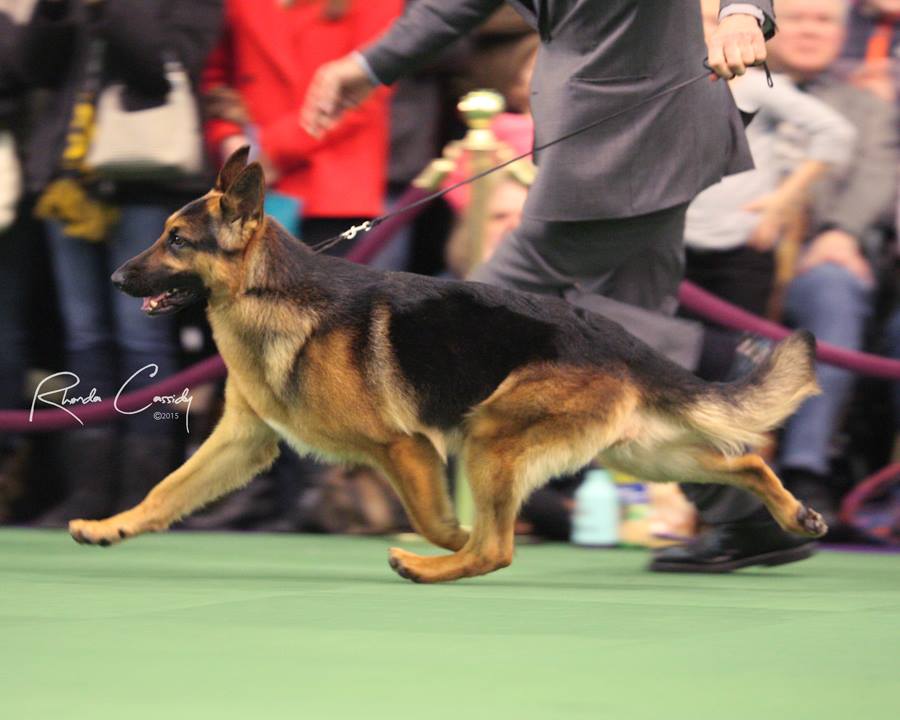
The #1 show dog in America is "Lockenhaus Rumor Has It V" which is pictured above, and below, walking on its metatarsus, with its hock almost touching the ground.

This dog won "herding" even though it cannot herd, and cannot even walk as a dog should.


A German shepherd should not walk on its metatarsals, and they did not used to.


Below is the gait of a wolf.


What have breeders done to wreck the German Shepherd?

Quite a lot. 


And what would it look like if we did the same thing to a horse?  


A lot like this:


Read More..

Helping Fearful Show Dogs

Honestly, I thought I had already posted this here, but then realized that I havent.  I probably keep shying away from it because it is a big topic to cover in a simple blog post.  I work with fearful show dogs constantly and have some solid methods and advice to offer on helping them.  This post wont cover everything, but will give you some tools to help your fearful dog or your clients fearful dog.

One thing I want to say is that I hope that people look for help because they are genuinely concerned for the well being of their dogs and want them to feel comfortable and safe, not just so that they will be successful in the show ring.  Many dogs suffer from fear and anxiety.  One of my most successful classes is my Confidence Building for Marshmallows which was designed to help fearful dogs gain confidence.  A large percentage of my dog and bird training and behavior consulting business is helpling people with fearful dogs and birds.  I see show dogs, pet dogs and dogs that do many other dog sports and activities as well.  It is our responsibility as their caretakers to find ways to help them so that they can live a life that allows them to feel safe, comfortable and trust in someone or hopefully, many people.

In addition to my client dogs, I also live with several fearful animals that have all made spectacular progress.  I have dogs that used to bark and lunge at people on the street, who would try to flee in a panic over vehicles and even parrots who would lunge at the side of the cage bars with their beaks trying to bite, all who have improved so much that you would not believe that they had those issues.  It took some time and it took work, but they got there.  On this point, there is something that I need to be very clear and honest about.  All animals are individuals and will have varying limitations.  There are a handful of dogs that I honestly do not feel will progress enough that putting them in the show ring is humane.  Imagine being terrified of people yet forced to be touched by strangers on a regular basis.  Much of the time we can modify the behavior to the point where the dog can be shown, but sometimes not and people need to be accepting of that.  It is heartbreaking to see people showing dogs that hate it, are terrified but are forced to keep doing it because there owners cant seem to accept the dog without a CH before his name.  And, dont even get me started on using those dogs in a breeding program, but I digress.  Let me just say that being structurally correct or "pretty" is NOT enough to justify putting a dog in the show ring, or in a breeding program for that matter, whose head wont allow him to be okay there.  This is an ethical responsibility we have.  We must put the animals well being ahead of our need or desire or ego to show the dog.  Work on helping the dog, learn how to modify the behavior, but always listen to the dog and accept it if the dog you had hoped would be your next big special (or agility champion or therapy dog or obedience dog or whatever) cannot do the job you are asking of him or her.  The animal simply MUST come first.

What Not To Do
There are some things that I do not do that pretty much apply to any and all fearful animals that I work with.

  • No pressure or force.  We must allow the fearful animal to set the pace.  There is a difference between slow, steady, honest progression and pushing or forcing.  Dont do it.  You will not only slow the dogs progress, but you will damage the relationship with the animal.  Of course there are sometimes things we must do such as take them to the vet or groom them, but these are things we can condition them for.  Getting into the show ring or into some type of dog sport competition is NOT a necessity and is something that can wait until the dog can do it without being afraid.  
  • Use only methods that protect the dogs comfort level such as classical conditioning, desensitization and counter conditioning and stay away from methods that force or overwhelm such as flooding.
  • Even if things are going well, do not enter your dog in any shows until you are VERY sure that he is ready for it.  Doing so can cause major setbacks.  Depending on the level of fear, I usually have my clients attend some shows but not enter at first.  
  • Do not taking behavior modification advice from non-professionals.  Dealing with fearful dogs is not simply "dog training", it is a whole other level of behavior modification that requires a strong and in depth understanding of animal learning theory as well as applied behavior analysis.  I find it extremely frustrating to be working with a client only to have their friend or breeder or handler or someone else pressuring them that they need to just "make him do it" or "correct him" when we have a solid training plan in place.  
  • Depending on the level of fear and the specific triggers, I sometimes recommend that a fearful or shy dog only be handled by his owner.  Handing a fearful dog off to a stranger or even someone that the dog does not trust very strongly is a bad idea and again a trust breaker.
  • Do not buy into the idea that a dog is being willful, lazy, dominant, stubborn or anything else.  Believe it or not, I have had longtime breeders, I am talking about someone with decades in a breed and "in dogs" tell me that their fearful dogs behavior was a "ploy" and that she knows these dogs and they "do this".  Newsflash, no animal behaves afraid on purpose, they just dont, so get over that one.
  • Do not punish a dog for being fearful.  Fear can look like a lot of different things while still being a fearful response.  You cannot punish someone for being afraid or guess what you get?  If you guessed more fear and anxiety youre right.  Dont do it.  
  • Do not allow yourself to be pressured into entering your dog before he is ready because someone told you he "needs to get over it" or because your breeder wants the dog in the ring or because your dog is needed to build majors.  
  • Do not have other people offer food to your dog if he is afraid of them.  Many people try to force dogs by using food and when this happens you can see that the dog is trying to get the food without getting near the person.  This is dangerous and a very bad idea because it puts the dog in conflict.  Best case scenario is that the dog panics and tries to escape once the food is gone, worst case scenario is that he bites the person once the food is gone, in either case, he didnt learn anything we wanted him to learn.  Whenever I meet a dog that I know is fearful or aggressive I start out with no food.  I need to see if the dog has any interest in people, in interacting or even just "checking me out" before I start using food.  Let me be clear that we do use food, a lot of food in this training, but it doesnt come from scary strangers.
  • Do not put anything above your dogs well being or your relationship with your dog.
What You Should Do
  • Learn about canine body language.  I teach my clients to learn to read their dogs body language starting with the most relaxed and comfortable body language which is at home.  Once they can do this easily, they can learn stress signals which allows them to see the earliest shifts in comfort level.  This is critical because it allows you to monitor the dog and get him out of situations while he can still function, not after he has had a complete meltdown.
  • Use desensitization and counter conditioning to teach the dog to be comfortable with the triggers that frighten him.  More on that later.
  • Move slowly and allow the dog to set the pace.  This is the only way to get honest progress.
  • Have the goal of the dog loving the show ring, not just accepting it.  Tolerating something is different from loving or enjoying something.  We need show dogs to really like it if they are going to be successful.
  • Wait to show the dog until he is more than ready for it.
Desensitization and Counter Conditioning
Desensitization and counter conditioning is the best way to treat a dog that is shy, fearful or unsure.  Desensitization is the process of systematically exposing the dog to the "trigger", which is the thing that scares him at controlled levels so that he is aware of the trigger, but at a distance or level where he still feels comfortable.  This level of exposure is called "sub threshold".  

Again, "sub threshold" is the point where the dog is aware of the trigger, but is not worried or upset.  This is where understanding body language is important.  If your dogs behavior is changing once he becomes aware of the trigger, he may be starting to become anxious and that is when you need to start making decisions about what to do next.  This is certainly not a complete list, but here are some stress signals that would indicate that your dog is become anxious or that his arousal level is rising.  
  • Unable to eat
  • Unable to hear you
  • Unable to focus
  • Scanning the environment or hypervigilance
  • Taking food harder, harder mouth
  • Less blinking, hard eyes
  • Changes in breathing
  • Hard muscles in the face, ridges
  • Curved topline
  • Circling, spinning, trying to escape
  • Avoidance of any kind including avoiding eye contact
  • Sniffing the ground
  • Panting when it isnt warm out
  • Yawning
Most of the time when I start to go over this list with clients with fearful dogs, they start to notice that their dogs do a lot of these things.  The time to increase distance from the trigger, change the value of the food you are offering or make whatever decision is necessary is when you notice small changes in the behavior, not after the dog has come completely unglued.  Once the dog has had a full blown reaction, you are not likely to get him back.

Counter conditioning is the process of adding something that the animal likes with the presence of the trigger.  Its pretty simple, it looks like this:  >scary thing = choice for the animal + the animals favorite thing< and >scary thing is gone = favorite thing is gone<

With show dogs we have to desensitize and counter condition to different things or multiple things depending on the dog.  I have worked with dogs that we had to desensitize and counter condition to:
  • Table
  • Judges Exam
  • Other dogs
  • Testicle exam
  • Bite/mouth exam
  • Grooming
  • Indoor shows (buildings)
  • Grass
  • Vehicles
  • Crates
  • Men in suits
  • Hats
  • Eye contact
Here is an example of a good desensitization and counter conditioning program, however, keep in mind that each step is determined by the dogs response to the prior step.  You dont progress until the dog is ready.  

Lets say a dog is okay with the table, but doesnt like the judges exam.  This is evidenced by moving back from judge, leaning away from judge, freezing when judge approaches, trying to jump off the table, turning to bite, etc.  For this example, lets say that the dog leans away or backs away from judge when the judge reaches to touch the dog.  Note that just strongarming and holding the dog in place forcibly is NOT okay, is extremely disrespectful and relationship damaging.  
  1. Owner puts dog on table, I approach to 1 from table, stop, owner feeds chicken, I turn and walk away.  I repeat this until the dog has zero concern with my approach.
  2. I approach table, pause, owner feeds chicken, I turn and walk away.  We do this until he is comfortable.  With each step, we repeat it until the dog shows no concern AT ALL or looks excited and anticipatory with my approach.  If at any time I approach and the dog is concerned, I back up to the last step or wherever he is comfortable and work from there.  You will be AMAZED at how quickly most dogs progress once they realize that they have some control over their safety and yes, it is safety to them.  Once they realize that you hear them and are listening, the confidence goes way up.
  3. Once he is comfortable with approach and pause, I approach, raise my hand about halfway up, pause, owner feeds, I walk away.  Note that every time I walk away is critical. It is a second reinforcer to the dog, a release of pressure.  It gives the dog a moment to process it, to think about it and it shapes his future responses and decisions.
  4. Next step would usually be raising arm higher, owner feeds, I walk away, owner stops feeding.
  5. Owner will always feed, and I will always walk away, but I am just going to type in my steps now to save space.
  6. Raise hand and reach out.
  7. Raise hand and reach out and pause.
  8. Raise hand, reach out, touch dog.
  9. Touch dog for longer duration.
  10. Pet dog down body.
  11. Then, I would progress through desensitizing and counter conditioning for the entire exam.
I have worked with dogs who in the past had been just forced to stay in position and be touched even though they were terrified and those dogs, understandably, can take longer to regain the trust.  They have lost such faith in their owners that they need time and we have to give it to them. 

Again, the key is always that you must stop or move back in the program if the dog gets worried.  If you have to go back several steps, it is usually MUCH faster to get there the next time.  

Other Things To Understand
  • Dogs do not "act" afraid if they arent afraid.  Dont buy into thinking that the dog is just doing it.  Fearful responses are not something the dog is doing, it is something that is happening to the dog.
  • Being "in dogs" does not make someone an expert in canine behavior, behavior modification or animal learning theory.  I hear some of the most dangerous, inaccurate and inhumane advice given by people who think that they know everything about dogs because they have been showing or breeding for a long time.  Again, dealing with fearful dogs is not "dog training".
  • A dog who has a fearful episode can remain "heightened" for quite a while.  Dogs that are constantly exposed to things that cause anxiety can literally take days (or longer) to decompress from that level of anxiety.  
  • Fear is very real to the individual experiencing it, even if it may seem unreasonable to you.  For instance, I am very anxious of dental visits and plane rides.  I have never had a bad experience in a plane and have not had a bad experience at the dentist in a very long time, still, my panic attacks are uncontrollable.  Because I can choose to go to the dentist or not, to cancel an appointment, to see a dentist that allows me to stop him if I need to, I have somewhat been able to desensitize myself to it so that my fear of the dentist is much better.  However, I cannot ease myself into plane rides as easily, so that panic (of taking off) remains pretty bad.
  • No matter how well trained an animal is, if they become fearful (or otherwise emotional in some way), the reliability of the training will not be as strong.  In other words, emotional state trumps training.  I have trained dogs to lift their tail on cue, however, if they become fearful and part of their physiological response when fearful is to lower their tail, that will happen and they cannot control it as they can when they are emotionally "even".
  • Our relationship with the dog and the dogs well being comes first, always.
Relationship and Trust
It is critical to me that the dog and owners relationship remain strong and intact and that we work to build a lot of trust.  Trust that remains, not just until the owner really wants to win, or really wants the dog in the ring, or is really feeling pressure to show the dog.  The trust comes first, always.  Our job is to protect our dogs and to advocate for them.  If the dog doesnt have an owner he can trust, he has nothing.  

Trust in you and the relationship can be damaged easier than you think.  Handing your dog off to someone he doesnt know, especially if that person uses force or physical corrections, forcing your dog to be touched when he is afraid, disappearing at a dog show when he isnt used to that are all ways to breach the trust.  

One of my biggest pet peeves is handlers or breeders saying that an owner "coddles" or "spoils" their dog and has no respect for the owner, blah, blah, blah.  What they are really saying is that they are going to do what they want to do with your dog, your dog is going to cope with it, they know your dog better than you and what the dog deems important isnt.  It is extremely rude and disrespectful to the owner of the dog and the dog himself.

I hope that this post can help people to understand the process of helping fearful show dogs.  


Read More..

Get Rich By Breeding Dogs!


O.K., the title is a joke. 

But only barely. 

Though show dog breeders may not be getting rich, many show dog people breed dogs to defray their show ring expenses -- payments to professional handlers, payments on motor homes and hotels, veterinary expenses, etc.

With "hobby" expenses of several thousand dollars a year, selling puppies is a significant part of the economic engine driving the show ring model.

The need for uninterrupted puppy sales is one reason the show dog world is so resistant to change.

If show ring folks could not sell their current crop of dogs because an AKC standard had been changed in order to improve canine health, that would be a serious economic hit.

There is another reason breed clubs are resistant to breed standard changes, and an increased focus on canine health issues; it is a negation of their own life and their own expertise. 

What does it say about the breed club, and its breeders, that the dog they claim to love so much is now in such dismal shape?

Dogs are not dying young and in pain because they are committing suicide.

Entire breeds have not been wrecked by accidental vehicle impacts.

No, the story here is quite a bit sadder than that. It is a story about a lot of people with misplaced priorities intentionally breeding dogs, and the horrific results they have achieved despite decades and decades of putative expertise "in the breed."

For these folks to admit that the results achieved have been a collective disaster, has a huge emotional cost attached to it.

They are in the same position as the person who has given this or her entire life to a company only to be fired in humiliation, or the wife who has been married for 25 years who comes home to find her husband in bed with another man. Was the whole thing a joke? A charade? Did this investment of my life mean nothing?

Little wonder that a lot of people are willing to do almost anything not to have to face those questions!
Read More..

Rules Ethics and Honesty in the Dog Show World

Social media is an amazing thing.  Sites like Facebook allow us to keep in touch with friends and family, to reconnect with old friends and to share what is going on in our own lives.  This should be a positive thing, but there is also a dark side.  Facebook, forums and other social media allows people vent publicly about things that bother them or that they are upset about and the dog show world is no exception.  The comments made publicly were bad enough with the dog forums, but Facebook is a whole new territory with our Facebook pages making our feelings and opinions an open book for our friends, family, dog show competition and anyone we are "friends" with to see.  Many times people are Facebook "friends" with people that they are venting about, so its sometimes more about saying what you want to say to someone without actually having to say it.

I am sometimes humored, sometimes astounded and sometimes horrified at the different things that I read. Most of the negative posts I see are in some way complaining about either the rules, someones personal ethics and honesty or lack thereof.  

RULES
This one is easy.  Rules are rules and you are either following them or breaking them.  If you break the rules, you risk getting caught and facing consequences for it.  The great part about the rules for dog shows is that they are written and they are specific.  If you break them and it can be proven, you may be punished for it. My personal opinion is that when it comes to dog shows it is best to follow the rules, not only because you can get yourself into trouble for not following them but also because it is just the right thing to do.  For me personally, I know the rules and I follow the rules, plain and simple.  It makes it really easy for me if someone suggests I broke a rule.  I wouldnt do it on purpose and if I did it inadvertently I would do whatever I had to in order to rectify it.

ETHICS
This one is a bit more sticky because ethics are a personal thing.  Something that one person feels is unethical may be perfectly acceptable to someone else.  I see people doing a lot of complaining about someone else being "unethical" but again, this is their personal opinion.  I have observed people complaining publicly about all of the following, just to name a few:
  • Moving a finished dog up
  • Not moving a finished dog up
  • Showing after a dog may be finished
  • Not showing after a dog may be finished
  • Committee chairs having someone show their dogs at a show where they are chairing
  • Committee chairs changing ownership of dogs so that they can be shown
  • Making negative to others about dogs at ringside
  • Commenting about others publicly on social media 
  • Breaking a major (even if for a very genuine reason)
  • Showing under a judge that you know, or that owned a dog you bred to, or that you had put you up before, or that you had lunch with two years ago, etc, etc, etc.
  • "Liking" pictures of dogs someone views as not a good dog
  • The judging, basically, disagreeing with the judging sometimes to the point of publicly insulting a judge because their dog wasnt put up
This is by no means a complete list, just some things that I have seen people complain about, usually on Facebook and rarely in person.  The thing is, these are situations in which each individual has a choice and a right to choose.  Of course most of us would probably say that it isnt nice to speak negatively about someone elses dog at ringside and that it isnt the right thing to do.  But, many of the other things are very individual and subjective.  I feel strongly that it is my right to move my finished dog up as a special if I choose to or to leave him in the classes, if I choose to.  However, I have seen people get pummeled for both of those options.  People can make a choice that they genuinely feel is the right, ethical and correct choice but it will still make some people mad.  You know that saying that "You cant please all the people all the time?" Well, that is the understatement of the century in the dog show world.  Not only can you not please everyone all the time, but some of those that are not pleased by your decisions will see your choice as a personal attack on them.  The bottom line is that you are not going to make everyone happy, so your best option is to follow your own gut and your own conscience and do what you want and what you feel is right for you and your dog.

What I find particularly frustrating is that some people will go on a social media rampage about this person or that person doing this thing or that when they do similar things themselves.  Of course, they are able to rationalize their choices and behavior, which is fine as long as they are willing to offer that same courtesy to others, unfortunately not everyone does.  They go on and on about other people and all their crimes and shortcomings and see themselves as completely justified in all their choices.  This is not a good look and not something I recommend.  Double standards are never a good thing.

HONESTY
I couldnt decide whether to talk about integrity or honesty here.  Integrity is really about being ethical which could include honesty, but honesty is really about truth.  Like rules, the truth is what it is, either it is true or not.  In the dog show world people can be so unbelievably untruthful that it is mind boggling.  To me dishonesty is a serious character flaw.  It isnt something I can accept or cope with in a friend and for the most part, I would choose not to be closely affiliated with people that I dont feel are honest.  And so, I dont.  I think it goes without saying that being honest is part of being ethical.  Does that mean that I have to sit at ringside and rip some dog to shreds because Im "just being honest"?  No, it doesnt.  I think that a good option for ringside judging is that if you cant say anything nice dont say anything at all until you get someplace private with someone you trust where it is appropriate and safe to vent .  In the case of saying it to the owner, if you arent asked, dont tell.  On the flip side, if you DO ask, make sure that you are prepared to hear the answer.  Asking someone what they think and then being upset with their opinion isnt fair either.  

JUST PLAIN STUPID
Several years ago I showed a friends dog to a big win.  The dog was nice, the judge was good and the win was honest.  Later that day, my friend was walking past a group of people who said, "Congratulations.  Isnt (insert the judges name) getting a puppy from you?"  Uh, no, the judge didnt even have the same kind of dog and there was never any discussion of a puppy or of the judge and the dogs owner being in business together.  It was so ridiculous that it was laughable and thats how we handled it, we laughed.  What else can you do?  It was just another case of people making up their own stories and fabrications to create suspicion about the win.  No truth to it at all.  Saying "Congratulations" just before saying something snarky doesnt make the comment sting less.  My skin has gotten thicker and I try not let this stuff get to me, but I do find it sad and disheartening when I see lies, sometimes quite vicious ones spread about dogs and owners who never did anything to deserve it.  Sometimes success can make you a target and there is just no way around it.

Sadly, this behavior is not uncommon.  There are just people out there who say things that arent true. In the case above and the times that I have been subjected to this type of behavior, I simply try to ignore.  There is no law against being dishonest, lying about people or spreading rumors.  So the best I can do is to not give it much thought, laugh it off and walk away.  Oh, and file that experience into my memory and my mind so that I can be thoughtful and careful about the people that I choose to trust, interact with and invest in.   

The just plain stupid category is one you have to just walk away from.  Of course, not everyone can do that. We are human and sometimes people need to defend themselves, fire back or say something and sometimes, its reasonable and warranted, but, I propose that a lot of the time ts not worth it.  Sometimes its better (and healthier) to walk away and be the better person and not feed the negativity.

In the end, we each need to decide for ourselves where we stand and who we are in terms of our ethics and honesty in the show ring and out.


Read More..

The Qualities of a REALLY good breeder of a show dog

When I got my first show Dachshund in the early 90s I went to some dog shows, met some dogs and breeders and found someone that I thought would be a good fit for me.  I got on the list for a male smooth standard.  Truth be told, I really wanted a longhair, but I couldnt afford one at the time.  I was young, single and self employed and I just didnt have the money for one.  At the time the internet was young, I sure didnt have a computer and so there was no long distance communicating and searching as easily as there is today.  I got my smooth and he was a fantastic dog.  I finished him easily and he was with me for nearly 14 years.  Still though, I wanted a male longhair.

Long story short, over the years I have had a few longhair girls.  I bred one litter of longhairs andgot three females and still have Ribbon, one of the puppies from that litter who is now almost 10 years old.  Still, I have always still wanted a male longhair.

In 2010, I started checking out the Aviance Dachshunds website.  I still wanted a male longhair, but the time wasnt right.  John Contoupe of Aviance Dachshunds told me at that time that when I was ready, he would send me a good puppy.  I was drawn to him because not only are his dogs beautiful, but I could see that he was extremely committed to their well being.  He views them and treats them as family members and his puppies are well socialized and exposed to a lot of different situations, environments and things before they leave his home.

I attended the 2014 Dachshund National and after yet another year of drooling over the gorgeous male longhairs, I decided it was time for me to think about a male longhair.  I wasnt really ready at that moment, but was ready to think about it.  At the time, John had a litter of four that were just about 3 1/2 months old.  He offered me one of those puppies, IF there was a nice show male available.  In short time I accepted the offer and began the torturous wait.  John let me know that it would be a while before he would know if there was an acceptable puppy for me and which one.  My mind said that time would be 4 months old.

A good breeder wants good homes for their puppies, not just good show homes.  My breeder knew that I didnt just want a show dog, but that I wanted a companion, training partner, a buddy.  

As the puppies grew older, John continued to watch them and I continued to squirm, desperate to bring my puppy home still within the critical socialization period.  But, that didnt happen because still John didnt know which puppies he would keep, who would be show quality and who would go where.  When the puppies were about 5 months old, I contacted John, frustrated and whining that I didnt want my puppy to be 6 months old when he came here.  John laid it on the line and let me know that he didnt feel it was right to place a puppy as a show prospect without really knowing what we had here.  This breeding was an outcross and he wanted to make sure.  He asked me, "You want a nice show dog right?  You really want to show this dog and you want something good, right?"  He was right, I did and he was going to make sure I got that before sending me a puppy.

A good breeder is honest about being able to determine the quality of a puppy and when.  Not only that, but they dont want inferior dogs to be exhibited in the ring, so they allow puppies that are not show quality to go into homes where they will not have to be shown, but where they will be companions and family members. Many breeders will sell inferior puppies as show puppies just to sell a puppy.  

So, I waited.  When the puppies were about 5 1/2 months old, John contacted me and told me that I would be getting Opie.  The male puppies were very similar, but Opie was the one I always wanted and so I was thrilled.  Unlike many other breeders I have worked with, John required that I sign a puppy contract.  Everything was very clear and spelled out to make sure we were in agreement.

A good breeder has a contract and all agreements spelled out in writing so that there is no question later on down the road.  Part of the contract is that if anything ever happened where I couldnt keep Opie, he is to be returned to John.  It is assumed that a good breeder will take their dogs back, but I was impressed that it was in writing.

Opie has been here a few months now and I am thrilled with him.  He has been two three shows and went reserve once and has a four point major out of the 6-9 puppy class.  I have been taking my time training and preparing Opie for the ring.  While Johns two puppies each have three majors, there is no pressure on me to rush Opie.  He is happy that we are enjoying the process and taking our time.

This is, to me, one of the greatest signs of a great breeder, that he is most concerned with Opies well being and comfort level, not obsessed with me rushing him to the ring.  He supports me taking my time with Opie, enjoying the process and journey with this dog and building a strong working relationship with him.  Because I work with so many show dog clients, I run into issues a lot where a dog is not ready and the owner sees this, but the breeder insists that the dog needs to get into the ring right away.  I have even seen owners pushed by other breeders and owners to get their unready dogs into the ring, just to build points for other people.  

Recently, while out on a neighborhood walk, Opie was attacked by a large dog, he escaped his harness and ran home in a panic.  While I am not seeing anything to indicate that Opie will have long term affects from the attack, I know that it is very possible that this may happen and that he may now have anxiety or issues around dogs, leash walks, our neighborhood, etc.  John not only supported, but actually suggested taking my time with Opie, not pressuring him and allowing him to feel comfortable.  As a behavior consultant who deals with dogs who have had single events impact their lives, I can say that this is great advice.  Many breeders would have said, "he will be fine, just get him out there", but John was concerned with Opies well being and cares more about him feeling safe and comfortable than being pushed in any way.

I have a lot of clients who obtained their dogs from really great breeders or who are reputable and responsible breeders themselves and for those breeders, I am so grateful.  However, so many of my clients have breeders who are not supportive of their decisions and are more concerned with the dog getting into the ring than they are with the puppy being prepared and ready for the ring.  I have clients who have been blamed for their dogs temperament not turning out when in fact, the dog is just not sound.  I have had clients whose breeders insisted that the dog be shown far before the dogs are ready.  I have had clients whose breeders think that they know far more about behavior than they do and sometimes recommend outdated, inaccurate and sometimes downright dangerous behavior modification methods.

If you are looking to get a puppy, please make sure that you do your homework and find a breeder whose views are in alignment with yours.  If this dog is going to be your companion and family member first, you need to make sure that you are aware of everything that you are agreeing to and that you are comfortable with that.  If that isnt the case, keep looking.  I work with so many clients that have fantastic relationships with wonderful breeders who support the fact that the dog is a beloved pet as much as a show dog and that truly want what is best for the dog.  This is the type of breeder that I hope everyone is looking for and hoping to connect with.


Read More..

The Dogs Are the Experts


"This book ... is great reading for all terriermen and women." -- Jack Russell Terrier Club of America.  Order yours here.
Read More..

How to Deal With Itchy Skin in Dogs


Killing fleas, airing and brushing the coat, and getting rid of the dirt, dander and pollen on your dog, are all key to keeping your dogs skin healthy and happy.

Veterinarian Marty Becker details the newest thinking about dogs with chronic itchy skin:

Many dogs with itchy skin and recurrent bacterial infections have a weakness in their skin known as a "barrier defect.  In normal dogs, the skins barrier keeps water inside the body and substances like bacteria, yeast and pollens out. In dogs with a barrier defect, those substances "leak" into the deeper layers of the skin. Because the body perceives them as invaders, the immune system revs itself up to destroy them, bringing local inflammation to the area as part of the immune response....

The good news is that there’s a solution to this problem. The even better news is that it’s not costly, and the side effects are few to none."

Becker goes on to note that the solution, or recommended course of treatment, is weekly or even daily baths and topical treatment.

I have noted in the past that weekly baths are key to terrier coat health -- the opposite of what many show dog folks will tell you.

I have had terriers for 45 years and, with one or two small and very short-lived exceptions, I have never had a dog with itchy skin.

Why is that? 

I chalk it up to two simple factors:

  1. I prefer mutts, cross-breeds, and unregistered dogs. 
    One of the main reasons we have a lot of skin problems in dogs, and especially terriers, is that most show dogs are heavily inbred and, as a consequence, they have weak immune systems and more allergies.

  2. I wash my dogs every week. 
    I have always washed my dogs once a week, and you should too.  You have heard that washing your dog is "bad" for the dog?  Nonsense.  A dog wants to be clean and it deserves to be clean. You wash yourself at least once a week, right?  Do the same for the dog.  If you are worried about keeping your dogs coat shiny for shows, please grow up and get a life.  A dog does not want a ribbon -- its want to be free of itch.

So why do dogs get itchy skin? 

Theres a lot of veterinary mumbo jumbo on that score, but lets cut to the chase and lump up the three factors:

  1. Weak immune system and auto-immune disorders. 
    Dogs can get allergic to pollen and even to their own dandruff, which is one reason you want to wash your dog -- to reduce pollen and dander as well as dirt. Yes, some dogs have food allergies, but this is much less common than most people think, and the most common diet-based allergy in dogs is not to corn or wheat, but to beef.  If your dog has seasonal hotspots, it is almost certainly not due to a food allergy, but to a reaction to pollen, dander, and fleas.

  2. Allergies to fleas, mites, ticks, and mosquitoes. 
    Flea bite dermititis is common, and it only takes one or two fleas for a dog with a weak immune system to go a little nuts.  One reason to wash your dog with flea shampoo once a week in spring, summer and fall, is to make sure your dog harbors few or no fleas, mites, or ticks.
  3. Dogs have too much hair these days.
    Air circulation over the coat and the skin helps cut down on fungus infections. When thick hair is combined with poor hygiene (too little bathing and too little combing), the ground is set for canine skin trouble.  Again, washing your dog and combing out the under-thatch at least once a week will solve a lot of problems.

Do you need a special shampoo to wash your dog? 

No. 

The folks who claim otherwise are marketing nonsense or repeating old wives tales.  If a shampoo is gentle enough to be used on a human head once a day, its fine for a dog once a week!

In cold-weather months, when fleas and ticks are not much of an issue, use the cheapest shampoo you can find at the grocery store.  I get Suave at about $1 a bottle, and it works fine.  Expensive non-medicated dog shampoos are all hype and marketing.  Save your money.

In summer, I use an off-the-shelf pyrethrin-based flea and tick shampoo ($4.00 a bottle on the Internet and $7 at the store), and I make sure to lather well around the ears and neck, and around the dogs vent area. 

Pyrethrin is a very safe, old, and natural insecticide made from Chrysanthemum flowers, and pyrethrin-based shampoos are famously effective at killing fleas and ticks. In doses too small to kill fleas and ticks, pyrethrin repels them, and the the active ingredient is biodegradable as well.  The US Department of Agriculture says pyrethrins are "probably the safest of all insecticides" and has approved their use around foodstuffs and at food plants. 

Killing fleas, airing and brushing the coat, and getting rid of the dirt, dander and pollen on your dog, are all key to keeping your dogs skin healthy and happy.

Do you already have a dog with itchy skin, aka a "hot spot"?

If its a seasonal hot spot, as is so often the case, then it almost certainly has nothing to do with a food allergy, and is more likely to be due to pollen, dander and (especially) fleas. 

Wash your dog, treat for fleas, and knock down the initial itchiness with a dose of benadryl (2 mg or less per pound), and things should sort themselves out fairly quickly.

After the fleas are gone from the dog, and eliminated from its bedding as well, I generally recommend washing dogs that have skin problems with a human dandruff shampoo like Selsun Blue

If the seasonal hot spot problem continues (probably due to pollen) the dog should also get dosed with benadryl (up to to 2 mg per pound of dog, every 12 hours) to reduce itching.  Remember:  people take benadryl for their allergies all the time, and dogs can take it too if it is administered in the proper dose (not for cats!).  For terriers, the 25 mg. benadryl caplets sold at Walgreens as a "sleep aid" for humans are just about perfect.

Of course not all "hot spots" can be eliminated with a good shampooing alone.  There is a chance your dog might have a fungal skin infection, aka, "ring worm."

The cheap over-the-counter remedy here is to treat the red or balding areas with a topic fungal ointment like Tenactin or its generic equivalent. Rub it into the root of the hair and the skin. This ointment is the same ointment used to treat athletes foot and jock itch, and is sold at any pharmacy or grocery store for about $7 a tube.

Another step that may be necessary, especially if the dog has already rubbed the skin raw, is to dose the dog with an antibiotic like cephalexin (sold without prescription as "Fishflex") until the skin heals up.  A 7-day course of antibiotics will help the dog "attack the attacker" from the inside, as well as the outside.

If you suspect mange, wash the dog and bedding with a pythrethin-shampoo, and dose the dog at the mange site with a dilute (.05 percent) solution of Ivermectin as well. 
.
Read More..

How Do Dogs Show Their Love


By Linda Cole

Dogs show us affection in many different ways. Most pet owners recognize their own pets love in his body language, and some dogs have unique ways of showing us how important we are to them. One way my Border Collie mix, Keikei, shows her affection is by holding her paw up so we can “hold hands.” There are, however, some common ways dogs show their love.

Doggy Kisses

Some canines give kisses more readily than others, and licking is a common way for them to show their love. Your dog may lick your legs, feet, hands, arms or face. If you have a dog that shows affection by licking your hands, make sure to wash them before preparing or eating food. Dont allow your pet to lick open wounds you may have. A doggy kiss is fine, but his tongue can transmit bacteria to your hands or an open sore.

The Pied Piper Effect

One sure sign of love is wanting to keep you in sight at all times. Sure, your dog may follow you to the kitchen just in case theres something in it for him, but hes more likely following you because he cares. Dogs have an innate protective nature when it comes to pack members, and to our canine friends we are a member of their pack. His natural desire is to follow you and wherever you lead – he will follow. But tagging along because he wants to be near you can also be a sign of separation anxiety. If you notice increased levels of stress before you leave and when hes home alone, talk to your vet for advice on how to help ease his anxiety. A checkup can rule out any medical issues that could be causing him stress.

Leaning on You

There are different reasons why dogs like to lean on us. One reason is because we make them feel safe and secure, and they lean against us to return the feeling. Some dogs lean on your legs when youre sitting or standing. Some like to climb up in your lap or sit beside you on the couch to snuggle as close as they can get. My dogs rest their head on my knee or foot, nudge my hand with their nose, or rub against my legs like a cat. These are all signs of affection. Touching is as important to canines as it is to us. A dog who rests his head on your knee or nudges your hand wants to be petted. Its his way of asking politely for attention. On the other hand, slapping at you with his paw is a demand for attention and should be ignored.

Exposing Their Tummy

One sign of submission is when a dog rolls over and exposes his belly. This says he trusts you completely and feels comfortable around you. Reward his sign of affection and trust with some tummy rubs.

Smiling

Jeffrey Mogil is a psychologist and neuroscientist at McGill University in Montreal. Based on research he did on mice on their facial reaction to pain, he believes that dogs do have the ability to smile. Our pets likely show emotions in similar ways we do and can use their facial muscles to form a smile. I know from watching my own dogs that there are times I see a smile on their face.

Wanting to Play

One way dogs bond with each other is through play. Barking, nipping and jumping around is a natural way they make friends, and they play with the ones they like. When your dog gives you a play bow, hes trying to get you to play with him because he sees you as his friend and its a sign of his love.

A Wagging Tail

We know its important to understand what a dog is trying to say with his wagging tail. It doesnt always indicate a happy or friendly dog, but you cant misinterpret your dogs excited tail wagging when he sees someone he cares about. New research on deciphering a wagging tail has found a subtle difference in how a dog wags his tail when he sees his owner, a stranger or an unfamiliar dog. We give our pets a positive feeling and they reflect it in how they wag their tail by pulling it a little bit to the right as they wag it. If their tail is pulled to the left side, that indicates negative feelings.

Most of the time, all you have to do is look into your dogs eyes to see how much he adores you. When he shows affection, hes saying you have his trust, respect and unconditional love. And that is priceless.

Top photo by SashaW
Bottom photo by Aine D

Read more articles by Linda Cole
Read More..

DOG LOVERS SHOW GIVEAWAY


Weve got 5 double passes to giveaway to the 
Dog Lovers Show in Melbourne! 

Just comment below to let us know what youd like most to see at the show and well nominate our favourite responses by the end of Sunday 27 April 2014. 

This giveaway is also open to responses received via our Facebook and Twitter community.


THE BIGGEST DOG EVENT IN THE SOUTHERN HEMISPHERE RETURNS TO MELBOURNE

Australia’s largest and most comprehensive event dedicated to educating, informing and entertaining dog lovers will take centre stage from Friday 2nd

Over three huge days, over 250 exhibitors, more than 600 dogs and a pack of pooch experts, personalities and performers will descend on the venue to provide 20,000+ visitors with everything and anything dog related on a scale never before seen in the Southern Hemisphere!

The Dog Lovers Show is a family friendly event which celebrates the unconditional love we share for our dogs with expert seminars, dog shows from the country’s most talented canines, information on all the off-leash parks in Victoria and literally thousands of the latest doggy products and services to reward your dog.

From dog adoption to hot dogs, there’s talks on diet, training and exercise to the fun of watching Chester the famous skateboarding dog on Centre stage - the Dog Lovers Show offers something for all ages.

LOCATION: Royal Exhibition Building, Carlton, Melbourne

DATES: Friday 2nd to Sunday 4th  May at the Royal Exhibition Building in Carlton.

TIMES: 10am - 5pm Daily

Detailed info and for tickets visit: dogloversshow.com.au or
Facebook: www.facebook.com/dogloversshow
__________________________________________________________

The give away has now ended! We had such great responses here on the blog, on our Facebook page and at our Twitter feed, that we ended up using a random number generator to decide who won - it seemed the most fair way! Winners have been contacted - thank you all so much for participating - hope to see you at the DLS - please come say hello if our paths cross!  :)  Mia
Read More..

Dont miss out! Dogs Science from November

Catch up! Participate! Plan your conferences for 2015! Check out all the latest in canine science from November here, thanks to the magic of Storify (if you dont see a beautiful array of handy snippets below, please click this link to view)

Further reading:

Cobb M., Paul McGreevy, Alan Lill & Pauleen Bennett (2014). The advent of canine performance science: Offering a sustainable future for working dogs, Behavioural Processes, DOI: http://dx.doi.org/10.1016/j.beproc.2014.10.012

Hecht J. (2014). Citizen science: A new direction in canine behavior research, Behavioural Processes, DOI: http://dx.doi.org/10.1016/j.beproc.2014.10.014

Bradshaw J.W.S. & Rachel A. Casey (2009). Dominance in domestic dogs—useful construct or bad habit?, Journal of Veterinary Behavior: Clinical Applications and Research, 4 (3) 135-144. DOI: http://dx.doi.org/10.1016/j.jveb.2008.08.004

Gosling S.D. & Oliver P. John (2003). A Dogs Got Personality: A Cross-Species Comparative Approach to Personality Judgments in Dogs and Humans., Journal of Personality and Social Psychology, 85 (6) 1161-1169. DOI: http://dx.doi.org/10.1037/0022-3514.85.6.1161
Read More..

Understanding Dog Show Terms

By Suzanne Alicie

Many dog lovers enjoy watching dog shows. We get to see the “top dogs” of each breed, but a lot of us may find ourselves wondering exactly how the judges choose the winners. There are many terms and standards that “show dog” owners are aware of and work to achieve. Let’s take a look at a few of these and what they mean, so the next time you watch a dog show you’ll understand more about the process and have more insight into the final results.

Breed Standard

The breed standard includes several areas of the dog’s appearance which are dictated by the AKC for show dogs. This means that dogs of a specific breed which are the wrong color, have any irregularities or are too large or small for the breed standard won’t be competing. The dogs which have shown that they fit the breed standard will be further evaluated to find the best example of the breed in the show.

Stacking

Stacking is how the dog stands naturally and when placed in position. This is something that the handler or trainer will teach the dog. Stacking helps the judges see all areas of the dog’s structure to evaluate against the breed standard and to allow the judges to feel the dogs bone structure and muscles. The breed standard stacking position differs from breed to breed. While evaluating the stack, you may hear judges and announcers talk about angulations, soundness and pedigree.

Showing the Bite

The bite is the alignment of the top and bottom teeth. Judges check this to compare to the breed standard and in the examination of bone structure. Some dog breeds have a slight under bite, but the best guide is that the teeth should fit together like scissors. Dogs with a bad bite don’t fit the breed standard and are typically not bred for show.

Movement Down and Back

Watching the dog move down and back in front of the judges allows them to evaluate the fit and function of the dog. Stacking is an up close examination, while movement down and back is a chance to see all the parts of the dog working together. Movement down and back is judged on the gait of the dog, heeling, and relation to the location of the handler while proceeding.

While many of us just enjoy watching beautifully groomed and well behaved dogs in dog shows, there is a great deal of time, training and preparation put into each appearance. Trainers work with show dogs daily to teach them proper comportment, improve their gait, their stance and of course their willingness to stand perfectly still while being examined by strangers.

As the owner of a dog who absolutely would not go for that, I am always amazed at the wonderful behavior show dogs exhibit. They are truly the top of their breeds, with excellent training, grace and athleticism.

There are other types of shows and competitions for dogs, including agility competitions, puppy competitions, specialty shows and obedience shows. Here on the Responsible Pet Ownership blog we have interviewed and explored many aspects of working and show dogs, their owners and the competitions and shows they participate in. CANIDAE Natural Pet Foods is proud to sponsor several exemplary show dogs and talented canine athletes.

If you’d like to learn more, check out these posts:

What Westminster Dog Show Champions Do After the Big Win 

What is a Conformation Dog Show? 

How to Train Your Dog for Agility Competitions 

CANIDAE Sponsored Dogs Make a Splash at “Paws in the Pool” 

Top photo by mjk23
Bottom photo by Natalie Maynor

Read more articles by Suzanne Alicie
Read More..

A Dog Show We Need to See


Dog shows are all about the romance of dogs -- which is to say they are pretty far from the reality of canine genetics today.

One of the things you will NEVER hear at a dog show is the true history of any breed, or the list of genetic defects that have been exacerbated by closed registries.

And yet what a thing it would be to hear the truth!

What a breath of fresh air it would be to hear:
"The German Shepherd was never much of a herding dog and is never found herding today. A herding German Shepherd -- ha - what a notion! In fact this dog is a relatively new breed, created around 1900. Today the genetic stock of this dog is so racked by chronic hip dysplasia that many lines of German shepherds can barely walk. Anyone with an ounce of sense stays away from show lines today, and imports their dogs from working stock overseas."

The Bull Dog would be properly introduced as:
"A game dog once used to catch stock for altering or slaughter, the bull dog was reduced in stature and mutated by intentionally breeding in achondroplastic dwarfism, which is why the legs on these dogs are so bent they can barely walk. The pressed-in-face means the dogs have chronic breathing problems, while the digestive tract is so wrecked that these dogs pass more gas than a Mexican restaurant. You will learn to light matches with a bull dog!

The heads on these dogs are so enormous that almost all the dogs are born caesarian, and in fact this dog would be extinct within 10 years if it were not for veterinarians helping these little mutants into the world.

Notice that nice little pig tail? That is a source of chronic skin infection, and most of the dogs in the ring today will have their tails completely cut off after they are retired from performance -- a way of making it easier to keep this breed after a show ring career."

Someone really should write a new voice-over sound track for a dog show and see if the BBC or Animal Planet might run it -- it would certainly amaze the public to learn the truth about these dogs, from dachshunds to poodles, from Irish setters to Scottish terriers. And there is certainly no shortage of true dog tales to tell!

  • Related:
    ** Rosettes to Ruin: Making & Breaking Dogs in the Show Ring
    .
Read More..

Best in Show at the Republican Dog Show

Read More..