Tampilkan postingan dengan label how. Tampilkan semua postingan

How to Massage an Arthritic Dog


By Langley Cornwell

My friend Karen recently adopted a senior dog with general arthritis and hip dysplasia. Good for her, right? It started with a conversation we were having about the high number of senior dogs in shelters, and how sad it was for an older dog to live out his or her days behind bars. In our local shelter, senior dogs make up about 10% of the overall population at any given time. When trying to understand why, a shelter worker told us that oftentimes families surrender their senior dogs when they reach an age where they require extra care. What a shame.

Karen’s goal is to provide her new dog, Goldie Girl, with a safe and comfortable home during her twilight years. Their union is heartwarming; it’s amazing how quickly Goldie Girl and Karen have bonded. And the dog seems to have turned back the clock several years. She holds her head a bit higher and her limp is less pronounced. Karen attributes the quick bonding and Goldie Girl’s improved physical state to massage.

The article I wrote titled The Benefits of Massage Therapy for Pets helped convince Karen that her new dog would get a lot out of regular massages, but she didn’t want to cause Goldie Girl any additional pain. Having no experience with massage, Karen went looking for advice on how to massage an older, arthritic dog. She found what she was looking for on The Dog Channel, where there is a helpful tutorial on massaging a senior dog. Here are some simple pointers.

Why massage an arthritic dog?

Arthritis is a degenerative disease that causes pain and soreness in a dog’s joints, specifically the hips, lower spine and knees, and, less severely, to the elbows and shoulders. Massaging your senior dog’s aching muscles a few minutes every day will help slow down the degenerative process of arthritis. Furthermore, massage can help relieve some of your dog’s arthritis pain and reduce some of the muscle tension associated with the disease.

How do you do it?

Start by lightly petting your dog all over, then slowly concentrate your efforts on the area you are about to massage. Continue to lightly stroke the area with very little pressure – this is called effleurage – which helps to increase circulation in the area.

Next, begin lightly kneading the tight muscles. Then rub your hands against your dog’s skin to create light friction which will loosen the tight muscle fibers and encourage deeper circulation. Continue to alternate light kneading with light hand friction. About every 10 seconds, use light effleurage strokes to assist drainage. Avoid putting any direct pressure on the dog’s painful joints, but do work the area around the joints to stimulate circulation and drainage.  

During the massage, you may want to perform some gentle stretching exercises on your dog, to increase the elasticity of the tissue you are working on. When your massage and stretching session is over, softly stroke your dog’s entire body to help her relax. Then you may want to give your sweet dog a soft and tasty CANIDAE TidNips treat.

How long should the massage last?

The massage should last about 10 minutes for smaller breeds and between 15 - 20 minutes for larger breeds. Start with less time and increase the duration gradually, otherwise you risk overworking a specific part of the dog’s body and exacerbating the inflammatory process often present with an arthritic condition.

Does time of day matter?

If you can manage it, try to massage your dog twice a day: once in the early morning and then again in the evening. A massage first thing in the morning is useful because it helps reduce the soreness and stiffness resulting from the previous night’s inactivity. A second massage in the evening will relieve muscle aches brought about by the days activities.

While massage isn’t a cure for arthritis, it will certainly help your older canine friend feel better. The added bonus is that the bonding experience will benefit both of you!

Read more articles by Langley Cornwell

Read More..

Dog Training Tips On How To Train A Dog

Dogs Training

  • Many people start their dog on the path to dog training success by enrolling them in a basic obedience class. This is a great idea because you will learn how to teach your dog to do basic commands such as “sit”, “stay”, and “heel”. You can use these dog training commands by using verbal commands and physical actions. For example, right after you say the word “sit” you gently push your dog’s bottom down onto the ground and put them in the sit position. Immediately say “good” and smile. Give them a tasty treat as well. Basically, you want to do as much as you can to reinforce the action of sitting when you say “sit”.

  • Dogs act like absorbent sponges when it comes to learning proper behavior and tricks. If you do your job properly then dog training should be a hit. Your dog is ready and eager to learn proper behavior. They want to please you. Therefore, if they aren’t following your instruction it might not be their fault. You might be giving confusing dog training instructions.

  • Dogs thrive on positive reinforcement and encouragement. Positive reinforcement such as acting excited and petting your dog when they do the right behavior help with your dog training efforts. It is a dogs nature to want to be close to you and make you happy. Showing encouragement and praise will help your dog much farther, much faster in their dog training. Make sure to encourage a dog through each dog training accomplishment, no matter how big or small.

  • Food is a powerful motivator when it comes to dog training. You will be hard pressed to find a dog that passes up food or a tasty treat. Dogs are always hungry and welcome any situation where food is involved.

  • Dog training should be a gradual process with regards to skill level and learning more complex commands. Give your dog time to understand new commands. They most likely won’t learn it the first day you teach them. You will have to review the commands and proper behaviors often.

  • Have dog training sessions at various times throughout the day. Your dog needs periodic training to reinforce the proper behaviors. You dog’s attention span can wane, so make sure to keep the training sessions to five to ten minutes long.

  • When you first start dog training work in environment that is free from distractions so your dog can focus on their behavior. Once your dog understands the basic commands you can try to use the commands in a busier environment. One thing you may find is that your dog is distracted and seems to have forgotten the commands. Don’t fret. This can happen because dogs tend to be situational learners and your dog just needs to work on the commands in the busier environment
    .
  • Too many treats equals an overweight dog. Dog training is a process that involves tasty treats, but too many of these treats can be a bad idea for your dog’s waistline. Use small treats and wean your dog off treats as they understand the different commands. They will then rely on your praise as the positive reinforcement for each behavior. These eight dog training tips will set you on the road to happy, healthy, obedient pooch

2006 (c) mdarma.com - All Rights Reserved Worldwide Dogs

Read More..

How You Train a Small Dog Makes a Difference


By Linda Cole

When it comes to dog training, the size of the dog does matter! It can mean the difference between being successful or falling flat on your face when trying to teach your small dog commands. In a way, its easier to train larger dogs because owners of small dogs often treat a smaller pet differently than they would a bigger dog.

Many small dogs belong to the terrier group. This is a group of feisty, high prey drive dogs with lots of energy. They are smart and not afraid to let their feelings be known. Small dogs can be manipulative if they get a chance, and can have an attitude the size of a Great Dane. Its tempting to let a little dog get away with things most owners wouldnt accept from a larger canine. His actions may not hold the same weight as a misbehaving larger dog, but a small dog can still be disruptive. If your small dog jumps up on someone to greet them, many will think thats cute, but if a Saint Bernard leaps up, your guest could be lying on their back with a drooling dog standing over them. Not as cool to some, but could be cute depending on your guests sense of humor.

Dogs can understand if they are being treated differently than others around them, and its important to treat small dogs just like you would a larger one. Training is about teaching your dog how you want him to act, but its also a good way for you to learn who your dog is as an individual. Small dogs can be stubborn. We can accidentally teach little dogs the wrong way to act if they are rewarded for their misdeeds or bad manners.

Part of our job is to instill confidence and trust in our pets. Treating a dog with respect, regardless of size, is one way of establishing yourself as their leader, and says you can be trusted. Dont give any treats or attention until your dog has all four feet on the ground.

Riley, my Terrier/Chihuahua mix, has been more of a challenge to train than my largest dog Max, a Lab mix. Riley had a tendency to jump up to grab a treat. I can understand why she did it – she was afraid one of the other dogs would get it before I got my hand down to her. Keep in mind how a small dog sees the world from their level if you have different sized dogs. Once Riley learned she didnt have to compete with the larger dogs for her treat, she settled down and became more willing to focus on the commands I was teaching, and not grab for her treat.

Finding the right treat is a consideration when training a small dog. The treat needs to be special and something that will get your dogs attention. CANIDAE TidNips™ treats are a favorite for my dogs. I like them because when treating a small dog, you want to give bite sized pieces they can handle, and I can easily break up the treat without it falling apart.

Small dogs need to learn the same basic commands as a larger dog. Sit, stay, come, and drop it are four commands that could save your pets life. Small breeds that were bred to hunt vermin and small game have a high prey drive, and their desire to chase is just as strong as it is in larger breeds. They are also quick and can be gone in a flash if off leash when outside. Dont take your pets small size for granted, and expect the unexpected just like you would with a Lab, Border Collie or any larger breed.

When training, get down to your small dogs level so he can see your face easier. When you call him to come, make sure he comes all the way to you, and doesnt go underneath a table or chair. A good command to teach a small dog is “stay calm, chill, settle, or quiet,” whichever word works for you to help keep him from getting over stimulated. Its a command that helps him control his energy. A small dog may have the attitude of a big dog, but they are still little, and that can be a bit intimidating for some dogs. Little dogs can be controlled by picking them up, but without training they wont learn how to behave, and could be at risk of developing small dog syndrome.

One mistake some owners of small dogs make is thinking their pet doesnt require exercise. All dogs need regular exercise to keep their mind and body healthy. Playing outside gets them out in the fresh air, and walking is a good way to keep your pet socialized with new people, sounds, sights, other dogs and places. A well socialized and trained dog is much easier to handle and less likely to get into trouble.

Photo by itarife

Read more articles by Linda Cole
Read More..

How to Find the Right Dog for Your Lifestyle

By Linda Cole

Finding the right dog isnt always easy. There are nearly 500 dog breeds recognized by kennel clubs throughout the world. With so many choices, purebred and mixed, how do you find the right dog for your lifestyle? Basically, its a combination of common sense, doing your homework on breeds, and understanding that some dogs can be harder to handle.

Purebred or Mixed?

You want to feel comfortable around your dog. The first thing to consider is why you want a dog. Secondly, do you want a purebred or a mixed breed? If cost is a consideration, visit your local shelter or rescue groups for purebreds and mixed breeds, or contact breed specific rescues for purebred dogs. Buying from a responsible breeder is more expensive, but you will learn about your pups history and health, see his parents, and have someone happy to answer all of your questions. They will have questions for you, as well.

Energy Level

Do you want a dog that watches you toss a ball and then gives you a look that says, “Youre the one who threw it over there. Im not going to get it,” one who is eager and ready for a five mile run, or something in between? Regardless of size or breed, all dogs need some daily exercise and some need more than others. How much exercise are you willing to give your dog each day? A bored dog can be destructive if he isnt given an outlet to get rid of pent up energy. A daily walk adds stimulation to your dogs mind. We would get bored doing the same thing every day, and so do dogs that never get outside their enclosed area.

Living Space

Size can matter when it comes to space inside and outside your home, and so does the location of your home. Do you live in an apartment, small house, large house, the suburbs, a small town, downtown, or in a rural area? Is there a spacious backyard or one just large enough to justify owning a lawnmower? Is there a fenced-in secure area? How close are your neighbors?

Size of the Dog 

If you have an apartment that reminds you of a closest, a Great Dane might not be your best choice, although as long as you provide him with plenty of exercise on a daily basis, it might work out if you dont mind having furniture rearranged when you get home. Your biggest consideration when it comes to size is can you control the dog and will he be comfortable in the space youre asking him to live in? Getting the right sized dog to fit your comfort level makes it easier for you to control him and keep him safe if you have a family that likes to rough-house. Size also matters when it comes to mealtime. A premium quality dog food like CANIDAE Life Stages is less expensive in the long run than lower quality brands because it doesnt take as much food to fill him up.

Coat Type

Some breeds require more time spent on grooming than others. A dogs coat can be wiry, long, short and with an undercoat, or single coat. Some coats need to be trimmed and some dont, and some breeds shed more than others.

Time for Training

All dogs should be taught basic commands, which gives you better control and helps you keep him safe. They all need to be socialized with other pets, people of all ages, and in different environments. Its not difficult to train a dog if you work with him on a daily basis until he learns what you are teaching and then reinforce it so he remembers. You might be surprised how quickly most dogs learn commands when youre consistent, dedicated, patient and respectful. Five or ten minutes a day is all you need. Its important to be able to handle your pet. Not all dogs are easy to control, and certain breeds should not be owned by someone who doesnt understand how powerful and strong willed they are.

Other People in the Home 

Do you have young children or an elderly person living with you? No matter what kind of dog you decide on, young kids and dogs should never be left together unsupervised. Some dogs may not get along with older people who dont always interact well with them. Its important to make sure everyone in the home is comfortable with the size, breed, temperament and energy level of a dog before you bring him home.

Choose a dog wisely, for the right reason, and for your specific lifestyle. Its worth the time and effort when your perfect pet snuggles next to you on the couch, happy you picked him.

Top photo by Sadie Hart
Bottom photo by Jon Hurd

Read more articles by Linda Cole
Read More..

How to Teach Your Dog to Play Red Light Green Light

By Linda Cole

Training is an essential part of a dogs education. Teaching basic commands helps you control your pet and keep him safe. Teaching your dog isnt difficult if you are committed, remain patient and stay consistent. Plus, if you make it into a game, its more fun all the way around. Dogs and kids love to play games, and by teaching both of them how to play Red Light, Green Light, youre showing them how to behave around each other.

One major lesson children can learn from playing the Red Light, Green Light game is how to react to a dog that may be chasing them or jumping up on them during play. It doesnt take long for a dog to become so excited during play that he ends up nipping at the kids when theyre running around or jumping up on them, all the while barking his love of the game hes playing. Unfortunately, thats when its time to slow the play down before someone gets hurt. The dog isnt being bad; hes just gotten too hyper to continue playing. Another good lesson for kids to learn is what to do when they meet an unfamiliar dog. By playing this game, kids are able to see firsthand how stopping and standing still can make a difference.

Before starting a game of Red light, Green light, your dog should know how to sit on command. But if he still needs to work on that, you can always practice with him during the game. Put a nice supply of CANIDAE dog treats in your pocket and be ready to reward him for sitting during the “freeze frame” part of the game.

The rules of the game are simple and easy for both kids and dogs to learn, but most kids probably already know how to play. Everyone starts out walking or running around the yard. A judge, which should be you to start with, suddenly shouts out “red light.” Everyone stops and freezes in position and the dog should sit down. To help him learn what you want him to do, run or walk with him on leash. As soon as you call out red light, stop and have him sit. Reward him with a treat immediately when he complies. Dont let him move until you yell “green light.” Thats the signal to release everyone and the game continues.

If running kids proves too tempting for your dog and he isnt getting the idea, start off slow and have everyone walk. Call out “red light” in shorter intervals to keep control of the game. You can let one of the kids hold the leash and give rewards or you can do it yourself until your dog gets what you want him to do. Call out “red light” and stand still. Give your pet the sit command or wait for him to sit on his own. Dont release everyone until he sits. This is also a good way to teach him to wait. Keep him sitting until you yell “green light.” If you want him to learn how to sit and wait and want to use a better word when letting him know he can move, instead of calling out “green light” use “Go.”

This is a good game to help your dog learn how to control his excitement, especially around kids, while giving him a way to work off some energy. And it helps kids see how their behavior influences how their dog acts around them. Kids learn how to control and calm down an excited dog. Playing a game is a good way to get your kids involved in dog training and makes the process more enjoyable. Kids and dogs learn better and faster when they are having fun.

Mix up the length of time between your freeze frame and walking or running. If at any time during the game your dog starts to get too excited, nips at the kids, or isnt paying attention to you, its time to end the game. Its a good idea when playing this game with young kids to leave a leash on your dog so you can quickly get him under control if needed.

Children and dogs of any age can learn how to play Red Light, Green Light, and playing is one of the best ways to bond with a pet. You might be surprised by what your kid and your dog can learn from a simple childhood game.

Top photo by Andy Carter
Bottom photo by Sheila Sund

Read more articles by Linda Cole
Read More..

How to Love Your Dog Believe It or Not!


Think that your dog likes hugs and kisses? Well if he is like most dogs, then he does not enjoy this type of human affection. Children want to show love to dogs by giving hugs and kisses, because this how they show affection to people they love. Hugs are not a natural form of canine interaction to show affection. To show your dog that you love him, learn to give him the things that he really does like and teach your kids to do the same.

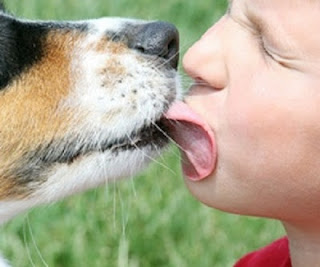
Most dog bites are to children, by the family dog or another dog known to the child. Hugs and kisses are a major cause of facial bites to children. Doggone Safe offers suggestions for safe ways to love your dog that the dog will appreciate.

Children (and adults too) often want to show love to dogs the way we show love to each other, through hugs and kisses. Dogs do not naturally understand this, or even enjoy it. Hugs and face-to-face contact can be very threatening to dogs. The dog may tolerate this for a while, but at some point may bite or snap to protect himself once he has exhausted all his means of more subtle warning. Some dogs do enjoy a hug from a special person, if it is on their terms and done with some extra scratching on the chest. Few, if any dogs enjoy hugs the way young children do this, which is to clasp around the neck and hang on. Parents, teach your children to avoid face-to-face contact with any dog (even their own dog) and to show love to the dog in ways other than hugging and kissing.

Doggone Safe offers the following suggestions for Valentine’s Day about how to love your dog in a way that the dog will appreciate.

Touch Your Dog
  • Invite your dog to come to you for attention. If your dog turns away or moves away, respect his wishes and leave him alone. Many dogs like to be near you, but not necessarily to be touched.
  • Scratch your dog on the side of the neck or on his chest.
  • Avoid hugs and kisses. People enjoy this, but most dogs don’t like hugs and kisses. They might tolerate it, but few actually enjoy it.
  • Invite your dog to sit with you while your read or watch TV. Let him lean on you or put his head on your lap on his terms.
  • Some dogs enjoy a scratch behind the ears. Most dogs don’t enjoy hands coming down on the top of their heads.
  • Pet your dog and then stop. If he tries to get you continue then you will know he likes it.

Play With Your Dog
  • Play games like fetch and hide and seek that do not involve chasing or rough play.
  • Take your dog for lots of walks.

Understand Your Dog
  • Learn to read dog body language so that you can understand what your dog is trying to tell you.
  • A happy dog pants and wags his tail loosely. He may wag all over.
  • An anxious dog might show a half moon of white in his eye or he may lick his lips or yawn. He may turn his head away or walk away. He wants to be left alone.
  • A dog that suddenly goes stiff and still is very dangerous and might be ready to bite.
  • A dog with his mouth closed and ears forward and/or with his tail held high is busy thinking about something and does not want to be bothered.

Reward Your Dog
  • Look for things your dog does right and give him a treat or praise, petting or play. Never hit or yell at your dog.
  • Give your dog a stuffed Kong or Chewber or other long lasting chew treat to enjoy while he lies on a mat or in a crate.
Visit our site to download this information as a handout

Read a previous blog post for more about why dogs dont like hugs and kisses
Read More..

How to Help Dogs with Compulsive Pica

By Langley Cornwell

We’ve all laughed over the old excuse “the dog ate my homework,” but even a phrase as innocent as that might not be funny to someone whose dog has compulsive pica.

Pica is characterized by a desire to consume substances that are non-nutritive, and it can affect not only dogs but also cats, as Julia covered in her article Does Your Cat Eat Strange Things? In fact, people can suffer from pica, too.

The first dog I had as an adult—a rescued black lab—had pica and I didn’t know it. When she was 10 years old she got very sick. My regular vet and an emergency vet had no idea what was wrong and, surprisingly, multiple x-rays revealed nothing. I lived in a college town with a well-respected veterinary school, so my vet took my dog to the school for examination. After more fluid-bags and pills than I could count, with my sweet baby barely hanging on, my vet said the only thing he could do was exploratory surgery.

I still credit that vet with saving Sadie’s life. Apparently she had an extreme case of pica. He had a quart-sized bag full of treasures that he found in my dog’s intestinal tract, including seashells, twist ties, rocks and the finger of a garden glove. He said her system had probably done a good job of passing these things in the past, but what got her in trouble this time was a pinecone with a piece of twine wrapped around it. The piece of twine was long and prohibited the pinecone from passing through.

Everyone on her healthcare team was amazed that none of these oddities showed up on her x-rays. The way the objects were located in the folds of her intestines masked their presence. She became a case study for the vet school, but more importantly, she recovered fully and went on to live seven more happy, healthy years. Of course, I watched her like a hawk after that, and made sure she stuck to eating only good stuff, like Canidae PURE dog food.

There are two key reasons why adult dogs eat non-food items: physical and behavioral. One physical reason is because a dog’s diet is lacking important nutrients. Another physical reason could be disease related, such as digestive disorders, parasitic infections or even poisoning. If your dog consumes inedible things, see your veterinarian first to rule out any physical causes for pica.

The behavioral reasons that a dog ingests non-nutritive items are usually because the dog is bored, anxious or seeking attention. If there is no medical reason your dog is eating weird things and his penchant for rocks and twigs is behavioral, then his condition is considered compulsive pica. The most common things dogs with compulsive pica eat are rocks, plastic bags, plastic containers, socks, gloves and wooden objects.

The American Society for the Prevention of Cruelty to Animals (ASPCA) reports that compulsive behavior isn’t something that just goes away. It requires special training to restrain this possibly dangerous activity. As in the case of my black lab, Pica can be a serious problem; items like rubber bands, socks, pinecones and twine can severely damage or block a dogs intestines.

Marthina McClay, a certified dog trainer in San Francisco, has helped plenty of rescue dogs with compulsive pica. Her therapy includes keeping hard chew toys on hand to keep her dogs busy, which keeps compulsive pica at bay. McClay also recommends being proactive with your pet. It’s a good idea to curb the behavior before it starts, by engaging your dog in activities that he finds fun and rewarding.

Another successful strategy involves spraying inedible objects with a deterrent designed specifically for this use. The ASPCA suggests that when first using a spray deterrent, apply a small amount to a piece of tissue and place it directly into your dog’s mouth to see if he finds the taste unpleasant. If so, he will begin to associate the smell with unfavorable things. Spray the deterrent on non-food objects that he usually eats, and reapply every day for two to four weeks to reinforce the avoidance behavior.

What about your pets? Do any of them eat things they shouldn’t?

Top photo by shoe the Linux Librarian
Bottom photo by ferrabone carlos

Read more articles by Langley Cornwell
Read More..

How a Unique Shelter is Helping Dogs


By Linda Cole

Most animal shelters are run by kind and responsible people who love the pets they care for in their facilities. Their main goal is finding the perfect owner for the pets. Without these caring individuals, dogs and cats would have no place to live while they wait for their forever home. However, some shelters are thinking outside the box to give pets a better environment to wait in.

Adopt-A-Dog animal shelter in Armonk, NY is manned by an army of dedicated and committed volunteers who help insure each pet living at the shelter receives all the love and attention they need. The animal shelter, sanctuary and rescue began in 1981, and sits on two acres of land. This shelter is unique in how its run, and proudly touts a 95 percent success rate in adoptions with practices that include educating potential pet owners about responsible pet ownership, how to properly care for pets, and making a lifetime commitment to adopted pets.

The shelter is run more like a sanctuary. Volunteers walk the dogs, take them for car rides, take them swimming, and play ball and other games with them in the exercise yard. During office hours, cats and dogs are allowed to wander in the office area where they get to spend time with the staff, sack out on a bed or watch TV. The office is in a house and has two people who live there, so someone is always available to tend to the needs of the pets. In order to give all of the dogs in the shelter access to the home, they are rotated on a daily basis.

The adoption process is taken slowly at the shelter. Their goal is to make sure a pet is a good match for someones lifestyle. Multiple home visits are made when there are children or other pets in a home. The first step for any shelter is to find someone to adopt a pet; making sure the pet remains in the home and isnt returned to the shelter can be a harder task to accomplish. This is where Adopt-A-Dog stands out from other shelters by using a program they incorporated to educate potential adopters, and taking time to make sure a pet fits into a potential owners lifestyle.

Visitors interested in seeing dogs meet them in the exercise area or home instead of viewing pets behind closed doors in the kennel area. In most shelters, as soon as someone enters, a chorus of barking dogs creates excitement and stress for both canines and humans. Being able to meet a dog in a more relaxed atmosphere keeps them calmer, and their true personality is more likely to shine. This reduces stress levels of everyone involved.

Adopt-A-Dog is also a rescue. According to its president, Allyson Halm, finding puppies in the Northeast part of the country can be difficult, and some people are looking specifically for puppies to adopt. To help reduce the number of pups in high kill shelters in the southern part of the country, volunteers drive to these shelters and transport puppies to Adopt-A-Dog where they have a better chance of finding a home. They also have taken in Beagles rescued from a lab that shut down in their area.

With millions of dogs and cats living in shelters, sometimes it takes thinking outside the box to increase their chances of finding a home. Volunteers are the backbone of animal shelters, doing what they can to help care for homeless pets. Without them, most shelters would have a much harder time tending to the needs of the pets in their care.

What Adopt-A-Dog has been able to accomplish is a good model for any shelter to follow. Unfortunately, its not always that easy to find enough funding to pay for expenses, let alone buy extra land that can be used for dogs to romp around in. Having the ability to let pets mingle with people working at the shelter, or going for walks, car rides and to the beach helps keep pets better socialized. Living in a home-like atmosphere is less stressful for them, too.

Even if you arent looking for a pet, visiting your local shelter to give pets much needed attention only takes a little bit of time, and most shelters appreciate an extra hand now and then. If you dont have time to volunteer at a shelter, I dont know any shelter that would turn down a donation. Making pet blankets, toys or beds is also a good way to help out. What a shelter pet needs more than anything else is the feeling that someone cares.

Photos by jeffreyw

Read more articles by Linda Cole
Read More..

Dog Training Initial Training how to train a dog


Dog training – Initial Training


Dogs are known as a faithful animal, most dog owners or dog breeders would love to have a calm and obedient a dog. It is said that a calm and an obedient dogs can be acheved by a good training program on how to train a dog. Moreover, these trained dogs will have lesser tussles with people and other dogs.

If it is a puppy, you will need much more patience and time to house train your puppy correctly.

If you want your puppy to use the bathroom outside, you have to observe to its need to use the bathroom. When he needs to go outside, it will help if you condition him by saying "outside" or "out" in a high-pitched tone of voice, just to get him used to the idea of where he is going. He will soon learn what you mean and that it is time to go to the bathroom. Never forget to reward him with a praise when he follows or obeys your command.
Whatever dog training we give the dogs, there are some basic trainings and commands a dog must understand and follow. There is will be great to have a good program on how to train a dog.
http://www.mdarma.com/dogs

Some of these commands are:

· Sit – Training your dog to sit on a command is a basic and an important part of any dog-training program.

· Stay – A well-trained dog should be able to remain where his or her owner commands. So stay is another very important command in dog training.

· Down – Lying down on command is more than just as necessary; it is a key factor of any successful dog-training program.

· No – the word “NO” is one word that all dogs must learn and obey. Training your dog to respond to this important word can save you a lot of unnecessary trouble.

A well-trained dog will respond well to all the owner’s command. This dog will not be confused or show displeasure. Therefore, to achieve this it is vital to embark on a good dog training program.

Also a well-trained dog will also be a very good companion to you and your family. Further, you will have fewer problems like getting into tussles with people or with other dogs. So a good dog training is necessary

Obedience training is essential and is a great way to satisfy some of the dog’s own needs, example, exercise, relationship with it’s owner or handler.

Obedience training should be on going sessions; apart from dog training, playtime should be part and parcel of the training. This will ensure that the dog does not become bored and it also reinforces the bond between the owner and the dog.

Have many happy years with your friend and companion. Cheers
P.S.
Dove Cresswell is Professional Hollywood North Dog Trainer. Find out her success secrets.

2006 (c) mdarma.com - All Rights Reserved Worldwide A Dog Training
Read More..

Dog Bite Prevention Challenge Report from Liberia

By Morris Darbo


DURATION: March 3, to May 23, 2014

SPONSOR: Doggone Safe Canada

DATE OF SUBMISSION:  May 26, 2014

NUMBER OF BENEFICIARIES: 13,949

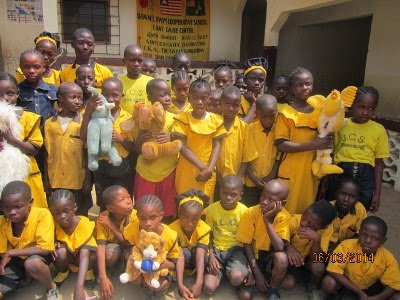
Doggone Safe Canada is a strong partner to the Liberia Animal Welfare & Conservation Society. Through materials and monetary support from Doggone Safe Canada, the Liberia Animal Welfare & Conservation Society has a sustainable dog bite prevention program established in 10 schools and an outreach program in additional 11 schools.

Dog bite prevention education is cardinal in rebuilding a country- Liberia where nearly 85% of the population lives below USD 1 dollar per day and the means of accessing anti- human rabies vaccine is nearly impossible. Dogs are part of the family circle but suffered as the result of rabies and the dog meat trade. When there is an outbreak of rabies, killing had been the only easier and common method used by community people. This method failed to eliminate or reduce the spread of the deadly and neglected disease. In partnership with Doggone Safe Canada, the Liberia Animal Welfare & Conservation Society introduced the dog bite prevention program in various communities and schools in Lofa County, Liberia targeting mainly children- the main victims of dog bite. The program is making an impressive improvement in the fight against the spread of rabies and the killing of dogs as the mean of curtailing the spread of rabies. Today, as the result of LAWCS intervention, dog bite incident is drastically reduced in the communities where LAWCS is working and people continue to live happily with their dogs.

LAWCS presently has 5 teachers volunteering as dog bite prevention presenters in their various schools and communities.

These volunteers were trained and empowered with dog bite prevention materials to conduct activities with their school children.

13,949 students were trained during the awareness program.

Below are the schools and number of students educated during the program:


NO.
NAME OF SCHOOL
LOCATION
# OF STUDENTS EDUCATED
1
Voinjama Central Academy
Voinjama
390
2
New Life Community Sch.
Voinjama
525
3
Kormah Sharparhood Day Care
Voinjama
621
4
Kids Connection Day Care
Voinjama
553
5
Japan Cooperative Day Care
Voinjama
434
6
Voinjama Public Sch.
Voinjama
988
7
William A. Brown
Voinjama
641
8
Ansuwaru Arabic & English Sch
Voinjama
378
9
Kintorma Community School
Voinjama
612
10
Selega Public School
Selega Town
315
11
Tenebu Public School
Tenebu Town
254
12
Lawalazu Public School
Lawalazu Town
632
13
Koryanmai Public School
Koryanmai Town
275
14
Kabata Public School
Kabata
419
15
Malamai Public School
Malamai
368
16
Read More..

The Science Surrounding Children Dogs Part 1 The Good


(source)
Hi Julie,

Oh my, but KAWAII is cute! I guess that’s kind of the point? I love that cute is good for us.

All this talk of cute, a website and some observations at home got me thinking this week.  

I recently saw this image posted on Facebook and I don’t mind admitting that it tugged at my emotions

Around the same day, I was watching my two year old toddler (an unpublished and independent kawaii survey reports the toddler is somewhat cute) interacting with my dogs (they are cute, no survey required).
(source)

The toddler is currently learning (slowly) that the world is not 100% about the toddler. This involves me frequently coaching the toddler’s interactions with other people and children (“yes it’s very sweet that you love your friend and that you’re giving them a big hug, but now you’ve actually crash-tackled them to the floor and they’re crying, it might be time to give them space”) and more recently in a similar way with the dogs.

These home observations and website images got me thinking about how important my pets, and in particular, my dogs, were to me while growing up. 


(source)
It got me wondering - why do so many of us have enduring psychological attachment to our childhood dogs
And do our childhood experiences stay with us as firmly held attitudes into adulthood? 

I plan to spend my next posts looking at some of the science surrounding children and dogs: the good, the bad and the ugly.


Why are dogs good for children?
The biophilia hypothesis suggests that people are instinctively attracted to animals and nature. It proposes that our relationship with them may contribute on an intimate biological level to our sense of fulfilment and identity. In our current busy lifestyles, often lived in industrialised city environments removed from ‘nature’ in its purest form, dogs and other companion animals offer opportunities for these ‘biophilic’ relationships. 

These nurturing relationships with animals are considered particularly important during early and middle childhood. Some research suggests that humans have a higher degree of attachment to dogs than we do to other companion animals; however, this may be a flaw in the way such studies have assessed attachment.

Dogs may promote respect and compassion for animals and nature by offering a child valuable opportunity to experience and learn about animals and the ‘facts of life’. Dogs can assist children to learn about responsibility. They can encourage trust, self-belief as well as caring attitudes and behaviour. They may promote exercise and healthy development, offer social support and provide companionship, security, comfort. Dogs can be an important source of fun and have demonstrated they can act as an outlet for childhood affection.

(source)
Research has shown that regular contact with two or more dogs in the first year of life is correlated with a reduced incidence of childhood allergies and asthma. The presence of a dog in a learning environment (such as a classroom) has been shown to contribute to children’s motivation and can speed task completion without compromising accuracy. Dogs in this context also aid emotional stability, improve children’s attitudes towards school and aid in the learning of respect, empathy and responsibility.

So it seems like there’s a lot to like about fostering a positive relationship between children and dogs. But what happens to children when such an important relationship ends? And do our childhood experiences stay with us into adulthood? 

Dont worry - I’ll be sure tell you more about that next time!

Mia

p.s. Dont forget to head over to our facebook page to keep track of the childhood dog photo challenge!

Further reading:

Serpell J. (1999). Animals in Childrens Lives, Society & Animals, 7 (2) 87-94. DOI: 10.1163/156853099X00013

OHaire M. (2010). Companion animals and human health: Benefits, challenges, and the road ahead, Journal of Veterinary Behavior: Clinical Applications and Research, 5 (5) 226-234. DOI: 10.1016/j.jveb.2010.02.002

Melson G.F. Child Development and the Human-Companion Animal Bond, American Behavioral Scientist, 47 (1) 31-39. DOI: 10.1177/0002764203255210

Blue G.F. (1986). The Value of Pets in Childrens Lives, Childhood Education, 63 (2) 85-90. DOI: 10.1080/00094056.1986.10521747

Zasloff R.L. (1996). Measuring attachment to companion animals: a dog is not a cat is not a bird, Applied Animal Behaviour Science, 47 (1-2) 43-48. DOI: 10.1016/0168-1591(95)01009-2

Holscher B., Frye C., Wichmann H.E. & Heinrich J. (2002). Exposure to pets and allergies in children, Pediatric Allergy and Immunology, 13 (5) 334-341. DOI: 10.1034/j.1399-3038.2002.02063.x

Anderson K.L. & Olson M.R. (2006). The value of a dog in a classroom of children with severe emotional disorders, Anthrozoos: A Multidisciplinary Journal of The Interactions of People & Animals, 19 (1) 35-49. DOI: 10.2752/089279306785593919

Gee N.R., Harris S.L. & Johnson K.L. (2007). The Role of Therapy Dogs in Speed and Accuracy to Complete Motor Skills Tasks for Preschool Children, Anthrozoos: A Multidisciplinary Journal of The Interactions of People & Animals, 20 (4) 375-386. DOI: 10.2752/089279307X245509

© Mia Cobb 2012
Read More..

How Some Popular Dog Breeds Got Their Name

Cocker Spaniel
By Linda Cole

Deciding on the perfect name for a new puppy or dog isnt always easy to do. You want to pick one that fits his personality and is easy to learn. Now imagine coming up with a name for a new dog breed. The history of dog breeds is an interesting story. The history behind naming some of our popular dog breeds is also an intriguing tale.

Cocker Spaniel

Spaniels date back to the 14th century; they evolved over the years with some working on land and others working as water retrievers. These dogs were highly prized by English hunters for their outstanding ability to flush out and retrieve a large, short legged and bulky wading bird called a woodcock. This nocturnal bird spends most of the day hiding in dense cover. People started calling the dog “cocker,” and the name caught on.

Labrador Retriever

Newfoundland is the land of the Labrador Retriever, not Labrador. Fishermen around the Canadian province used a small water dog that was bred with Newfoundland dogs to produce a first-class swimmer called the St. Johns Water Dog, the ancestor of the Labrador. The breed had webbed feet and was used to retrieve fishermens nets from the icy waters and bring them back to shore. In the early 1800s, the Earl of Malmesbury saw one of the dogs in action and imported it to England. He trained his dogs to retrieve ducks and called them “Labrador dogs.” Even though the Earl was confused about which province his dogs came from, the name stuck as the dog became more popular.

Cairn Terrier
Cairn Terrier

This little dog was developed on the Isle of Skye, in Scotland. Farmers wanted a small, feisty dog with lots of courage, determination, intelligence and the ability to go to ground when necessary after prey. The Cairn Terrier was bred to hunt badger, otter, fox, rabbit and other vermin. They were especially good at digging prey out from under cairns, which are mounds of man-made piles of stone used in the Scottish Highlands as grave site memorials and boundary markers. People started calling the dogs Cairn, and thats where the breed name came from.

Great Dane

This is one of the tallest dog breeds on Earth, affectionately referred to as the “Apollo of all breeds.” The Great Dane was developed in Germany and was likely created from mastiff type dogs, the Greyhound and the Irish Wolfhound. It was the French who named this breed, mistaking Denmark as the country of origin. In Germany, the dog is known as the Deutsche Dogge. A proper diet is very important for Great Danes, and its essential to feed them a high quality food made especially for big dogs, such as the new CANIDAE Large Breed Formula.

Bouvier Des Flandres

This breed was developed in Flanders, which is located in northern Belgium, as an all-around farm dog to drive cattle, herd sheep, pull carts and act as a watchdog. French farmers were impressed with the working spirit of the dog and the breed name is French, meaning “Cow herder of Flanders.”

Beagle

This little dog has a distinct, resonant baying voice, which was how hunters were able to follow a pack of Beagles as they eagerly chased after prey. According to the Oxford English dictionary, the beagle word was first used in English writings in 1475. Where the word came from, however, is still a mystery. Beagle could have come from a French word “begueule” that means open throat, or a French, Old English or Celtic word “beag” which means little. Another possibility is a French word “beugler” which means to bellow, or a German word, “begele” which means to scold.

Dachshund puppy
Dachshund

The Dachshund is an interesting breed, not only in looks, but in the job this small dog was bred to do. Dont let those short legs and long body fool you. When it comes to rooting out prey from underground, this breed is as feisty, determined, smart and capable as any dog. The breed was created in the early 1600s to work with hunters. Their job was to dig into badger holes and engage in combat with them. The dog was so good at doing his job, the breed was named in honor of his fearless spirit. Dachshund is a German word that means “badger dog.”

Weimaraner

Nicknamed the “Grey Ghost” because of his unique coat color, this breed was developed in the early 1800s at the Weimar court in Germany. Noblemen wanted a courageous hunting dog that was smart and fast, with plenty of stamina and good scenting ability to take on bear, wolves and deer. The breed name comes from the court he was developed in.

Cocker Spaniel photo by Jeremy McWilliams
Cairn Terrier photo by robinsend
Dachshund photo by Bill Kuffrey

Read more articles by Linda Cole
Read More..