Tampilkan postingan dengan label your. Tampilkan semua postingan

Incorporating A Vibrating Dog Collar in Your Dog Training


Introducing The Collar To The Dog

In preparation for training your dog with your new underground dog fence, you’ll need to work with a vibrating dog-training collar. This collar teaches your pup to notice when she’s coming close to the boundaries of the fence and to stop BEFOREshe crosses that line.

 
Introducing The Collar To The Dog

The first thing you’ll want to do is get your dog used to wearing her new vibrating dog collar. Because of the technology involved, these collars tend to be a tiny bit heavier and bulkier than regular dog collars, and you want your dog to feel comfortable wearing hers.

Adjust the collar so that the prongs are just resting on her skin and not burrowing into her neck. You want to make it tight enough so that she feels the vibrations immediately, but yet not so loose that she can pull it over her head. Usually, being able to slip 1 or 2 fingers between the collar and your dog’s neck works best.

Place the vibrating dog collar on her neck and give her a treat. Leave the collar on for 10 to 15 minutes – just long enough for her to feel comfortable – then remove it. Do this several times during the first day of training, always remembering to treat her every time you put on the collar.

During the second training day, extend your training intervals to 15 to 30 minutes, again treating as you place the collar on your pup.

By the third day, you should be able to start leaving the collar on for longer periods of time. In any case, we recommend that you NEVER leave the collar on for longer than 12 hours.

Resist the urge during the collar training to try the vibrating sensation with your dog. You want her to be perfectly comfortable wearing the collar, and starting the vibration training too early can be a distraction.


Introducing The Vibration

Once your pup is fully comfortable wearing her vibrating dog-training collar, you can begin introducing the sensation of the vibrations to her. You’ll need to have treats and her clicker available to get her attention – she needs to learn that the buzzing on her neck is coming from you and that you won’t harm her.

Place her on her leash and move her close to your body. Set your remote control on its lowest setting, and, press it. Immediately use the clicker and give your dog a treat without waiting for her to look at you. Perform this step 10 times in a row – press and treat, press and treat – and then quit.

Keep these initial training sessions very short, 5 to 10 minutes only. Leave the vibrating dog collar on your pooch and repeat these sessions 2 to 3 times during the day. You’re wanting her to get used the vibrations and know they are coming from you.

Continue to train in this manner for several days to a week, keeping her close to you. If she starts to look at you when you press the remote, give her extra treats and lavish praise. She’s telling you she’s ready to move on to the “paging” part of her training.


Training to Respond When Paged

When she begins to look at you during a vibration, you know your dog is starting to associate the feeling on her neck with you. That means she is not afraid of the feeling, but is looking to you for guidance as to what to do next. In this training step, you are going to require her to look at you.

As before, keep her close to you during these sessions and make sure this time will be free of distractions.

Page her with a quick press of the remote control, and when she looks at you, IMMEDIATELYtreat her. If she doesnt look at you, move your hand with the treats down in front of her nose so that she sees and smells it, and then move the treat up to your face so that she looks at you. Give her the treat when you make eye contact. Your goal is to have her consistently look at you every time she’s paged. A dog trained in this fashion, will come find you if you’re out of sight range.

As she begins to make consistent eye contact, you can start to move away from her. Start by letting her off the leash, but keep her in the same room with you. Allow her to move about the room and page her when she’s distracted. Give her a treat every time you page and she looks up for you.

Once she is performing this feat every single time, you can move outdoors for training. Please note that if she’s not responding as you want, you may have pushed her too fast in her training and you need to back up a step.

Moving outdoors typically means starting this training over from the beginning, so use your leash as a control, keep your dog close to you, and begin introducing the vibrating collar to her as you did in the house…only this time, you’ll have all those outside noises and smells to deal with. Take your time with this part of her training.

Remember, kindness, patience, and consistency will teach better than harsh words or impatient hands.

How A Vibrating Dog Collar Works

How A Vibrating Dog Collar Works

The buzzing of your dog’s training collar works to get her attention focused on you. It tells her that you want her to look at you and that you are going to give her a command to do something. If you train her properly and consistently, you can use her vibrating collar to tell her to come when called, to stay in sight of you in the yard, to not eat that piece of trash on the ground, and to not follow the neighbor’s dog as he walks down the street in front of your house. It’s a constant reminder to your dog of those boundaries that you work hard to instill in her.

This type of training works especially well with deaf dogs or older canines that may be a little hard of hearing. A deaf dog can’t hear you to look around when you call and won’t hear a car horn or the squeal of brakes. Using a vibrating dog collar on a deaf dog is the equivalent of teaching her how to listen for your voice and pay attention to what you want. Additionally, you use the same training methods for a deaf dog as you would a dog with correct hearing.

Many modern collars come with soft, rubber prongs that vibrate against your dog’s skin instead of the old-fashioned metal ones. You can adjust them for strength and range. For example, if you have a more dominant dog, you may need to make the warning vibration a little stronger than you would for a more submissive pooch. You should find a collar that best fits your dog – one that is neither too small nor too big – is waterproof, shows options for vibration and tone, has a range that fits your yard, and has a long battery life.

You can use your vibrating dog-training collar alone, or with the static correction collar available through most underground dog containment systems. Whichever you choose, remember that training of any dog works best when patience, kindness and consistency factor into the training module.


Guest Article by Sarah Stoltzfus
This article is sponsored by Havahart Wireless, please feel free to visit their website, http://www.havahartwireless.com/
Read More..

Tip of the Day Get off Your Bike if a Dog Chases You

Making it Worse?

We are asked this question quite frequently: What should I do if a dog chases me or my kids while we are riding our bikes? Most adults assume that if they have good speed they can outride a dog. A cyclist in our area was badly injured when dog ran down a farm lane barking at him. He sped up to try to get away from the dog, lost control on the gravel shoulder and fell off his bike. The dog sniffed him and walked away.

Avoid a Chase

Kids on bikes should never assume that they can ride faster than a dog can run, because most likely they cant. If confronted by a dog while riding a bike, the best thing to do is to stop and if there is time get off the bike so that the bike is between you and the dog.

The main motivation for the dog is the chase and when there is nothing to chase the dog will lose interest. If the dog does catch a moving cyclist this could result in serious injuries both from the fall and from the dog, whose natural instinct is to bite and shake prey that it has caught. It is best to defuse the situation by removing the dogs motivation to chase.

Some people have been told that they should get off the bike, but keep moving so as to keep the bike between them and the dog. This movement will just keep the dog interested longer. It is best to stand still even if the dog circles around the bike to investigate and even if the dog is barking and acting aggressively.

A Note to Cyclists on Busy Trails

If you see a person walking a dog on a leash ahead of you, make some noise to warn the dog handler so that they can move over to give you room to pass. They will be more than happy to do this. If there is only a narrow passing area, please slow down, or even better, get off your bike and walk past (with your bike between you and the dog, just in case). If the dog handler looks like they are having trouble with the dog, or they have multiple dogs, you are advised to walk your bike past. Blasting past pedestrians with a few inches to spare is not cool (dog or no dog) and could result in a surprised dog pulling loose and chasing you. In some mixed use trails, there could be loose dogs, be ready to stop if the dog looks like it might give chase. You may be fast, but a large breed dog in peak condition is faster.

Here is a video that shows the wrong thing to do if a dog chases you while you are riding a bike. Notice that when the cyclist moves the bike to try to keep the dog on the other side of it, this just makes the dog more interested in him. As soon as he stops moving the dog loses interest.


Here is a video that shows the right thing to do. Notice how much less interested the dog is when the cyclist stands still, compared to the previous video, when he kept moving around.


Read More..

Use Some Of Those Dog Training Skills To Help Teach Your Dog To Sit

by Chris Simpson


Anyone who has experienced the thrill of teaching a dog new tricks knows exactly what it takes to get their dog to listen to their commands and it usually does work too. It is very exciting when you finally start to see the results from using your dog training techniques on your dog and it will motivate you to continue working with them to teach them even more. Instead of having a dog that just sits around doing nothing, you could have a dog that is totally fit to be involved in dog shows or anything else interesting such as that. One of the easiest commands to teach a dog would have to be, to sit. Teaching your dog to sit should come pretty easy, if you are consistent and praise them every time that they do listen to you. Normally within just a week of working with them, you should have a dog that listens to the sit command and you will just be tickled if this has never happened for you before now. Dog training can be a great deal of fun, both for the owner and their dog, if it is done correctly.

There are several different ways that you can go about teaching your dog how to sit whenever you tell him to and it is important for you to try a few different techniques with him and once you are seeing that he is listening to you finally, then you will know which technique to stick with. Some people can teach their dogs to sit just by saying it over and over and gently pushing down on their backside and once they do it then they are given a treat or a great deal of praise. Others find that taking something that the dog loves and kind of moving it slowly around their head and behind them, saying the word sit to them in a stern tone each time, works for them the best. It just depends on your preferences and what your dog responds to the best. Finding what works for you and your dog is what is important, do not let anyone else try and tell you how you should be doing it, if what you are doing does work. Advice is usually a good thing but for some reason there are those people that believe that they know what is best for you and your dog and sometimes that can really be annoying, so do what works for you ok.

Whenever you do decide to begin dog training your dog to teach them to sit for you, just remember to be patient with them because sometimes certain dogs might take a little bit longer to catch on than others would. Your dog can be your best little friend and when you do start seeing results from using your dog training techniques, you will just be totally excited and will be even more excited about showing it off to all of your friends and family members, so have fun with it!

Dog Training Resources

Kingdom Of Pets
Dog obedience training by sitstayfetch. Learn how to obedience train your dog effectively to stop your dogs behavior problems.

Dog Food Secrets
Increase the lifespan of your dog by up to 134%.

Dove Cresswells Puppy and Dog Training Online
Dog Training Online offers dog training, puppy training, dog obedience training, puppy house training and dog house training, puppy potty training, crate training, dog potty training, crate training a puppy.


About The Author:

You DONT have to struggle with your dogs behavior issues any longer. Get the facts and eliminate your dogs behavior problems now. Grab your free 10 lesson report at http://infoblink.com/SitStayFetch.


Tags: dog, dogs, dog training, dog-training, dogtraining, dog obedience training, dog training tips, dog beds, dog toys, dog collars, dog food, dog care, dog health, pets, puppy, puppies, puppy training, puppy-training, pet, dog clothes, animal

Read More..

No Dogs in the Babys Room!

By Hannah Branigan MS, CPDT-KA, KPA CTP


To keep everyone safe, we are establishing safe spaces for both the dogs and the baby. The dogs wont be allowed in the babys room, and the baby wont be allowed in the dog room. This will give the baby a safe, dog-free place to play and I wont have to worry about baby toys becoming dog toys.

We will use baby gates to help control access to parts of the house, especially while the baby is young, but its a good idea to have some training in place as well.

I want waiting outside the room to be easy and stress-free for the dogs, and I really want to avoid using any aversives on the dogs with the baby around, because I dont want any negative associations to form. So Im using clicker training and positive reinforcement to teach them to stay in the hall and not follow me in. Im not using a cue, because I want the behavior to be automatic, so I dont have to remember to say wait every time (and because I know for sure that my husband will forget).


More about Hannah and Wonderpups Training and Behavior


Obedience FUNdamentals DVD
Read More..

Traveling with Your Dog

By Lisa Mason

Traveling with your dog is different from traveling with cats. If you have an upcoming trip and you want to take your dog along for the ride, there are a few things you should know first and that you should prepare for. Let’s explore this topic for a bit to help you prepare.

Should You Bring Him or Leave Him?

One of the first questions to ask yourself when traveling with your dog is if you should even bring him along or not. To find your answer, consider where you are going and for how long, what method of travel you will take, if your dog has traveled before and if he likes traveling.

If you consider leaving him instead, how will he be cared for in your absence? Do you have a dog sitter you can trust or will you be using a kennel service? Have you researched the kennel and the conditions your dog will be in?

If you plan on taking your dog, will your destination be dog friendly? If your dog has traveled before, how did he react? Are you prepared to handle any behavior issues that may arise while traveling to unfamiliar territory with your dog?

Driving with Your Dog

If you and your dog both like traveling by car, a road trip can be an excellent way to spend time together. Try to plan your route ahead of time with dog-friendly stops along the way (hotels that allow pets, dog parks, dog-friendly rest stops, etc.) and be sure to pack the car with your dog’s safety and comfort in mind as well.

Know that you are probably going to have to make more stops than you usually would. Give your dog plenty of potty breaks and chances to walk around and stretch if this will be a long car ride. Be sure to pack a secure leash and be sure he has his collar, tags and identification on. You don’t want him to go missing in an unfamiliar area.

Flying with Your Dog

If you will be flying with pets, there are some extra precautions and planning you should take. You need to book with airlines that allow pet travel and you will want to fully investigate the conditions and how your dog will be transported. Currently, public airlines have pets travel in the cargo area, not with the passengers, and you will want to ensure your pet is properly cared for.

Flying your dog can also be very stressful for your pet so it’s not recommended for short trips or situations where you could just leave him at home. In some situations, however, you may have no other choice so you want to make sure you fly as safely as possible with him.

Packing for Your Dog

To help make the trip more relaxed and comfortable for both of you, it’s important to bring along some things that are familiar to your dog. Don’t forget his CANIDAE dog food, because you might not be able to find a place to buy it along the way. Bring dishes for food and water and some bottled water in case you stop somewhere that does not have access to water for filling his bowl.

CANIDAE TidNips™ and Snap-Bits™ treats are great for packing along for the ride and when you get there. If your dog is in an unfamiliar place, you may need to resort to old training methods. It’s also helpful to have something familiar and tasty for your dog so she feels comfortable and safe.

If your dog has a favorite bed, blanket or toy, be sure to pack this and keep it close to her while traveling and once you arrive.

The truth is that sometimes it’s just not best to bring your dog along. A quick business trip where you will spend most of your time in meetings and your dog will spend most of her time alone in the hotel room is probably not the time to bring her along. If you could leave your dog with a trusted friend or family member instead, she’s sure to have a better time.

But family vacations, extended travels or just a long car drive to a neighboring city might be great times to travel with your dog, especially if she has shown she likes to travel. So pack properly, plan ahead and bring your canine friend along for the ride!

Top photo by Kirbie the Dorkie
Bottom photo by kdnewton  

Read more articles by Lisa Mason
Read More..

New Zealand farm working dogs 11 The Law and your Dog


 By Dr Clive Dalton

The law
Ownership of a working dog carries with it some clearly-defined legal responsibilities under current legislation.  Your main responsibilities are to:

·      Make sure a dog is registered and that the certificate is in a secure place and readily available.
·      Have collars, discs, or tags for all dogs and make sure they wear them at all times.
·      Notify any change of address, either permanent or temporary if you move, or if you sell the dog.
·      Ensure discs or labels are not tampered with.
·      Present all dogs for treatment for hydatids as required.
·      Keep dogs under control at all times.
·      Make certain dogs are well housed.
·      Ensure dogs are well fed.

The dog is also covered under legislation that states that an animal must be provided with adequate food, water, and shelter, and given adequate exercise.  Ill-treating your dog or cruelly ill-treating it is an offence under the law.

Registration
All dogs must be registered annually with a "territorial authority" such as a borough council, county council, district council or city council, or a hydatids and dog control authority acting on behalf of these.  All farm dogs over 3 months of age must be registered. 

The fees vary with each territorial authority and some charge lower fees for working dogs and neutered dogs.  You are not allowed to shop round for the cheapest authority - you register your dog where you live! 

Proof of ownership, other than the owners certificate is the label or disc that the dog should wear at all times.  This shows:
·      The territorial authority where the dog is registered.
·      Year of registration, also shown by the colour of the tag.
·      The dogs ownership number.

New collars can be purchased from the authority.  Old ones can be used provided the current label or tag is firmly attached.  If a collar or disc is lost, you can apply to the authority for a replacement and youll have to pay for it. 

Remember that if a dog is found without a collar, it will be "deemed as unregistered" until you can prove the contrary.

Selling a dog
When selling a dog, if its under 3 months of age, there is no obligation to register it before sale.  If you sell the dog when over 3 months of age you must notify the territorial authority in writing within 14 days that the dog has been sold.  Theres no fee charged for change of ownership. 

When selling a dog you must:
·      Give the new owner a current treatment certificate showing that the dog has been treated for hydatids in the last 42 days.
·      Provide the authority with the name and address of the new owner and the address where the dog in normally kept.

Buying a dog
If you buy a dog under 3 months of age, the vendor doesnt have to produce a hydatids treatment certificate.  As a new owner you must:

·      Register the dog before its 3 months old
·      If over 3 months old, get the original owner to provide a certificate to show the dog has been treated for hydatids in the last 42 days.
·      Notify the territorial authority in writing within 14 days of purchase the name of the authority the dog came from.

Moving with your dog
If you move within the same territorial authority, then notify the territorial authority of your address change, in writing, within 14 days .

If you move to a new authority, notify them in writing within 6 weeks of moving where the dog came from.   Then inform the authority you have just left that youve moved, and give them the new address where the dog is kept.  It would pay to do this in writing too.

These two situations are important for stockpersons doing casual work and for those having dogs on trial before purchase.  Its also important for people traveling outside their district to always carry their dogs hydatids treatment certificate. It should show that treatment has been carried out within the last 42 days.

Control of dogs
This part of the act is important for farm dogs.  It covers the fact that dogs must be kept under control at all times.  If a dog is considered to be out of control, then a number of things can happen.  Important examples are:

·      A Dog Control Officer can impound it.
·      The occupier of the land on which the dog is found can impound it.
·      If the dog is in a public place from which dogs are prohibited, anyone can seize the dog, or arrange for it to be seized and impounded.
·      Anyone can impound a dog (or dogs) if they consider it to be causing distress, annoyance, and damage to property other than the owners.
The occupier of land where a dog causes a nuisance can either return the dog to its owner or hand it over to a Dog Control Officer or Dog Ranger.

Barking dogs
If a barking dog has been reported to a Dog Control Officer or Dog Ranger, and there are reasonable grounds to believe that its barking constitutes a nuisance, an officer or ranger can:

·      Enter the land or premises (other than a dwelling house) at any reasonable time to inspect the conditions under which the dog is kept.

·      Give the owner a written notice requiring him/her to abate the nuisance or remove the dog.  The owner may object within 7 days.

Disqualification from ownership
A territorial authority may apply to a court to disqualify a person from owning a dog if convicted of a range of listed offences in the legislation.

Dogs attacking people or livestock or rushing at vehicles
Anyone who sees a dog attack stock or poultry, or who is themselves attacked, can either seize the dog or destroy it immediately.  Note that police dogs are exempt!  Once you have seized the dog, you must hand it over to its owner or to a Dog Control Officer or Ranger.

If you cannot catch the dog, you may call a police officer who can shoot it.  It need not be caught in the act for this to happen, but the office must have reasonable ground for believing the attacks took place.

The police officer is empowered to destroy the dog only if he/she is unable to seize it.

Dangerous dogs at large
It is an offence for owners of a dangerous dog to have it at large without a suitable muzzle.  A "dangerous dog" is one that has attacked people, stock, poultry or property of any kind.  If you keep it in a vehicle or cage, then this is acceptable.

Destroying dangerous dogs
A court can order the owner of a dangerous dog either to keep it under proper restraint or make an order for it to be destroyed.

Seizure or destruction of a dog found at large among livestock
If a dog is found running at large among livestock or poultry, the owner may either seize a dog or destroy it.  Owners can also request their "agent", a constable, a Dog Control Officer or Ranger to do this on their behalf.

If seized the dog must be returned to its owner or delivered into the custody of a Dog Control Officer or Ranger.

Dogs seen worrying livestock
If a dog has been seen worrying livestock of poultry, the owner may make a complaint to the District Court.  The court as a result may make an order of restraint or an order to destroy the dog.

Liability of the owner for damage
The owner of a dog is liable for all damage done by the animal.

Dog control bylaws
A territorial authority can make bylaws for a range of purposes.  Those of interest to farm dog owners are:

·      Prescribing minimum standards for accommodation of dogs.
·      Limiting the number of dogs kept on land or premises.
·      Requiring dogs to be tied up during the hours of darkness.

5 Helpuful Uses For Teaching Your Dog Place


I wrote a Bubblews post the other day on 5 Helpful Uses for Teaching Your Dog Place. I wanted to share it with you guys! Place can be an extremely handy thing for your dog to know and is so easy to teach. In the picture, you see our dogs; Crash (Weimaraner) and Blackjack (Black Dog) on place at the lake! A nice way to keep your dog out of trouble.


Take a look at our Bubblews post; 5 Helpful Uses for Teaching Your Dog Place


Amy @ Talented K9 Dog Training
talentedk9dogtraining@gmail.com
Talented K9 Website
Facebook Page
YouTube Channel

Read More..

January is Train Your Dog Month Free Webinars and Chats

National Train Your Dog Month is an Association of Pet Dog Trainers (APDT) annual campaign, and 2012’s event will be better than ever! Join us for FREE educational webinars and live chats with professionals!

Each year, hundreds of thousands of pets are turned into animal shelters because their owners couldn’t find a reliable resource to help them with their pets’ behavior problems. Sadly, the end result is often euthanasia at the shelter rather than rehoming the pet. In response, the APDT has designated the month of January as National Train Your Dog Month to bring awareness to the importance of socialization and training for all pets! January was selected as the perfect month because so many animals are adopted and brought home during the winter holidays. We hope to help families and their pets start the New Year off on the right paw with information on the behavior needs and training of their pets.

To help the pet-loving public, as well as professionals in the animal shelter and others in the pet care industry, the APDT has recorded free educational webinars featuring many well-known pet training and behavior professionals and experts. These webinars will be available starting in January through the Train Your Dog Month event website and are completely free. APDT has also filled the month of January with a variety of “live” Facebook “chats” where anyone can “talk” in real time with professional training and behavior consultants, on a variety of topics pertaining to the training and care of dogs, cats and even rabbits! Anyone with any behavior and training questions can join the chats to learn more about their chosen pet. Visit the event website, www.trainyourdogmonth.com, for full schedule information, professional bios, as well as fun downloadable resources on training and behavior.

Free Webinar: Dog Safety - What to Teach Your Kids with Joan Orr
Free Webinar: Setting Dog and Baby Up for Success with Jennifer Shryock

Doggone Safe and the APDT believes that a better understanding of our pets’ behavior can lead to happier, healthier and harmonious households for humans and companion animals. Top trainer Ken Ramirez says:
?"Training is not a luxury, but a key component to good animal care. Everyone who has a pet should understand that basic fact. Training is a way to enhance the quality of life for our pets. It is far more than just teaching a dog to do a cute trick. Training is about teaching a dog (or any animal) how to live in our world safely."
Read a fascinating interview with Ken about advanced training concepts.

Have Fun! Train your dog!
Read More..

How to Find the Right Dog for Your Lifestyle

By Linda Cole

Finding the right dog isnt always easy. There are nearly 500 dog breeds recognized by kennel clubs throughout the world. With so many choices, purebred and mixed, how do you find the right dog for your lifestyle? Basically, its a combination of common sense, doing your homework on breeds, and understanding that some dogs can be harder to handle.

Purebred or Mixed?

You want to feel comfortable around your dog. The first thing to consider is why you want a dog. Secondly, do you want a purebred or a mixed breed? If cost is a consideration, visit your local shelter or rescue groups for purebreds and mixed breeds, or contact breed specific rescues for purebred dogs. Buying from a responsible breeder is more expensive, but you will learn about your pups history and health, see his parents, and have someone happy to answer all of your questions. They will have questions for you, as well.

Energy Level

Do you want a dog that watches you toss a ball and then gives you a look that says, “Youre the one who threw it over there. Im not going to get it,” one who is eager and ready for a five mile run, or something in between? Regardless of size or breed, all dogs need some daily exercise and some need more than others. How much exercise are you willing to give your dog each day? A bored dog can be destructive if he isnt given an outlet to get rid of pent up energy. A daily walk adds stimulation to your dogs mind. We would get bored doing the same thing every day, and so do dogs that never get outside their enclosed area.

Living Space

Size can matter when it comes to space inside and outside your home, and so does the location of your home. Do you live in an apartment, small house, large house, the suburbs, a small town, downtown, or in a rural area? Is there a spacious backyard or one just large enough to justify owning a lawnmower? Is there a fenced-in secure area? How close are your neighbors?

Size of the Dog 

If you have an apartment that reminds you of a closest, a Great Dane might not be your best choice, although as long as you provide him with plenty of exercise on a daily basis, it might work out if you dont mind having furniture rearranged when you get home. Your biggest consideration when it comes to size is can you control the dog and will he be comfortable in the space youre asking him to live in? Getting the right sized dog to fit your comfort level makes it easier for you to control him and keep him safe if you have a family that likes to rough-house. Size also matters when it comes to mealtime. A premium quality dog food like CANIDAE Life Stages is less expensive in the long run than lower quality brands because it doesnt take as much food to fill him up.

Coat Type

Some breeds require more time spent on grooming than others. A dogs coat can be wiry, long, short and with an undercoat, or single coat. Some coats need to be trimmed and some dont, and some breeds shed more than others.

Time for Training

All dogs should be taught basic commands, which gives you better control and helps you keep him safe. They all need to be socialized with other pets, people of all ages, and in different environments. Its not difficult to train a dog if you work with him on a daily basis until he learns what you are teaching and then reinforce it so he remembers. You might be surprised how quickly most dogs learn commands when youre consistent, dedicated, patient and respectful. Five or ten minutes a day is all you need. Its important to be able to handle your pet. Not all dogs are easy to control, and certain breeds should not be owned by someone who doesnt understand how powerful and strong willed they are.

Other People in the Home 

Do you have young children or an elderly person living with you? No matter what kind of dog you decide on, young kids and dogs should never be left together unsupervised. Some dogs may not get along with older people who dont always interact well with them. Its important to make sure everyone in the home is comfortable with the size, breed, temperament and energy level of a dog before you bring him home.

Choose a dog wisely, for the right reason, and for your specific lifestyle. Its worth the time and effort when your perfect pet snuggles next to you on the couch, happy you picked him.

Top photo by Sadie Hart
Bottom photo by Jon Hurd

Read more articles by Linda Cole
Read More..

How to Teach Your Dog to Play Red Light Green Light

By Linda Cole

Training is an essential part of a dogs education. Teaching basic commands helps you control your pet and keep him safe. Teaching your dog isnt difficult if you are committed, remain patient and stay consistent. Plus, if you make it into a game, its more fun all the way around. Dogs and kids love to play games, and by teaching both of them how to play Red Light, Green Light, youre showing them how to behave around each other.

One major lesson children can learn from playing the Red Light, Green Light game is how to react to a dog that may be chasing them or jumping up on them during play. It doesnt take long for a dog to become so excited during play that he ends up nipping at the kids when theyre running around or jumping up on them, all the while barking his love of the game hes playing. Unfortunately, thats when its time to slow the play down before someone gets hurt. The dog isnt being bad; hes just gotten too hyper to continue playing. Another good lesson for kids to learn is what to do when they meet an unfamiliar dog. By playing this game, kids are able to see firsthand how stopping and standing still can make a difference.

Before starting a game of Red light, Green light, your dog should know how to sit on command. But if he still needs to work on that, you can always practice with him during the game. Put a nice supply of CANIDAE dog treats in your pocket and be ready to reward him for sitting during the “freeze frame” part of the game.

The rules of the game are simple and easy for both kids and dogs to learn, but most kids probably already know how to play. Everyone starts out walking or running around the yard. A judge, which should be you to start with, suddenly shouts out “red light.” Everyone stops and freezes in position and the dog should sit down. To help him learn what you want him to do, run or walk with him on leash. As soon as you call out red light, stop and have him sit. Reward him with a treat immediately when he complies. Dont let him move until you yell “green light.” Thats the signal to release everyone and the game continues.

If running kids proves too tempting for your dog and he isnt getting the idea, start off slow and have everyone walk. Call out “red light” in shorter intervals to keep control of the game. You can let one of the kids hold the leash and give rewards or you can do it yourself until your dog gets what you want him to do. Call out “red light” and stand still. Give your pet the sit command or wait for him to sit on his own. Dont release everyone until he sits. This is also a good way to teach him to wait. Keep him sitting until you yell “green light.” If you want him to learn how to sit and wait and want to use a better word when letting him know he can move, instead of calling out “green light” use “Go.”

This is a good game to help your dog learn how to control his excitement, especially around kids, while giving him a way to work off some energy. And it helps kids see how their behavior influences how their dog acts around them. Kids learn how to control and calm down an excited dog. Playing a game is a good way to get your kids involved in dog training and makes the process more enjoyable. Kids and dogs learn better and faster when they are having fun.

Mix up the length of time between your freeze frame and walking or running. If at any time during the game your dog starts to get too excited, nips at the kids, or isnt paying attention to you, its time to end the game. Its a good idea when playing this game with young kids to leave a leash on your dog so you can quickly get him under control if needed.

Children and dogs of any age can learn how to play Red Light, Green Light, and playing is one of the best ways to bond with a pet. You might be surprised by what your kid and your dog can learn from a simple childhood game.

Top photo by Andy Carter
Bottom photo by Sheila Sund

Read more articles by Linda Cole
Read More..

Tip of the Day Talk to Your Child After a Dog Bite It is NOT the Childs Fault

It is Child Mental Health Week and Dog Bite Prevention Week, so we are starting off our series of daily tips on the topic of emotional support for children after a dog bite.

Children who are bitten by a dog often experience significant stress that can persist long after the incident. The may feel betrayed if their own dog bit them, guilt if the dog is put down or sent away, anxiety due to the distress that this has caused their parents and fear of some or all dogs. Signs that your child is experiencing emotional distress or even post traumatic stress include, nightmares, social withdrawal, fear of going outside or other changes in behavior that surface after the incident.

Please remember that no matter what, it is NOT YOUR CHILDS FAULT that they were bitten by a dog. If the dog was supervised and secure the child would not have encountered the dog. Be sure to reassure your child that it is not his fault and avoid using language that might add to a childs guilt ("you should have..." or "why didnt you..." or "if only you had..." or "I told you not to..."). In many cases neither the child nor the supervising adult, nor the dog owner realized that there was a danger of a bite because the dog was a generally friendly family pet. In other cases the child encountered a strange dog running loose, a situation that should have been prevented by the dog owner. Learning about dog body language and how to read the signs from a dog will help prevent these types of bites in the future and will be empowering for the child. We do not blame the victim, but we do encourage education for children just as we would for any hazard. The more they know, the less likely they are to be hurt.

Child psychiatrist Dr. R. Larry Schmitt recommends that parents repeatedly encourage and allow their child to talk about the incident and their feelings.

Read an article by Dr. Schmitt about why it is important to keep encouraging your child to talk about the bite or attack and more importantly to listen to your child.

Find out more and read answers by Dr. Schmitt to frequently asked questions from parents.

Dr. Schmitt will be giving a lecture for parents about how to help a child after a dog bite. This will be held at the San Diego Humane Society on May 22 from 6:30-8:00 PM. If your child has been bitten, be sure to attend so that you know how to prevent lasting emotional effects.

Click here for more information or to register. 
Help us with our research into the lingering effects of a childhood dog bite by taking our survey:

Create your free online surveys with SurveyMonkey , the worlds leading questionnaire tool.
Read More..

Dog Training Tips and Tricks Recall Training Your Dog

This article gives you tips, tricks and sound advice on recalling training your dog.

Do you have to keep an eagle eye on Buddy when you’re bringing in the groceries or answer a knock on your door? Is he just itching to make a mad dash for the great outdoors whenever the door is opened? If he makes his escape, does he fail to come back when called? If so, don’t despair, Buddy needs recall training.

Having a dog that comes the first time you call him is a rare thing. More often, it is the product of a grueling training schedule; repetition, rewards; repetition rewards. You probably know the scenario by now. If not, you have a lot to learn.

Before you throw your hands up in defeat and make Buddy wear his leash both indoors and out, or risk losing him to the dangers of the street, consider recall training.

Recall training has two basic concepts. The first is to treat your dog well each time he comes to you. Be it a kind word, a pat on the head, or a scratch behind the ears, Buddy will relish the affection you show him.

The second concept takes much more effort. Purchase a line that measures ten to twenty feet. Clip it onto Buddy’s collar and take him to the park or into the yard. Then, start training.

The line allows Buddy to put some distance between you. When Buddy has ventured almost to the end of his line, call him. A simple, “Buddy come,” will suffice. Be sure to have lots of treats in your pocket just in case he shocks you and comes immediately. If he does come, give him a treat. The worst scenario is that you will have to reel in the line to make him come. With this method, Buddy is responsible for his own behavior, but you still have control over the situation if he doesn’t obey.

If Buddy sits perfectly still when you give the “come” command, or watches birds and squirrels playing in a nearby tree, he hasn’t obeyed. Either reel him in, or go and get him and bring him to the spot where you gave the command. If this is the case, Buddy gets no reward, but no punishment either. Down play the incident and try again later.

The next time you try recall training, follow the same agenda. Never repeat the “come” command. Buddy should come the first time he’s called. If not, reel him in or go and get him and take him to where you gave the command. Down play the incident and try again later. Do this again and again and… well, you get the picture. Repetition is the name of the game. The process is long. It may take a week, a month, a year or more of constant recall training before Buddy gets it right and comes on your first command every time. But…diligence pays off and in time when you say, “come,” Buddy will obey.

In the meantime recall training will have its ups and downs. There will be times when Buddy will come. When this happens, give him a treat, rub his head, and scratch his ears and say, “good boy,” or some thing similar. Whatever else you do, reward his obedience immediately. He’ll soon get the message that obedience reaps rewards and affection.

Above all, never scream, yell, or hit Buddy if he doesn’t obey. If you do, it will set your training efforts back to day one. Buddy will fear you and instead of coming on command, he will put more distance between the two of you. When he doesn’t obey simply go to him, grasp his collar and gently take him to where you gave the command. This lets him know you are ready to enforce your commands and that he has no choice but to obey.

If you run into problems and Buddy just won’t obey, seek the services of a professional dog trainer. It may cost a bit, but a professional will be able to point out where you’re going wrong. It’s well worth the expense to know that Buddy will respond to your commands. This ensures that he will always be safe, so you can enjoy each others company for many years to come.
Read More..

When To Crate Train Your Puppy


While doing a search for some Talented K9 things, I came across another site that used my article Talented K9 Crate Training Tips. I am happy they thought my article was worthy of posting on their own site. So I wanted to give another thank you and a link back.

Visit them at When To Crate Train Your Puppy

The post was published a while ago, but better late than never right!? They also have some other good tips and articles on there, so its worth checking out.

Enjoy!


Image Source: Commons.wikimedia

Amy @ Talentedk9
talentedk9@yahoo.com
www.talentedk9.com


Read More..

Happy New Year to you and your tracking dogs!


We are joining Tuesday (in the picture) to wish all of you a Very Happy New Year! BTW, Tuesday will be bred this week to Kunox, and hopefully we will have some puppies born in nine weeks. Unfortunately, our waiting list is full and closed, and we are not taking more reservations.
Read More..

Introducing Your Dog to a Cat


By Suzanne Alicie

Some people are “cat people” while others are “dog people,” but what about those who love both? It’s always been a common belief that dogs and cats do not get along. In fact, many dogs and cats can be great friends. Ideally, puppies and kittens are introduced when young and grow up together. However, if that isn’t the situation and you want to introduce your dog to a cat in the hopes of adding a feline presence to your home, there are certain steps to take.

The first thing to understand is that both dogs and cats are territorial, and a dog that lives in your home will see the cat as an intruder. If the cat runs, then it is prey; this could get really messy if you don’t take precautions and introduce both animals slowly.  Keep in mind that the cat is not only meeting a larger, louder animal with teeth and claws who doesn’t want her there, but she is also being introduced into a new place and will be nervous and skittish.

To assist you with this introduction and prevent injury to the dog, cat and people, there are a few things you’ll need to have. The first is a secure cat carrier, preferably with holes too small for the cat to get a paw out. You will also need a harness, leash and muzzle for your dog as well as a second person to help with the introductions. Don’t forget to have some CANIDAE TidNips™ treats on hand. Reward the animals throughout the process for their good behavior and be sure to praise them both. Your voice will be calming and help both animals deal with the introduction.

Place the cat in the carrier and harness your dog before attaching the muzzle. Keep in mind you are dealing with nature: dogs bite, cats scratch…so do as much as possible to prevent any injury to either animal.

Once both animals are situated, choose an area to place the cat carrier and slowly allow your dog to sniff and inspect the carrier. Scent is very important to dogs, so introducing the scent of the cat to your dog first is a good idea. The cat may hiss and puff up its fur. This is a defensive measure, and by having the cat inside the carrier you’re saving your dog’s nose from those dangerous claws.  Allow both animals to smell and get used to one another. When your dog settles down and is willing to lie down or wander away from the carrier and when the cat stops hissing, that is an indicator they are accustomed to the scent and presence of one another.

However, this doesn’t mean they are ready to be friends! Close the doors to the room you are in so both animals are contained. Make sure someone has a very tight hold on the dog’s leash and that the muzzle is secure before you open the door to the cat carrier. Step several feet away from the carrier and allow the cat to come out on her own. Your dog may lunge toward the cat, but it is important to keep him back and allow the cat to wander around the room without the dog getting close enough to get swatted. This enables both the dog and cat to realize that there is another animal in the room, and the cat can explore the new area without anyone getting hurt.

The more trained your dog is and the better he follows commands, the better the introduction will go.  Learn more about dog training in this article on 11 Basic Commands by Linda Cole.

Sadly, there is a time when your dog will probably come into contact with claws and hissing. It’s almost unavoidable because as soon as the dog gets close enough to sniff and explore the cat, the cat will defend its personal space. Be patient and allow the animals to get accustomed to one another in a controlled environment.

It can take several days before you feel comfortable having the cat and dog in the same room without the dog being harnessed and even longer before you feel comfortable taking off the muzzle. When you do take off the muzzle, be sure to have someone ready to grab the cat and get it to safety in case the dog attacks. Before you plan to bring a cat into your home with a dog, make sure you have a way to keep them separated until they become used to each other.

While most dogs and cats will adapt, there are cases where a dog just can’t get over the urge to chase the cat, and there are cats whose nerves just can’t handle being around a dog. Observe your pets and make sure they are both happy, feel safe and are comfortable in their home. In cases where the animals just can’t adapt, it is important to find a safe home for one of the pets.  Being a responsible pet owner means preventing injury and unhappiness in your pets at all costs. A proper introduction is imperative if you wish to have a multi-species home.

Top photo by fazen
Bottom photo by Michelle Tribe

Read more articles by Suzanne Alicie
Read More..

Do you beat your dog


Dogs are not human beings they dont understand things the way humans do, they cant think or reason nor do they understand some of our more complicated human emotions, but this is replaced with their own unique abilities that we would not trade for the world. That is what makes animals so special; they differ from humans. An effort to learn how they think and what makes them tick will help you successfully communicate with your dog.

As mentioned before dogs cannot think or reason but rather follow their instinct to tackle their problems. You cannot always expect your dog to do things that you feel are cool. For some reason people humanize their dogs and perceive them to have human tendencies. In doing so, the dog suffers because he does not get his instinctual needs met. Lets say that you have a snake as a pet, would you treat it the same way as you treat your dog ? No right, you would rather see the snake as the animal it is and try and give it what it instinctually needs. Why not the dog ? If your answer is that “there is a difference between wild animals and pets” then you are wrongly mistaken my friend, dogs may be domestic animals but that doesnt mean you can force to change their instinctually behavior or needs.

If your dog chews up something like your couch or you expensive shoe, dont blame your dog, blame yourself cause youre the one responsible for its actions. Try correcting your dog in a more tactical and harmless manner. The next time your encounter your dog doing something mischievous dont beat your dog, rather try correcting it by looking at things the way your dog does. Just think how long would it take your dog to bite the crap out of you ?

Dogs are pack creatures and just because the alpha member(you) is shunning them doesnt mean they know why, they just recognize the fact that youre displeased. The slinking behavior is a generalized plea for forgiveness for crossing over boundaries or limitations the pack places on its subordinates (lower members of the pack), not an acknowledgment of a specific wrongdoing.

In order for dogs to successfully live among humans, the humans must be the pack leaders. In the wild, pack leaders do not give affection to lower members of the pack unless it is earned by exhibiting wanted behavior. What they do give are rules the pack must follow, limits to what they are allowed to do, and boundaries that the pack must not cross. This social structure makes the dog feel safe and secure. When dogs live with humans they experience a human trait called affection. Love is embedded in all animate creatures and affection is the exhibition of that love. However, affection is not as frequently displayed in the dog world as it is in the human world. An example of affection in dogs is displayed by licking, like when a group returns after hunting and is greeted by the puppies/adolescent dogs that did not participate in the hunt. Affection between two different species is something humans have introduced to dogs and humans must learn the proper times to give it in order to properly communicate.

Affection is wonderful and dogs thrive on this human characteristic. However, too many times we give our dogs only affectionate love and we overlook the most important canine instincts. The thing that keeps the pack solid and the members secure is consistent, firm, confident discipline. When a dog is lacking in the latter, they loose their direction, become unstable, confused, insecure and unhappy. The lower dogs look to the pack leader for guidance and direction. Their instincts tell them that without a strong, consistent pack leader, they will not survive. Therefore, it is instinct for a dog to try to take over if they do not see you as a consistent strong leader.

The biggest mistake dog owners make is that they forget dogs are animals. We humanize dogs, as it pleases the human inside of us to do so. Too many times we humans use dogs to satisfy our own needs, and overlook the fact that our fellow canines, what we call mans best friend, have their own needs. People do not think about what the "animal" in their dog needs. Dogs help people, and its high time people start helping the dogs by taking a step back and seeing it is an animal, learning what the animal needs and giving it to them. Then, and only then, can we also be our dogs best friend.

Read More..

New Zealand Farm working Dogs 1 Breeds

 
By Dr Clive Dalton
Whats a breed?
The definition of a breed is often rather vague.  All you can say is that its a group of animals with a common origin, that generally look similar.  Its really not very important to folk who want animals simply for their function - and that includes most shepherds and stock persons. 

Trouble starts with people who want animals for their looks and aesthetic traits.  Fortunately for people working stock - the show ring and breed society specifications have never influenced the farm dog.  Long may that be the way of things. 

The show ring has sadly been the cause of the loss of many working genes from some breeds - and this is a pity, as you never know when these could be needed in future.  We should have saved these working genes as frozen semen and embryos - a good idea far too late.

The Border Collie
Classical British Border Collie (Photo: Helen Brown)
This breed has been the foundation of most of the worlds working dogs.  It originated from the English-Scottish border, this small, long-haired dog that "clapped" on its belly while stalking stock, came to NZ with the early shepherds.   Selection for performance over time in New Zealand has changed it into an upstanding, long-legged and smooth-haired speedster.  It is not a barking dog except when excessively excited, and selection is firmly against this trait by dog trialists.  The instinct to grab and bite can be fairly strong and remains in some strains.  It was the final act to kill after the "stalk" in the primitive dog.

The NZ "eye" dog or "heading" dog does the bulk of speed gathering of stock and the quick-reaction close-quarter work such as shedding or catching sheep.  Border collies are mainly black and white although there are some black and tan strains and the occasional "blue merle", a gene associated with "wall" or pale blue eyes.  There are red (ginger) genes found and sometimes very white animals that are usually disliked.

NZ eye or heading dog
 However, border collies are now becoming popular as pets and are winning most obedience trials and agility tests.  This could be a threat to the farm working dog if these two strains separate and then get mixed up.  Not many shepherds want their dog to find their hankie or bring back a toy rabbit!  But fetching the paper from the gate is a useful trick some shepherds do teach their heading dogs though.

Border collies love to learn and there’s nothing wrong with teaching a working dog a few new tricks to keep its brain active.  Same principle applies to their owners.

The Huntaway
Typical huntaways


Huntaway x Beardie
 The Huntaway is truly "made in NZ" and is probably the best example in the world of an animal bred for performance alone, and not ruined by breed society rules and regulations!  A wonderful example of how to use a pool of genetic variation, out of which you select what is needed to do a specified task.  Its modern genetic theory used before such theory was worked out.

Huntaways come in many shapes and colours and there are there used to be three or four major strains.  They are big strongly-built dogs used for everything - heading (gathering by going round sheep), hunting (driving stock away from or towards the handler), forcing sheep by jumping on their backs, and handling all the hurly-burly work sheep yards and woolsheds.  They are all bred to bark (give noise).

Huntaways are mainly black and tan with variations of mainly black, and a ginger red colour.  These are genes clearly from their origins of border collie, beardie, fox hound, Labrador and goodness-knows what else!  Nobody today is concerned what went into the mix, but it would still be interesting to know how it was done.
(See blog on Huntaway)

The Beardie
Beardie
 Originated from Scotland where it would bark and gather sheep from bracken covered hills.  They were called "hunters" and this could be the origin of the Kiwi term "huntaway".  They are grey, white, and tan in colour and have long hair including a beard.  .  Great-natured, tireless dogs and despite their long hair, work well in heat.  They are better at hunting than heading and are always keen to bark.  They are very popular in dairy farms to bring cows in.

The Smithfield
A bit of a mystery dog, supposed to have come from the barking dogs used by drovers at Smithfield market in London.  The Australians have added confusion by calling Beardie-types "Smithfields".  The NZ Smithfield, if you can find one, is like a small conventional huntaway or beardie type, and sometimes has a naturally bobbed tail.  They look like small huntaways or handy dogs.

The NZ "handy" dog
These are great dogs that do everything!  It seems as if they are a strain of huntaway that some breeders have selected over time.   They are not a heading dog-huntaway cross, as these are generally disasters!  But they are varied in colour and mostly like huntaways.   Farmers comment that these old-fashioned dogs are now very hard to find, as dog trialists have selected for more specialist dogs and not the general-purpose dog so useful on farms for general-hands or less-experienced shepherds.  These dogs would definitely bring the paper from the gate.
The Kelpie

 
This is the Australian all-round working dog that has NO dingo in it!  Kelpie breeders get very upset if you mention dingos!  Its the Aussie huntaway and is supposed to have been selected from strains of Border Collies.  Very tough either black or chocolate-coloured dogs.  In NZ it would be used mainly for cattle work.

Photo:  Kelpie (Source: Internet)


The Australian cattle dog 

Australian cattle dog (with red factor gene instead of blue)
 Also known as the "blue heeler", "Australian heeler" or "Queensland blue heeler" - and probably a lot of other unprintable things too.  These are tough dogs bred to heel and nose cattle - real Aussie battlers!  Their well-documented genetic origin contains "black bobtails" (presumably collie), definitely dingo to get rid of barking, as well as Kelpie, blue merle collie, Dalmatian, and probably a lot more.  Generally too tough for most shepherds unless you have stroppy cattle to handle.  A loyal and tough dog.

Surprisingly they are increasing in popularity in New Zealand as pets and show dogs, so their future as workers is clearly at risk.


The rough-coated collie
These are the dogs that "Lassie" made famous.  Useless as working dogs as their working genes have been lost through the show ring. 

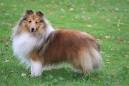
The Shetland sheepdog or Sheltie


This is smaller version of the rough coated collie from Scotlands northern most islands.  They were the crofter’s working dogs but now useless as workers.

Sheltie (Source:  Internet)


Old English sheepdog 
A very old breed of working dog developed to handle intensive sheep on the English downland.   Now completely ruined as a working dog by show ring standards.  Many of these dogs now cannot see for facial hair - unless its tied up with a ribbon.  Modern shepherds as far as I know dont carry ribbons!

 Photo:  Old English sheepdog (Source: internet)


The Corgie
Once the tough little Welsh cattle dog, and you may still find some that will heel cattle.  Two strains exist - the Cardigan and the Pembrokeshire.  Now generally useless for working stock, but made popular because of Royal associations.

Pembroks Corgi (Source:  Internet)

Read More..