Tampilkan postingan dengan label collar. Tampilkan semua postingan

Incorporating A Vibrating Dog Collar in Your Dog Training


Introducing The Collar To The Dog

In preparation for training your dog with your new underground dog fence, you’ll need to work with a vibrating dog-training collar. This collar teaches your pup to notice when she’s coming close to the boundaries of the fence and to stop BEFOREshe crosses that line.

 
Introducing The Collar To The Dog

The first thing you’ll want to do is get your dog used to wearing her new vibrating dog collar. Because of the technology involved, these collars tend to be a tiny bit heavier and bulkier than regular dog collars, and you want your dog to feel comfortable wearing hers.

Adjust the collar so that the prongs are just resting on her skin and not burrowing into her neck. You want to make it tight enough so that she feels the vibrations immediately, but yet not so loose that she can pull it over her head. Usually, being able to slip 1 or 2 fingers between the collar and your dog’s neck works best.

Place the vibrating dog collar on her neck and give her a treat. Leave the collar on for 10 to 15 minutes – just long enough for her to feel comfortable – then remove it. Do this several times during the first day of training, always remembering to treat her every time you put on the collar.

During the second training day, extend your training intervals to 15 to 30 minutes, again treating as you place the collar on your pup.

By the third day, you should be able to start leaving the collar on for longer periods of time. In any case, we recommend that you NEVER leave the collar on for longer than 12 hours.

Resist the urge during the collar training to try the vibrating sensation with your dog. You want her to be perfectly comfortable wearing the collar, and starting the vibration training too early can be a distraction.


Introducing The Vibration

Once your pup is fully comfortable wearing her vibrating dog-training collar, you can begin introducing the sensation of the vibrations to her. You’ll need to have treats and her clicker available to get her attention – she needs to learn that the buzzing on her neck is coming from you and that you won’t harm her.

Place her on her leash and move her close to your body. Set your remote control on its lowest setting, and, press it. Immediately use the clicker and give your dog a treat without waiting for her to look at you. Perform this step 10 times in a row – press and treat, press and treat – and then quit.

Keep these initial training sessions very short, 5 to 10 minutes only. Leave the vibrating dog collar on your pooch and repeat these sessions 2 to 3 times during the day. You’re wanting her to get used the vibrations and know they are coming from you.

Continue to train in this manner for several days to a week, keeping her close to you. If she starts to look at you when you press the remote, give her extra treats and lavish praise. She’s telling you she’s ready to move on to the “paging” part of her training.


Training to Respond When Paged

When she begins to look at you during a vibration, you know your dog is starting to associate the feeling on her neck with you. That means she is not afraid of the feeling, but is looking to you for guidance as to what to do next. In this training step, you are going to require her to look at you.

As before, keep her close to you during these sessions and make sure this time will be free of distractions.

Page her with a quick press of the remote control, and when she looks at you, IMMEDIATELYtreat her. If she doesnt look at you, move your hand with the treats down in front of her nose so that she sees and smells it, and then move the treat up to your face so that she looks at you. Give her the treat when you make eye contact. Your goal is to have her consistently look at you every time she’s paged. A dog trained in this fashion, will come find you if you’re out of sight range.

As she begins to make consistent eye contact, you can start to move away from her. Start by letting her off the leash, but keep her in the same room with you. Allow her to move about the room and page her when she’s distracted. Give her a treat every time you page and she looks up for you.

Once she is performing this feat every single time, you can move outdoors for training. Please note that if she’s not responding as you want, you may have pushed her too fast in her training and you need to back up a step.

Moving outdoors typically means starting this training over from the beginning, so use your leash as a control, keep your dog close to you, and begin introducing the vibrating collar to her as you did in the house…only this time, you’ll have all those outside noises and smells to deal with. Take your time with this part of her training.

Remember, kindness, patience, and consistency will teach better than harsh words or impatient hands.

How A Vibrating Dog Collar Works

How A Vibrating Dog Collar Works

The buzzing of your dog’s training collar works to get her attention focused on you. It tells her that you want her to look at you and that you are going to give her a command to do something. If you train her properly and consistently, you can use her vibrating collar to tell her to come when called, to stay in sight of you in the yard, to not eat that piece of trash on the ground, and to not follow the neighbor’s dog as he walks down the street in front of your house. It’s a constant reminder to your dog of those boundaries that you work hard to instill in her.

This type of training works especially well with deaf dogs or older canines that may be a little hard of hearing. A deaf dog can’t hear you to look around when you call and won’t hear a car horn or the squeal of brakes. Using a vibrating dog collar on a deaf dog is the equivalent of teaching her how to listen for your voice and pay attention to what you want. Additionally, you use the same training methods for a deaf dog as you would a dog with correct hearing.

Many modern collars come with soft, rubber prongs that vibrate against your dog’s skin instead of the old-fashioned metal ones. You can adjust them for strength and range. For example, if you have a more dominant dog, you may need to make the warning vibration a little stronger than you would for a more submissive pooch. You should find a collar that best fits your dog – one that is neither too small nor too big – is waterproof, shows options for vibration and tone, has a range that fits your yard, and has a long battery life.

You can use your vibrating dog-training collar alone, or with the static correction collar available through most underground dog containment systems. Whichever you choose, remember that training of any dog works best when patience, kindness and consistency factor into the training module.


Guest Article by Sarah Stoltzfus
This article is sponsored by Havahart Wireless, please feel free to visit their website, http://www.havahartwireless.com/
Read More..

New Zealand Farm working Dogs 1 Breeds

 
By Dr Clive Dalton
Whats a breed?
The definition of a breed is often rather vague.  All you can say is that its a group of animals with a common origin, that generally look similar.  Its really not very important to folk who want animals simply for their function - and that includes most shepherds and stock persons. 

Trouble starts with people who want animals for their looks and aesthetic traits.  Fortunately for people working stock - the show ring and breed society specifications have never influenced the farm dog.  Long may that be the way of things. 

The show ring has sadly been the cause of the loss of many working genes from some breeds - and this is a pity, as you never know when these could be needed in future.  We should have saved these working genes as frozen semen and embryos - a good idea far too late.

The Border Collie
Classical British Border Collie (Photo: Helen Brown)
This breed has been the foundation of most of the worlds working dogs.  It originated from the English-Scottish border, this small, long-haired dog that "clapped" on its belly while stalking stock, came to NZ with the early shepherds.   Selection for performance over time in New Zealand has changed it into an upstanding, long-legged and smooth-haired speedster.  It is not a barking dog except when excessively excited, and selection is firmly against this trait by dog trialists.  The instinct to grab and bite can be fairly strong and remains in some strains.  It was the final act to kill after the "stalk" in the primitive dog.

The NZ "eye" dog or "heading" dog does the bulk of speed gathering of stock and the quick-reaction close-quarter work such as shedding or catching sheep.  Border collies are mainly black and white although there are some black and tan strains and the occasional "blue merle", a gene associated with "wall" or pale blue eyes.  There are red (ginger) genes found and sometimes very white animals that are usually disliked.

NZ eye or heading dog
 However, border collies are now becoming popular as pets and are winning most obedience trials and agility tests.  This could be a threat to the farm working dog if these two strains separate and then get mixed up.  Not many shepherds want their dog to find their hankie or bring back a toy rabbit!  But fetching the paper from the gate is a useful trick some shepherds do teach their heading dogs though.

Border collies love to learn and there’s nothing wrong with teaching a working dog a few new tricks to keep its brain active.  Same principle applies to their owners.

The Huntaway
Typical huntaways


Huntaway x Beardie
 The Huntaway is truly "made in NZ" and is probably the best example in the world of an animal bred for performance alone, and not ruined by breed society rules and regulations!  A wonderful example of how to use a pool of genetic variation, out of which you select what is needed to do a specified task.  Its modern genetic theory used before such theory was worked out.

Huntaways come in many shapes and colours and there are there used to be three or four major strains.  They are big strongly-built dogs used for everything - heading (gathering by going round sheep), hunting (driving stock away from or towards the handler), forcing sheep by jumping on their backs, and handling all the hurly-burly work sheep yards and woolsheds.  They are all bred to bark (give noise).

Huntaways are mainly black and tan with variations of mainly black, and a ginger red colour.  These are genes clearly from their origins of border collie, beardie, fox hound, Labrador and goodness-knows what else!  Nobody today is concerned what went into the mix, but it would still be interesting to know how it was done.
(See blog on Huntaway)

The Beardie
Beardie
 Originated from Scotland where it would bark and gather sheep from bracken covered hills.  They were called "hunters" and this could be the origin of the Kiwi term "huntaway".  They are grey, white, and tan in colour and have long hair including a beard.  .  Great-natured, tireless dogs and despite their long hair, work well in heat.  They are better at hunting than heading and are always keen to bark.  They are very popular in dairy farms to bring cows in.

The Smithfield
A bit of a mystery dog, supposed to have come from the barking dogs used by drovers at Smithfield market in London.  The Australians have added confusion by calling Beardie-types "Smithfields".  The NZ Smithfield, if you can find one, is like a small conventional huntaway or beardie type, and sometimes has a naturally bobbed tail.  They look like small huntaways or handy dogs.

The NZ "handy" dog
These are great dogs that do everything!  It seems as if they are a strain of huntaway that some breeders have selected over time.   They are not a heading dog-huntaway cross, as these are generally disasters!  But they are varied in colour and mostly like huntaways.   Farmers comment that these old-fashioned dogs are now very hard to find, as dog trialists have selected for more specialist dogs and not the general-purpose dog so useful on farms for general-hands or less-experienced shepherds.  These dogs would definitely bring the paper from the gate.
The Kelpie

 
This is the Australian all-round working dog that has NO dingo in it!  Kelpie breeders get very upset if you mention dingos!  Its the Aussie huntaway and is supposed to have been selected from strains of Border Collies.  Very tough either black or chocolate-coloured dogs.  In NZ it would be used mainly for cattle work.

Photo:  Kelpie (Source: Internet)


The Australian cattle dog 

Australian cattle dog (with red factor gene instead of blue)
 Also known as the "blue heeler", "Australian heeler" or "Queensland blue heeler" - and probably a lot of other unprintable things too.  These are tough dogs bred to heel and nose cattle - real Aussie battlers!  Their well-documented genetic origin contains "black bobtails" (presumably collie), definitely dingo to get rid of barking, as well as Kelpie, blue merle collie, Dalmatian, and probably a lot more.  Generally too tough for most shepherds unless you have stroppy cattle to handle.  A loyal and tough dog.

Surprisingly they are increasing in popularity in New Zealand as pets and show dogs, so their future as workers is clearly at risk.


The rough-coated collie
These are the dogs that "Lassie" made famous.  Useless as working dogs as their working genes have been lost through the show ring. 

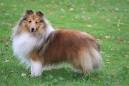
The Shetland sheepdog or Sheltie


This is smaller version of the rough coated collie from Scotlands northern most islands.  They were the crofter’s working dogs but now useless as workers.

Sheltie (Source:  Internet)


Old English sheepdog 
A very old breed of working dog developed to handle intensive sheep on the English downland.   Now completely ruined as a working dog by show ring standards.  Many of these dogs now cannot see for facial hair - unless its tied up with a ribbon.  Modern shepherds as far as I know dont carry ribbons!

 Photo:  Old English sheepdog (Source: internet)


The Corgie
Once the tough little Welsh cattle dog, and you may still find some that will heel cattle.  Two strains exist - the Cardigan and the Pembrokeshire.  Now generally useless for working stock, but made popular because of Royal associations.

Pembroks Corgi (Source:  Internet)

Read More..

Is Your Dog’s Collar on Securely


By Tamara McRill

Putting on a dog collar should be an easy task, right? Pick one that fits your dog’s unique personality, slip it around his neck (not too tight), fasten, give your woofer an affectionate head rub and you’re good to go. At least that’s what I always thought, but it turns out there’s more that goes into making sure your dog’s collar is on nice and secure.

I found this out the hard and heart-stopping way, with my chocolate Labrador, Wuppy. We were all geared up to take a walk in our new neighborhood, which is super exciting when you’re a dog that loves the adventure of new locations. When Wuppy and I set off, he bounced right out of his collar!

See, Wuppy has a generous waddle – the loose skin around a dog’s neck – which, combined with his bouncy behavior makes keeping him in his dog collar a little tricky. Luckily for me, our older dog, Cody, was also in the yard with Mike. So Wuppy bolted straight to the two objects of his hero worship.

Go By Feel, Not Sight

The first thing I learned when I started researching how to properly make sure my dog’s collar was secure was that I was doing it wrong. No shocker there – he did escape. I was looking at Wuppy’s collar to see if it looked like it was loose enough, when I should have been feeling it.

A good rule of thumb for flat collars, which are the most common, is to make sure you can get two fingers underneath it. You simply slide your fingers in between the collar and your dog’s neck. If there is more space than that, try tightening it up a notch until it is tight enough to comfortably allow your fingers underneath. If you can’t get two fingers under the collar, then loosen it up because you could be accidentally hurting your dog’s throat.

Check the Buckle

This is something we are in the habit of doing with all of our pets, since our dog Cody is older and has some health issues that prevent his collar from being tightened securely. His buckle comes loose a lot, and even at his slower pace the collar could come undone if we don’t make sure the buckle is properly fastened. The most common thing we have to adjust is the prong, which comes up a lot, with his collar being so loose. It’s also what we have to occasionally adjust on our other dogs.

If your dog’s collar has a plastic fastener, such as a side release or breakaway buckle, you’ll want to make sure it comes together like it should, before taking your dog on a walk.

Be Vigilant for Secureness

Of course, ensuring the collar has a great fit isn’t a “one time and you’re done” activity. You have to keep periodically checking that it is on your pet securely, since neither the collar nor your dog will always stay in the same condition as when you first placed it around their furry neck. Besides buckle wear, the collar fabric can also get worn out or stretch just enough for your pooch to slide his head through. Collars can also become fragile over time and get rips.

Puppies and young dogs can grow out of their collars, sometimes quicker than you think; be sure to frequently check that the collar isn’t too tight. Older dogs also can gain and lose weight, which will affect the fit of their collar.

It’s also good to work on mastering sit and stay commands, as well as keeping CANIDAE dog treats in your pocket when you take your pooch for a walk. Sometimes, even with the most vigilant of checking, dogs still manage to wiggle out of their collars. For your dog’s safety, it’s good to have some backup training and an enticingly tasty bribe if this happens.

What kind of collar does your dog wear? Has it ever slipped off before?

Top photo by jespahjoy
Middle photo by lindyi
Bottom photo by Tony Alter

Read more articles by Tamara McRill
Read More..