Tampilkan postingan dengan label new. Tampilkan semua postingan

Be a Resource Full Puppy Owner

We though wed best follow up our joint-post about Books for Before & After you get a Puppy or Dog with some further resources. 

Because lets face it - you can never have enough resources to consult with a new puppy in the family! 

Here are some of our primary go-to places and wed love to hear your suggestions in the comments section below - lets turn this into a great resource-full page for everyone!

Mia & Julie


The Other End of The Leash ~ Patricia McConnell
In 2012, McConnell gave her website a major overhaul. Readers can now follow along her weekly blog, as well as search by interest area and easily link to relevant blog posts and videos.


McConnell’s Reading Room has drop down menus where you can access Training Your DogBehavior & HealthSolving Behavior Problemsand Finding Resources. Have a question about aggression? Go to Solving Behavior Problems. What do you think the "Guilty Look" is all about? Check out the Emotions section in Behavior & Health. 


The Art & Science of Animal Behavior ~ Sophia Yin
An incredibly user-friendly website jam packed with all sorts of information. Yin’s blog and resources are searchable so just type in a term (e.g. toilet training) and take a look! 


Julies favorite video shows counter conditioning of a dog displaying aggression.

Dog Star Daily ~ Ian Dunbar and co.
Dog Star Daily is a resource-laden website populated by Dunbar and a lot of other trainers. 


Take some time to look through their many many videos.

New resources to watch

AVSAB
The American Veterinary Society 
of Animal Behavior (AVSAB) new website includes a free newsletter (you can sign up using your email address or access the archives online) and blog. Considering that AVSAB tackles such topics as Cat Body Language as well as Post Traumatic Stress Disorder in Military dogs, it’s definitely a great resource for everyone!


Pet Pages
Pet Pages features content from lots of different sources. Animal behaviourist Kate Mornement writes regular posts on different topics that can be searched.


Commercial sites
Dr Joanne Righetti has helped Purina populate their Puppy Club website with helpful information.


Read More..

Dog Training Tips On How To Train A Dog

Dogs Training

  • Many people start their dog on the path to dog training success by enrolling them in a basic obedience class. This is a great idea because you will learn how to teach your dog to do basic commands such as “sit”, “stay”, and “heel”. You can use these dog training commands by using verbal commands and physical actions. For example, right after you say the word “sit” you gently push your dog’s bottom down onto the ground and put them in the sit position. Immediately say “good” and smile. Give them a tasty treat as well. Basically, you want to do as much as you can to reinforce the action of sitting when you say “sit”.

  • Dogs act like absorbent sponges when it comes to learning proper behavior and tricks. If you do your job properly then dog training should be a hit. Your dog is ready and eager to learn proper behavior. They want to please you. Therefore, if they aren’t following your instruction it might not be their fault. You might be giving confusing dog training instructions.

  • Dogs thrive on positive reinforcement and encouragement. Positive reinforcement such as acting excited and petting your dog when they do the right behavior help with your dog training efforts. It is a dogs nature to want to be close to you and make you happy. Showing encouragement and praise will help your dog much farther, much faster in their dog training. Make sure to encourage a dog through each dog training accomplishment, no matter how big or small.

  • Food is a powerful motivator when it comes to dog training. You will be hard pressed to find a dog that passes up food or a tasty treat. Dogs are always hungry and welcome any situation where food is involved.

  • Dog training should be a gradual process with regards to skill level and learning more complex commands. Give your dog time to understand new commands. They most likely won’t learn it the first day you teach them. You will have to review the commands and proper behaviors often.

  • Have dog training sessions at various times throughout the day. Your dog needs periodic training to reinforce the proper behaviors. You dog’s attention span can wane, so make sure to keep the training sessions to five to ten minutes long.

  • When you first start dog training work in environment that is free from distractions so your dog can focus on their behavior. Once your dog understands the basic commands you can try to use the commands in a busier environment. One thing you may find is that your dog is distracted and seems to have forgotten the commands. Don’t fret. This can happen because dogs tend to be situational learners and your dog just needs to work on the commands in the busier environment
    .
  • Too many treats equals an overweight dog. Dog training is a process that involves tasty treats, but too many of these treats can be a bad idea for your dog’s waistline. Use small treats and wean your dog off treats as they understand the different commands. They will then rely on your praise as the positive reinforcement for each behavior. These eight dog training tips will set you on the road to happy, healthy, obedient pooch

2006 (c) mdarma.com - All Rights Reserved Worldwide Dogs

Read More..

Sad that Kids Cant Hug Their Dog

Who is enjoying this hug?
One of our most important messages at Doggone Safe is that dogs dont like hugs and kisses. This is very controversial among dog owners and has caused many challenges for our Be a Tree presenters. Many people simply do not believe this and are sure that their dog loves to be hugged.

We got a comment on one of our previous posts from a reader who said that it is sad that kids cant hug their dogs and that her own dogs do like hugs and actually solicit this type of attention. This is a very good comment and many people have said this same thing to us over the years. We agree that there are dogs who do enjoy certain types of attention and will solicit this at times. The main thing to note in these cases is that the dog is asking for this on its own terms. Even these types of dogs will not enjoy a hug if they are busy watching a squirrel or chewing on a favorite toy. They are also unlikely to enjoy hugs the way kids do it (that is wrap their arms around the dogs neck and hang on). Adults tend to scratch the dog on the chest or engage in other petting the dog enjoys, while they are hugging. Thus the dog becomes conditioned to enjoy certain specific types of hugging from specific people.

You can tell if you dog likes hugs by watching for body language signs. Does he yawn, lick his lips or show a half moon of white in his eye while you are hugging or when you approach to hug? Does he start trying to lick your face while you are hugging him? Does he shake the hug off (wet dog shake) when you release him? All of these are signs that the dog does not enjoy the hug.

It is confusing for children to learn that they can hug this dog but not that one, can hug this way, but not that way, can hug in this situation but not that one. It is simpler to teach them to avoid hugging any dog. It may seem sad to tell a child that they should not hug a dog to show how much they love him. It is much sadder when a beloved dog bites a child in the face leaving lasting emotional and physical scars and costing the dog his family or even his life. There are many, many parents in our dog bite victim support group who have said "I wish I had known that dogs dont like hugs", after their child hugged or kissed a nice family dog. The most common scenario is a child at a  family function who hugs the grandparents, relatives or neighbors dog. The dog is stressed because of all the commotion and people and noise and is less tolerant than usual. In most cases the dog has never bitten before.

It is also sad to think that a child is trying to show love, while the recipient of the "love" is just hoping it will stop. Luckily most dogs are tolerant and do not bite, but why should they have to tolerate something they dont enjoy? Please read about the Curse of the Good Dog for more about this. The vast majority of dog owners believe that their dogs like hugs, while the vast majority of dogs do not like hugs. There is a disconnect here that leads to many dogs being unhappy and to many facial bites to children.

Here is a video that shows a lovely, tolerant dog who is not enjoying the hug from a child. This is a great example of a nice dog who is tolerating something he doesnt like. If you search on YouTube for videos of kids or babies hugging dogs you will see numerous examples of dogs yawning, licking their chops, licking the children, showing a half moon of white in their eyes, turning their heads away or getting up and leaving. You will rarely if ever find one of a dog that is enjoying the hug. 


Dog behavior experts agree that it is best to teach children other ways to show love to dogs. Well known behavior expert Dr Patricia McConnell in her wonderful book For the Love of a Dog says that she has at least 50 photos of kids hugging dogs and in not one of them is the dog happy about it. There are lots of safe ways for kids to show love to a dog. Read about these in our article: How to Love Your Dog.
Read More..

New Zealand farm working dogs 11 The Law and your Dog


 By Dr Clive Dalton

The law
Ownership of a working dog carries with it some clearly-defined legal responsibilities under current legislation.  Your main responsibilities are to:

·      Make sure a dog is registered and that the certificate is in a secure place and readily available.
·      Have collars, discs, or tags for all dogs and make sure they wear them at all times.
·      Notify any change of address, either permanent or temporary if you move, or if you sell the dog.
·      Ensure discs or labels are not tampered with.
·      Present all dogs for treatment for hydatids as required.
·      Keep dogs under control at all times.
·      Make certain dogs are well housed.
·      Ensure dogs are well fed.

The dog is also covered under legislation that states that an animal must be provided with adequate food, water, and shelter, and given adequate exercise.  Ill-treating your dog or cruelly ill-treating it is an offence under the law.

Registration
All dogs must be registered annually with a "territorial authority" such as a borough council, county council, district council or city council, or a hydatids and dog control authority acting on behalf of these.  All farm dogs over 3 months of age must be registered. 

The fees vary with each territorial authority and some charge lower fees for working dogs and neutered dogs.  You are not allowed to shop round for the cheapest authority - you register your dog where you live! 

Proof of ownership, other than the owners certificate is the label or disc that the dog should wear at all times.  This shows:
·      The territorial authority where the dog is registered.
·      Year of registration, also shown by the colour of the tag.
·      The dogs ownership number.

New collars can be purchased from the authority.  Old ones can be used provided the current label or tag is firmly attached.  If a collar or disc is lost, you can apply to the authority for a replacement and youll have to pay for it. 

Remember that if a dog is found without a collar, it will be "deemed as unregistered" until you can prove the contrary.

Selling a dog
When selling a dog, if its under 3 months of age, there is no obligation to register it before sale.  If you sell the dog when over 3 months of age you must notify the territorial authority in writing within 14 days that the dog has been sold.  Theres no fee charged for change of ownership. 

When selling a dog you must:
·      Give the new owner a current treatment certificate showing that the dog has been treated for hydatids in the last 42 days.
·      Provide the authority with the name and address of the new owner and the address where the dog in normally kept.

Buying a dog
If you buy a dog under 3 months of age, the vendor doesnt have to produce a hydatids treatment certificate.  As a new owner you must:

·      Register the dog before its 3 months old
·      If over 3 months old, get the original owner to provide a certificate to show the dog has been treated for hydatids in the last 42 days.
·      Notify the territorial authority in writing within 14 days of purchase the name of the authority the dog came from.

Moving with your dog
If you move within the same territorial authority, then notify the territorial authority of your address change, in writing, within 14 days .

If you move to a new authority, notify them in writing within 6 weeks of moving where the dog came from.   Then inform the authority you have just left that youve moved, and give them the new address where the dog is kept.  It would pay to do this in writing too.

These two situations are important for stockpersons doing casual work and for those having dogs on trial before purchase.  Its also important for people traveling outside their district to always carry their dogs hydatids treatment certificate. It should show that treatment has been carried out within the last 42 days.

Control of dogs
This part of the act is important for farm dogs.  It covers the fact that dogs must be kept under control at all times.  If a dog is considered to be out of control, then a number of things can happen.  Important examples are:

·      A Dog Control Officer can impound it.
·      The occupier of the land on which the dog is found can impound it.
·      If the dog is in a public place from which dogs are prohibited, anyone can seize the dog, or arrange for it to be seized and impounded.
·      Anyone can impound a dog (or dogs) if they consider it to be causing distress, annoyance, and damage to property other than the owners.
The occupier of land where a dog causes a nuisance can either return the dog to its owner or hand it over to a Dog Control Officer or Dog Ranger.

Barking dogs
If a barking dog has been reported to a Dog Control Officer or Dog Ranger, and there are reasonable grounds to believe that its barking constitutes a nuisance, an officer or ranger can:

·      Enter the land or premises (other than a dwelling house) at any reasonable time to inspect the conditions under which the dog is kept.

·      Give the owner a written notice requiring him/her to abate the nuisance or remove the dog.  The owner may object within 7 days.

Disqualification from ownership
A territorial authority may apply to a court to disqualify a person from owning a dog if convicted of a range of listed offences in the legislation.

Dogs attacking people or livestock or rushing at vehicles
Anyone who sees a dog attack stock or poultry, or who is themselves attacked, can either seize the dog or destroy it immediately.  Note that police dogs are exempt!  Once you have seized the dog, you must hand it over to its owner or to a Dog Control Officer or Ranger.

If you cannot catch the dog, you may call a police officer who can shoot it.  It need not be caught in the act for this to happen, but the office must have reasonable ground for believing the attacks took place.

The police officer is empowered to destroy the dog only if he/she is unable to seize it.

Dangerous dogs at large
It is an offence for owners of a dangerous dog to have it at large without a suitable muzzle.  A "dangerous dog" is one that has attacked people, stock, poultry or property of any kind.  If you keep it in a vehicle or cage, then this is acceptable.

Destroying dangerous dogs
A court can order the owner of a dangerous dog either to keep it under proper restraint or make an order for it to be destroyed.

Seizure or destruction of a dog found at large among livestock
If a dog is found running at large among livestock or poultry, the owner may either seize a dog or destroy it.  Owners can also request their "agent", a constable, a Dog Control Officer or Ranger to do this on their behalf.

If seized the dog must be returned to its owner or delivered into the custody of a Dog Control Officer or Ranger.

Dogs seen worrying livestock
If a dog has been seen worrying livestock of poultry, the owner may make a complaint to the District Court.  The court as a result may make an order of restraint or an order to destroy the dog.

Liability of the owner for damage
The owner of a dog is liable for all damage done by the animal.

Dog control bylaws
A territorial authority can make bylaws for a range of purposes.  Those of interest to farm dog owners are:

·      Prescribing minimum standards for accommodation of dogs.
·      Limiting the number of dogs kept on land or premises.
·      Requiring dogs to be tied up during the hours of darkness.

Happy New Year to you and your tracking dogs!


We are joining Tuesday (in the picture) to wish all of you a Very Happy New Year! BTW, Tuesday will be bred this week to Kunox, and hopefully we will have some puppies born in nine weeks. Unfortunately, our waiting list is full and closed, and we are not taking more reservations.
Read More..

New perspective on dog breeding part 1 puppies conditioning in the womb

This article by Larry Mueller was published in Outdoor Life 15 years ago, in 1998. Since then the science of genetics and epigenetics have advanced tremendously but the conclusion has not changed that much. If you want to breed superdogs, youd better start really, really early in a dogs life. The next installment will present a current perspective on the points raised in Larrys article.

Building The Superdog
Beginning Before Birth
The where, when, why and how of starting a superdog

Larry Mueller
Hunting Dogs Editor, Outdoor Life, 1998

     The new century for dogs is now. Modern science has poised the dog world for a fastforward of unprecedented proportions. In the past, superdogs were rare accidents of nature - naturals that made even first timers believe they were great trainers. And now we know how those accidents happen. We hold the simple secrets to building our own superdogs from scratch.
  
How early can we begin the conditioning which could lead to a superdog? Five months? Eight weeks? Ninety days? Would you believe… in the womb? Its true. We have scientific evidence that the fetus is not sealed in isolation. It lives in its mothers world.

Interestingly, before Mendel discovered genes, breeders were hunting pregnant bitches to produce superior pups. After Mendels theory caught on, that practice was called an old wives tale. Genetics allowed us to break breeding down to numbers and predict a few traits like coat color. So, we assumed that breeding is a crap shoot of many-sided gene dice. All traits, behavioral and physical alike, were thought to be locked m place at birth. It was a neatly packaged theory that shrank nature to fit our head size. To believe it, however, required ignoring all the loopholes and protecting our ignorance against obvious evidence to the contrary.
  
But this is for the future. For now, were conditioning fetuses to become great hunting dogs: Proof that its possible comes from the Universityof California, Berkeley. Dr. Marion Diamond, professor of anatomy, divided laboratory rats into two groups. In one rats were housed singly in boxes with just food and water. In the other, groups of rats lived together and enjoyed toys which were changed periodically - a mentally challenging environment.
  
At maturity, Marion Diamond sacrificed some of both groups and physically measured the cortex areas of their brains. The cortexes had actually grown thicker in the challenged rats. For the first time, it was proven that the anatomy of an animal brain could be changed by experience. Subsequent maze tests m other laboratories proved that rats with thicker cortexes were smarter and quicker to learn.
     
In a second study, Professor Diamond placed pregnant rats in both deprived and challenging environments. Again, the challenged rats had the thicker cortexes. But get this: So did their offspring! Somehow, the mothers experiences had improved their babies ability to learn.
  
Can this happen in dogs as well as rats? Of course. As Dr. Diamond points out, the number of neurons in a single column of cortical nerve cells is the same in rats, dogs and man. The number of dendrites (branchlike extensions) and the resulting complexity of circuitry is what creates some of the differences between species.
I asked Professor Diamond whether given the olfactory propensity of dogs and the fact that scent is tasted as well as smelled - there might be a biological connection telling the fetuses that their hunting mother is excited and what odor is responsible. Sound reasonable? "It does," she said, cautioning, however, that she believes everything is possible until proven otherwise.
  
How might the fetus be conditioned by the mother s experience? My own theory is that tasted odor, like medicine held under the tongue, quickly enters the bloodstream. At the same time, excitement releases adrenaline into the bloodstream. Brain chemicals such as seratonin fire into the gaps between the dendrites. A percentage of those chemicals are recycled to be used again by the brain. The remainder enters the bloodstream, which, in a pregnant bitch, also flows through the unborns brain where it reproduces sensations much like the mothers.
  
Whether my theory is right or wrong (veterinary neurologist and Auburn Universityprofessor Larry Myers says Im close, if not dead on) were certain that challenging the pregnant bitch will enlarge the offsprings cortex. Training will be easier. And if my theory is right, the pups will likely have a strong preference for the scent that excites their mother. Deer chasing should be minimized.
  
I believe that the time to make the greatest impression on the fetus is the last 21 days of gestation. (Since this was published in Outdoor Life, NBC reported that Dr. David Min used ultrasound to track heartbeats and movements of human fetuses. They began responding to parents voices and music at 26 weeks, verifying the third trimester as the time of greatest opportunity for influencing the unborn.)

Additional support for hunting the pregnant bitch comes from Missourieducator, Red Setter breeder and trainer, Bruce Ludwig. Except for heat-of-summer litters, Ludwig hunts his bitches until the last week. "Ive definitely seen more pointing intensity in pups from hunted bitches, Bruce said. And as an educator I see a parallel in children. From all walks of life and degrees of intelligence, those mothers who are physically and mentally active during pregnancy bear children who react noticeably better to sight, sound, and touch. Its most apparent before learned responses form, but it carries over to superior grades later."
  
But will breeders hunt their pregnant bitches? Should we risk hunting ours? Weve always pampered them. I can only answer with more questions. Have you ever known a coyote who took off two months from hunting to have her pups? Have you ever known a young coyote that wouldnt hunt? Not hunting the pregnant bitch may well be the first step in producing all those worthless dogs we see.


Read More..

New Zealand Farm working Dogs 1 Breeds

 
By Dr Clive Dalton
Whats a breed?
The definition of a breed is often rather vague.  All you can say is that its a group of animals with a common origin, that generally look similar.  Its really not very important to folk who want animals simply for their function - and that includes most shepherds and stock persons. 

Trouble starts with people who want animals for their looks and aesthetic traits.  Fortunately for people working stock - the show ring and breed society specifications have never influenced the farm dog.  Long may that be the way of things. 

The show ring has sadly been the cause of the loss of many working genes from some breeds - and this is a pity, as you never know when these could be needed in future.  We should have saved these working genes as frozen semen and embryos - a good idea far too late.

The Border Collie
Classical British Border Collie (Photo: Helen Brown)
This breed has been the foundation of most of the worlds working dogs.  It originated from the English-Scottish border, this small, long-haired dog that "clapped" on its belly while stalking stock, came to NZ with the early shepherds.   Selection for performance over time in New Zealand has changed it into an upstanding, long-legged and smooth-haired speedster.  It is not a barking dog except when excessively excited, and selection is firmly against this trait by dog trialists.  The instinct to grab and bite can be fairly strong and remains in some strains.  It was the final act to kill after the "stalk" in the primitive dog.

The NZ "eye" dog or "heading" dog does the bulk of speed gathering of stock and the quick-reaction close-quarter work such as shedding or catching sheep.  Border collies are mainly black and white although there are some black and tan strains and the occasional "blue merle", a gene associated with "wall" or pale blue eyes.  There are red (ginger) genes found and sometimes very white animals that are usually disliked.

NZ eye or heading dog
 However, border collies are now becoming popular as pets and are winning most obedience trials and agility tests.  This could be a threat to the farm working dog if these two strains separate and then get mixed up.  Not many shepherds want their dog to find their hankie or bring back a toy rabbit!  But fetching the paper from the gate is a useful trick some shepherds do teach their heading dogs though.

Border collies love to learn and there’s nothing wrong with teaching a working dog a few new tricks to keep its brain active.  Same principle applies to their owners.

The Huntaway
Typical huntaways


Huntaway x Beardie
 The Huntaway is truly "made in NZ" and is probably the best example in the world of an animal bred for performance alone, and not ruined by breed society rules and regulations!  A wonderful example of how to use a pool of genetic variation, out of which you select what is needed to do a specified task.  Its modern genetic theory used before such theory was worked out.

Huntaways come in many shapes and colours and there are there used to be three or four major strains.  They are big strongly-built dogs used for everything - heading (gathering by going round sheep), hunting (driving stock away from or towards the handler), forcing sheep by jumping on their backs, and handling all the hurly-burly work sheep yards and woolsheds.  They are all bred to bark (give noise).

Huntaways are mainly black and tan with variations of mainly black, and a ginger red colour.  These are genes clearly from their origins of border collie, beardie, fox hound, Labrador and goodness-knows what else!  Nobody today is concerned what went into the mix, but it would still be interesting to know how it was done.
(See blog on Huntaway)

The Beardie
Beardie
 Originated from Scotland where it would bark and gather sheep from bracken covered hills.  They were called "hunters" and this could be the origin of the Kiwi term "huntaway".  They are grey, white, and tan in colour and have long hair including a beard.  .  Great-natured, tireless dogs and despite their long hair, work well in heat.  They are better at hunting than heading and are always keen to bark.  They are very popular in dairy farms to bring cows in.

The Smithfield
A bit of a mystery dog, supposed to have come from the barking dogs used by drovers at Smithfield market in London.  The Australians have added confusion by calling Beardie-types "Smithfields".  The NZ Smithfield, if you can find one, is like a small conventional huntaway or beardie type, and sometimes has a naturally bobbed tail.  They look like small huntaways or handy dogs.

The NZ "handy" dog
These are great dogs that do everything!  It seems as if they are a strain of huntaway that some breeders have selected over time.   They are not a heading dog-huntaway cross, as these are generally disasters!  But they are varied in colour and mostly like huntaways.   Farmers comment that these old-fashioned dogs are now very hard to find, as dog trialists have selected for more specialist dogs and not the general-purpose dog so useful on farms for general-hands or less-experienced shepherds.  These dogs would definitely bring the paper from the gate.
The Kelpie

 
This is the Australian all-round working dog that has NO dingo in it!  Kelpie breeders get very upset if you mention dingos!  Its the Aussie huntaway and is supposed to have been selected from strains of Border Collies.  Very tough either black or chocolate-coloured dogs.  In NZ it would be used mainly for cattle work.

Photo:  Kelpie (Source: Internet)


The Australian cattle dog 

Australian cattle dog (with red factor gene instead of blue)
 Also known as the "blue heeler", "Australian heeler" or "Queensland blue heeler" - and probably a lot of other unprintable things too.  These are tough dogs bred to heel and nose cattle - real Aussie battlers!  Their well-documented genetic origin contains "black bobtails" (presumably collie), definitely dingo to get rid of barking, as well as Kelpie, blue merle collie, Dalmatian, and probably a lot more.  Generally too tough for most shepherds unless you have stroppy cattle to handle.  A loyal and tough dog.

Surprisingly they are increasing in popularity in New Zealand as pets and show dogs, so their future as workers is clearly at risk.


The rough-coated collie
These are the dogs that "Lassie" made famous.  Useless as working dogs as their working genes have been lost through the show ring. 

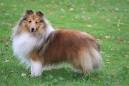
The Shetland sheepdog or Sheltie


This is smaller version of the rough coated collie from Scotlands northern most islands.  They were the crofter’s working dogs but now useless as workers.

Sheltie (Source:  Internet)


Old English sheepdog 
A very old breed of working dog developed to handle intensive sheep on the English downland.   Now completely ruined as a working dog by show ring standards.  Many of these dogs now cannot see for facial hair - unless its tied up with a ribbon.  Modern shepherds as far as I know dont carry ribbons!

 Photo:  Old English sheepdog (Source: internet)


The Corgie
Once the tough little Welsh cattle dog, and you may still find some that will heel cattle.  Two strains exist - the Cardigan and the Pembrokeshire.  Now generally useless for working stock, but made popular because of Royal associations.

Pembroks Corgi (Source:  Internet)

Read More..

New Zealand Farm working Dogs 9 Basic Nutrition

-->
By Dr Clive Dalton 


Theres a mountain of information available these days on the nutritional needs of dogs.  And yet, there are still far too many dogs that are not properly fed – not through intentional neglect but through ignorance. 

Unfortunately nutrition is not an easy subject, and you can easily get lost in the technical detail.    

The important point to remember is that your working dog is an athlete and deserves more than a leg of frozen mutton at the end of the day.


What a dog needs from its feed?
Carbohydrates
These are compounds made up of carbon, hydrogen and oxygen and provide the "energy" part of the diet.  They contain such things as sugars and starch.  The most complex carbohydrates are broken down in digestion and end up as sugars before final absorption.

Glycogen is carbohydrate stored in the muscle ready for action.  Marathon runners have to build this up days before the race so they dont have to wait for digestion to take place before energy can be used.  Working dogs as athletes need this in a big way too.

To get the energy out of the carbohydrates the animal needs oxygen from the lungs via the blood stream.  This burns up the carbohydrate releasing carbon dioxide and water which is then excreted.  Excess carbohydrates are stored in the body as fat. 

True carnivores dont need carbohydrates - but dogs need them in a properly balanced diet.  Carbohydrates should not exceed 60% of a dogs diet. 

Dogs cannot digest large amount of fibre, so cereals should be cooked before feeding or the dog will suffer from diarrhoea.  Too much lactose (milk sugar) will also cause scouring so dont add large amounts of dried skim-milk powder to the diet as it is 50% lactose.  Fresh milk contains only 5% lactose.

Proteins
Proteins are used for muscle building and come from both animal and plant sources.   The building blocks of these proteins are "amino acids".  The dog needs 23 amino acids but can synthesise (ie make its own) only 13, so 10 must be supplied in its diet to prevent deficiency diseases.

The "complete" proteins that contain these essential amino acids are found in eggs, milk, soybeans, peanuts, yeast, as well as muscles and glandular organs.  So the best way to make sure you have covered all the essential amino acids in a diet is to use both animal and plant proteins in a diet.

Proteins like carbohydrates and fats are made up of carbon, hydrogen and oxygen.  But they have one important difference - they contain nitrogen.  Proteins are insoluble in water so have to be broken down by enzyme action into amino acids, which are then soluble and easily transported around the body.

Animals can break down protein for energy but this is not a very efficient process.  Surplus nitrogen produced in the process is excreted as urea in the urine.  To avoid this, make sure dogs are not fed high protein diets over long periods, and there are enough carbohydrates and fats in the diet to balance things up.

A dog should be fed protein daily as it is not stored in the body in large quantities like fat.  It should make up from 20 - 25% of the daily diet.

Fats and oils
These are made up of chains of chemicals called "fatty acids".  They contain carbon, hydrogen and oxygen just like carbohydrates, but they differ by having a greater proportion of carbon in them.  They also contain more than twice as much energy on an equal weight basis. 

So nature has designed fat depots to be highly effective energy stores for times of need.  You get a lot of energy into a small bulk!  Putting fat on is a very efficient process, for example the energy in 4 kg of starch to can be stored as 1kg of fat.  Taking fat off is harder, as you only get 2kg of starch energy from 1kg of stored fat.  Remember this when trying to slim down an obese dog or to lose weight yourself!

Fat serves as important body insulation, as well as helping to transport fat-soluble vitamins around the body.  It also improves the palatability and texture of dog foods.   A shortage of fat in a dogs diet can cause an abnormal skin and hair condition and may increase susceptibility to skin infections.

A dog needs a minimum of 5% of fat in the total dry weight of its diet.  At least 1% of the fatty acid called "linoleic" is needed for skin health.  If you feed the recommended maintenance level of 20% fat, then enough linoleic will be present.

If you boost the fat level to 40% or more this will provide all the dogs energy needs, but youll risk problems with rancidity.  This can then impair the utilisation of Vitamin E, cause deficiencies in the B-complex vitamins and generally depress appetite.  If the dog doesnt eat, then it stops thriving.  So don’t expect top performance from all that fatty mutton - put it down the offal hole and buy a decent balanced feed.

If you feed these high fat diets, then you must readjust the mineral, vitamin and protein levels to keep the diet balanced.  You may also have to add an "antioxidant" to preserve nutrient quality and stop the fats going rancid.  Avoid these problems by feeding lower fat levels in the diet.

Vitamins
Vitamins are essential to growth and health.  They help the body to resist disease and body cells to function properly.   We have to consider two types of vitamins - water soluble and fat soluble.

Water soluble vitamins
The B-complex and vitamin C are water soluble. They cannot be stored in the body in large amounts so must be supplied regularly in the diet.

When a dog loses fluids by vomiting or diarrhoea, its vitamins must be replaced..   Overfeeding these water-soluble vitamins does not cause toxicity as excesses are lost in the urine.

Vitamin B1 (thiamine)
·      This is very important to dogs.
·      Dogs differ genetically in their need for thiamine.
·      Metabolic disturbance, exercise and cold housing may increase demand.
·      Only small amounts of thiamine are stored in the body. 
·      Treating meat for hydatids (freezing and boiling) reduces thiamine - it is lost in the       thawed water and boiling juices. 
·      The heat of cooking will destroy thiamin.  Commercially prepared dog feeds have extra thiamine added to their diets to compensate for cooking losses.
·      If you are cooking your own feed recipe, add some yeast tablets to it.
·      Feed a dog supplementary thiamine 2-3 times a week.
·      Brewers (not live) yeast and wheat germ are valuable sources.
·      Meat and cereals are also good sources.
·      A high fat diet contains less thiamine than a high-carbohydrate diet.
·      Never feed dogs raw fish as some species contain an enzyme (thiaminase) which       will make thiamine unavailable.  Nervous symptoms may develop leading to       paralysis.  Cooked fish is safe as thiaminase is destroyed.


Other vitamin B-complex
·      These include riboflavin (Vit B2), niacin pyridoxin (Vit B6), pantothenic acid, biotin, folic acid, and vitamin B12.
·      The best supplies are in wheat germ, brewers yeast, liver and the organ and muscle meats.
·      Under normal feeding there should be no problems, but egg white and sulpha drugs can make them unavailable.
·      "Black tongue" is a defect of the mucous membranes caused by a niacin deficiency.
·      Poor blood clotting can be caused by folic acid deficiency.
·      Riboflavin shortage can cause slow growth, poor appetite and low fertility.

Vitamin C
·      Plenty of this is synthesised by the dog to meet its needs.

Fat-soluble vitamins
These vitamins (A, D, E and K) need fat to be transported and absorbed by the body.  So if the fat metabolism of the dog is upset, then a vitamin deficiency may occur.

Get veterinary advice when supplementing fat soluble vitamins as excess builds up and is stored in the body fat and can lead to problems.

·      Liver, kidney, muscle fat and fish liver oil are good sources.
·      Handle fats with care - the vitamins are lost if the fat goes rancid.