Tampilkan postingan dengan label farm. Tampilkan semua postingan

Be a Resource Full Puppy Owner

We though wed best follow up our joint-post about Books for Before & After you get a Puppy or Dog with some further resources. 

Because lets face it - you can never have enough resources to consult with a new puppy in the family! 

Here are some of our primary go-to places and wed love to hear your suggestions in the comments section below - lets turn this into a great resource-full page for everyone!

Mia & Julie


The Other End of The Leash ~ Patricia McConnell
In 2012, McConnell gave her website a major overhaul. Readers can now follow along her weekly blog, as well as search by interest area and easily link to relevant blog posts and videos.


McConnell’s Reading Room has drop down menus where you can access Training Your DogBehavior & HealthSolving Behavior Problemsand Finding Resources. Have a question about aggression? Go to Solving Behavior Problems. What do you think the "Guilty Look" is all about? Check out the Emotions section in Behavior & Health. 


The Art & Science of Animal Behavior ~ Sophia Yin
An incredibly user-friendly website jam packed with all sorts of information. Yin’s blog and resources are searchable so just type in a term (e.g. toilet training) and take a look! 


Julies favorite video shows counter conditioning of a dog displaying aggression.

Dog Star Daily ~ Ian Dunbar and co.
Dog Star Daily is a resource-laden website populated by Dunbar and a lot of other trainers. 


Take some time to look through their many many videos.

New resources to watch

AVSAB
The American Veterinary Society 
of Animal Behavior (AVSAB) new website includes a free newsletter (you can sign up using your email address or access the archives online) and blog. Considering that AVSAB tackles such topics as Cat Body Language as well as Post Traumatic Stress Disorder in Military dogs, it’s definitely a great resource for everyone!


Pet Pages
Pet Pages features content from lots of different sources. Animal behaviourist Kate Mornement writes regular posts on different topics that can be searched.


Commercial sites
Dr Joanne Righetti has helped Purina populate their Puppy Club website with helpful information.


Read More..

New Zealand farm working dogs 11 The Law and your Dog


 By Dr Clive Dalton

The law
Ownership of a working dog carries with it some clearly-defined legal responsibilities under current legislation.  Your main responsibilities are to:

·      Make sure a dog is registered and that the certificate is in a secure place and readily available.
·      Have collars, discs, or tags for all dogs and make sure they wear them at all times.
·      Notify any change of address, either permanent or temporary if you move, or if you sell the dog.
·      Ensure discs or labels are not tampered with.
·      Present all dogs for treatment for hydatids as required.
·      Keep dogs under control at all times.
·      Make certain dogs are well housed.
·      Ensure dogs are well fed.

The dog is also covered under legislation that states that an animal must be provided with adequate food, water, and shelter, and given adequate exercise.  Ill-treating your dog or cruelly ill-treating it is an offence under the law.

Registration
All dogs must be registered annually with a "territorial authority" such as a borough council, county council, district council or city council, or a hydatids and dog control authority acting on behalf of these.  All farm dogs over 3 months of age must be registered. 

The fees vary with each territorial authority and some charge lower fees for working dogs and neutered dogs.  You are not allowed to shop round for the cheapest authority - you register your dog where you live! 

Proof of ownership, other than the owners certificate is the label or disc that the dog should wear at all times.  This shows:
·      The territorial authority where the dog is registered.
·      Year of registration, also shown by the colour of the tag.
·      The dogs ownership number.

New collars can be purchased from the authority.  Old ones can be used provided the current label or tag is firmly attached.  If a collar or disc is lost, you can apply to the authority for a replacement and youll have to pay for it. 

Remember that if a dog is found without a collar, it will be "deemed as unregistered" until you can prove the contrary.

Selling a dog
When selling a dog, if its under 3 months of age, there is no obligation to register it before sale.  If you sell the dog when over 3 months of age you must notify the territorial authority in writing within 14 days that the dog has been sold.  Theres no fee charged for change of ownership. 

When selling a dog you must:
·      Give the new owner a current treatment certificate showing that the dog has been treated for hydatids in the last 42 days.
·      Provide the authority with the name and address of the new owner and the address where the dog in normally kept.

Buying a dog
If you buy a dog under 3 months of age, the vendor doesnt have to produce a hydatids treatment certificate.  As a new owner you must:

·      Register the dog before its 3 months old
·      If over 3 months old, get the original owner to provide a certificate to show the dog has been treated for hydatids in the last 42 days.
·      Notify the territorial authority in writing within 14 days of purchase the name of the authority the dog came from.

Moving with your dog
If you move within the same territorial authority, then notify the territorial authority of your address change, in writing, within 14 days .

If you move to a new authority, notify them in writing within 6 weeks of moving where the dog came from.   Then inform the authority you have just left that youve moved, and give them the new address where the dog is kept.  It would pay to do this in writing too.

These two situations are important for stockpersons doing casual work and for those having dogs on trial before purchase.  Its also important for people traveling outside their district to always carry their dogs hydatids treatment certificate. It should show that treatment has been carried out within the last 42 days.

Control of dogs
This part of the act is important for farm dogs.  It covers the fact that dogs must be kept under control at all times.  If a dog is considered to be out of control, then a number of things can happen.  Important examples are:

·      A Dog Control Officer can impound it.
·      The occupier of the land on which the dog is found can impound it.
·      If the dog is in a public place from which dogs are prohibited, anyone can seize the dog, or arrange for it to be seized and impounded.
·      Anyone can impound a dog (or dogs) if they consider it to be causing distress, annoyance, and damage to property other than the owners.
The occupier of land where a dog causes a nuisance can either return the dog to its owner or hand it over to a Dog Control Officer or Dog Ranger.

Barking dogs
If a barking dog has been reported to a Dog Control Officer or Dog Ranger, and there are reasonable grounds to believe that its barking constitutes a nuisance, an officer or ranger can:

·      Enter the land or premises (other than a dwelling house) at any reasonable time to inspect the conditions under which the dog is kept.

·      Give the owner a written notice requiring him/her to abate the nuisance or remove the dog.  The owner may object within 7 days.

Disqualification from ownership
A territorial authority may apply to a court to disqualify a person from owning a dog if convicted of a range of listed offences in the legislation.

Dogs attacking people or livestock or rushing at vehicles
Anyone who sees a dog attack stock or poultry, or who is themselves attacked, can either seize the dog or destroy it immediately.  Note that police dogs are exempt!  Once you have seized the dog, you must hand it over to its owner or to a Dog Control Officer or Ranger.

If you cannot catch the dog, you may call a police officer who can shoot it.  It need not be caught in the act for this to happen, but the office must have reasonable ground for believing the attacks took place.

The police officer is empowered to destroy the dog only if he/she is unable to seize it.

Dangerous dogs at large
It is an offence for owners of a dangerous dog to have it at large without a suitable muzzle.  A "dangerous dog" is one that has attacked people, stock, poultry or property of any kind.  If you keep it in a vehicle or cage, then this is acceptable.

Destroying dangerous dogs
A court can order the owner of a dangerous dog either to keep it under proper restraint or make an order for it to be destroyed.

Seizure or destruction of a dog found at large among livestock
If a dog is found running at large among livestock or poultry, the owner may either seize a dog or destroy it.  Owners can also request their "agent", a constable, a Dog Control Officer or Ranger to do this on their behalf.

If seized the dog must be returned to its owner or delivered into the custody of a Dog Control Officer or Ranger.

Dogs seen worrying livestock
If a dog has been seen worrying livestock of poultry, the owner may make a complaint to the District Court.  The court as a result may make an order of restraint or an order to destroy the dog.

Liability of the owner for damage
The owner of a dog is liable for all damage done by the animal.

Dog control bylaws
A territorial authority can make bylaws for a range of purposes.  Those of interest to farm dog owners are:

·      Prescribing minimum standards for accommodation of dogs.
·      Limiting the number of dogs kept on land or premises.
·      Requiring dogs to be tied up during the hours of darkness.

New Zealand Farm working Dogs 1 Breeds

 
By Dr Clive Dalton
Whats a breed?
The definition of a breed is often rather vague.  All you can say is that its a group of animals with a common origin, that generally look similar.  Its really not very important to folk who want animals simply for their function - and that includes most shepherds and stock persons. 

Trouble starts with people who want animals for their looks and aesthetic traits.  Fortunately for people working stock - the show ring and breed society specifications have never influenced the farm dog.  Long may that be the way of things. 

The show ring has sadly been the cause of the loss of many working genes from some breeds - and this is a pity, as you never know when these could be needed in future.  We should have saved these working genes as frozen semen and embryos - a good idea far too late.

The Border Collie
Classical British Border Collie (Photo: Helen Brown)
This breed has been the foundation of most of the worlds working dogs.  It originated from the English-Scottish border, this small, long-haired dog that "clapped" on its belly while stalking stock, came to NZ with the early shepherds.   Selection for performance over time in New Zealand has changed it into an upstanding, long-legged and smooth-haired speedster.  It is not a barking dog except when excessively excited, and selection is firmly against this trait by dog trialists.  The instinct to grab and bite can be fairly strong and remains in some strains.  It was the final act to kill after the "stalk" in the primitive dog.

The NZ "eye" dog or "heading" dog does the bulk of speed gathering of stock and the quick-reaction close-quarter work such as shedding or catching sheep.  Border collies are mainly black and white although there are some black and tan strains and the occasional "blue merle", a gene associated with "wall" or pale blue eyes.  There are red (ginger) genes found and sometimes very white animals that are usually disliked.

NZ eye or heading dog
 However, border collies are now becoming popular as pets and are winning most obedience trials and agility tests.  This could be a threat to the farm working dog if these two strains separate and then get mixed up.  Not many shepherds want their dog to find their hankie or bring back a toy rabbit!  But fetching the paper from the gate is a useful trick some shepherds do teach their heading dogs though.

Border collies love to learn and there’s nothing wrong with teaching a working dog a few new tricks to keep its brain active.  Same principle applies to their owners.

The Huntaway
Typical huntaways


Huntaway x Beardie
 The Huntaway is truly "made in NZ" and is probably the best example in the world of an animal bred for performance alone, and not ruined by breed society rules and regulations!  A wonderful example of how to use a pool of genetic variation, out of which you select what is needed to do a specified task.  Its modern genetic theory used before such theory was worked out.

Huntaways come in many shapes and colours and there are there used to be three or four major strains.  They are big strongly-built dogs used for everything - heading (gathering by going round sheep), hunting (driving stock away from or towards the handler), forcing sheep by jumping on their backs, and handling all the hurly-burly work sheep yards and woolsheds.  They are all bred to bark (give noise).

Huntaways are mainly black and tan with variations of mainly black, and a ginger red colour.  These are genes clearly from their origins of border collie, beardie, fox hound, Labrador and goodness-knows what else!  Nobody today is concerned what went into the mix, but it would still be interesting to know how it was done.
(See blog on Huntaway)

The Beardie
Beardie
 Originated from Scotland where it would bark and gather sheep from bracken covered hills.  They were called "hunters" and this could be the origin of the Kiwi term "huntaway".  They are grey, white, and tan in colour and have long hair including a beard.  .  Great-natured, tireless dogs and despite their long hair, work well in heat.  They are better at hunting than heading and are always keen to bark.  They are very popular in dairy farms to bring cows in.

The Smithfield
A bit of a mystery dog, supposed to have come from the barking dogs used by drovers at Smithfield market in London.  The Australians have added confusion by calling Beardie-types "Smithfields".  The NZ Smithfield, if you can find one, is like a small conventional huntaway or beardie type, and sometimes has a naturally bobbed tail.  They look like small huntaways or handy dogs.

The NZ "handy" dog
These are great dogs that do everything!  It seems as if they are a strain of huntaway that some breeders have selected over time.   They are not a heading dog-huntaway cross, as these are generally disasters!  But they are varied in colour and mostly like huntaways.   Farmers comment that these old-fashioned dogs are now very hard to find, as dog trialists have selected for more specialist dogs and not the general-purpose dog so useful on farms for general-hands or less-experienced shepherds.  These dogs would definitely bring the paper from the gate.
The Kelpie

 
This is the Australian all-round working dog that has NO dingo in it!  Kelpie breeders get very upset if you mention dingos!  Its the Aussie huntaway and is supposed to have been selected from strains of Border Collies.  Very tough either black or chocolate-coloured dogs.  In NZ it would be used mainly for cattle work.

Photo:  Kelpie (Source: Internet)


The Australian cattle dog 

Australian cattle dog (with red factor gene instead of blue)
 Also known as the "blue heeler", "Australian heeler" or "Queensland blue heeler" - and probably a lot of other unprintable things too.  These are tough dogs bred to heel and nose cattle - real Aussie battlers!  Their well-documented genetic origin contains "black bobtails" (presumably collie), definitely dingo to get rid of barking, as well as Kelpie, blue merle collie, Dalmatian, and probably a lot more.  Generally too tough for most shepherds unless you have stroppy cattle to handle.  A loyal and tough dog.

Surprisingly they are increasing in popularity in New Zealand as pets and show dogs, so their future as workers is clearly at risk.


The rough-coated collie
These are the dogs that "Lassie" made famous.  Useless as working dogs as their working genes have been lost through the show ring. 

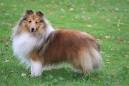
The Shetland sheepdog or Sheltie


This is smaller version of the rough coated collie from Scotlands northern most islands.  They were the crofter’s working dogs but now useless as workers.

Sheltie (Source:  Internet)


Old English sheepdog 
A very old breed of working dog developed to handle intensive sheep on the English downland.   Now completely ruined as a working dog by show ring standards.  Many of these dogs now cannot see for facial hair - unless its tied up with a ribbon.  Modern shepherds as far as I know dont carry ribbons!

 Photo:  Old English sheepdog (Source: internet)


The Corgie
Once the tough little Welsh cattle dog, and you may still find some that will heel cattle.  Two strains exist - the Cardigan and the Pembrokeshire.  Now generally useless for working stock, but made popular because of Royal associations.

Pembroks Corgi (Source:  Internet)

Read More..

New Zealand Farm working Dogs 9 Basic Nutrition

-->
By Dr Clive Dalton 


Theres a mountain of information available these days on the nutritional needs of dogs.  And yet, there are still far too many dogs that are not properly fed – not through intentional neglect but through ignorance. 

Unfortunately nutrition is not an easy subject, and you can easily get lost in the technical detail.    

The important point to remember is that your working dog is an athlete and deserves more than a leg of frozen mutton at the end of the day.


What a dog needs from its feed?
Carbohydrates
These are compounds made up of carbon, hydrogen and oxygen and provide the "energy" part of the diet.  They contain such things as sugars and starch.  The most complex carbohydrates are broken down in digestion and end up as sugars before final absorption.

Glycogen is carbohydrate stored in the muscle ready for action.  Marathon runners have to build this up days before the race so they dont have to wait for digestion to take place before energy can be used.  Working dogs as athletes need this in a big way too.

To get the energy out of the carbohydrates the animal needs oxygen from the lungs via the blood stream.  This burns up the carbohydrate releasing carbon dioxide and water which is then excreted.  Excess carbohydrates are stored in the body as fat. 

True carnivores dont need carbohydrates - but dogs need them in a properly balanced diet.  Carbohydrates should not exceed 60% of a dogs diet. 

Dogs cannot digest large amount of fibre, so cereals should be cooked before feeding or the dog will suffer from diarrhoea.  Too much lactose (milk sugar) will also cause scouring so dont add large amounts of dried skim-milk powder to the diet as it is 50% lactose.  Fresh milk contains only 5% lactose.

Proteins
Proteins are used for muscle building and come from both animal and plant sources.   The building blocks of these proteins are "amino acids".  The dog needs 23 amino acids but can synthesise (ie make its own) only 13, so 10 must be supplied in its diet to prevent deficiency diseases.

The "complete" proteins that contain these essential amino acids are found in eggs, milk, soybeans, peanuts, yeast, as well as muscles and glandular organs.  So the best way to make sure you have covered all the essential amino acids in a diet is to use both animal and plant proteins in a diet.

Proteins like carbohydrates and fats are made up of carbon, hydrogen and oxygen.  But they have one important difference - they contain nitrogen.  Proteins are insoluble in water so have to be broken down by enzyme action into amino acids, which are then soluble and easily transported around the body.

Animals can break down protein for energy but this is not a very efficient process.  Surplus nitrogen produced in the process is excreted as urea in the urine.  To avoid this, make sure dogs are not fed high protein diets over long periods, and there are enough carbohydrates and fats in the diet to balance things up.

A dog should be fed protein daily as it is not stored in the body in large quantities like fat.  It should make up from 20 - 25% of the daily diet.

Fats and oils
These are made up of chains of chemicals called "fatty acids".  They contain carbon, hydrogen and oxygen just like carbohydrates, but they differ by having a greater proportion of carbon in them.  They also contain more than twice as much energy on an equal weight basis. 

So nature has designed fat depots to be highly effective energy stores for times of need.  You get a lot of energy into a small bulk!  Putting fat on is a very efficient process, for example the energy in 4 kg of starch to can be stored as 1kg of fat.  Taking fat off is harder, as you only get 2kg of starch energy from 1kg of stored fat.  Remember this when trying to slim down an obese dog or to lose weight yourself!

Fat serves as important body insulation, as well as helping to transport fat-soluble vitamins around the body.  It also improves the palatability and texture of dog foods.   A shortage of fat in a dogs diet can cause an abnormal skin and hair condition and may increase susceptibility to skin infections.

A dog needs a minimum of 5% of fat in the total dry weight of its diet.  At least 1% of the fatty acid called "linoleic" is needed for skin health.  If you feed the recommended maintenance level of 20% fat, then enough linoleic will be present.

If you boost the fat level to 40% or more this will provide all the dogs energy needs, but youll risk problems with rancidity.  This can then impair the utilisation of Vitamin E, cause deficiencies in the B-complex vitamins and generally depress appetite.  If the dog doesnt eat, then it stops thriving.  So don’t expect top performance from all that fatty mutton - put it down the offal hole and buy a decent balanced feed.

If you feed these high fat diets, then you must readjust the mineral, vitamin and protein levels to keep the diet balanced.  You may also have to add an "antioxidant" to preserve nutrient quality and stop the fats going rancid.  Avoid these problems by feeding lower fat levels in the diet.

Vitamins
Vitamins are essential to growth and health.  They help the body to resist disease and body cells to function properly.   We have to consider two types of vitamins - water soluble and fat soluble.

Water soluble vitamins
The B-complex and vitamin C are water soluble. They cannot be stored in the body in large amounts so must be supplied regularly in the diet.

When a dog loses fluids by vomiting or diarrhoea, its vitamins must be replaced..   Overfeeding these water-soluble vitamins does not cause toxicity as excesses are lost in the urine.

Vitamin B1 (thiamine)
·      This is very important to dogs.
·      Dogs differ genetically in their need for thiamine.
·      Metabolic disturbance, exercise and cold housing may increase demand.
·      Only small amounts of thiamine are stored in the body. 
·      Treating meat for hydatids (freezing and boiling) reduces thiamine - it is lost in the       thawed water and boiling juices. 
·      The heat of cooking will destroy thiamin.  Commercially prepared dog feeds have extra thiamine added to their diets to compensate for cooking losses.
·      If you are cooking your own feed recipe, add some yeast tablets to it.
·      Feed a dog supplementary thiamine 2-3 times a week.
·      Brewers (not live) yeast and wheat germ are valuable sources.
·      Meat and cereals are also good sources.
·      A high fat diet contains less thiamine than a high-carbohydrate diet.
·      Never feed dogs raw fish as some species contain an enzyme (thiaminase) which       will make thiamine unavailable.  Nervous symptoms may develop leading to       paralysis.  Cooked fish is safe as thiaminase is destroyed.


Other vitamin B-complex
·      These include riboflavin (Vit B2), niacin pyridoxin (Vit B6), pantothenic acid, biotin, folic acid, and vitamin B12.
·      The best supplies are in wheat germ, brewers yeast, liver and the organ and muscle meats.
·      Under normal feeding there should be no problems, but egg white and sulpha drugs can make them unavailable.
·      "Black tongue" is a defect of the mucous membranes caused by a niacin deficiency.
·      Poor blood clotting can be caused by folic acid deficiency.
·      Riboflavin shortage can cause slow growth, poor appetite and low fertility.

Vitamin C
·      Plenty of this is synthesised by the dog to meet its needs.

Fat-soluble vitamins
These vitamins (A, D, E and K) need fat to be transported and absorbed by the body.  So if the fat metabolism of the dog is upset, then a vitamin deficiency may occur.

Get veterinary advice when supplementing fat soluble vitamins as excess builds up and is stored in the body fat and can lead to problems.

·      Liver, kidney, muscle fat and fish liver oil are good sources.
·      Handle fats with care - the vitamins are lost if the fat goes rancid.

New Zealand Farm Working Dogs 4 Basic Training

  By Dr Clive Dalton
 
The pup
Pup at sale waiting for new boss
 Training methods are as variable as handlers and dogs.   But the basic principles are fairly straightforward.  How you apply them depends greatly on your nature, and the nature of the pup.  One thing all trainers agree on - theres no point wasting your time on a badly bred pup.  If it hasnt got the working genes - then forget it.

Pups start to work at different ages, but you would certainly expect to see some action by 6 months of age.  If a dog hadnt shown much interest by 9 months, youd be getting concerned about the costs of keeping it.  It would have to be an especially good prospect based on its pedigree to keep it.  Check with the breeder incase the strain are late starters, before deciding what to do.  It may not be the pup – it could be you!  Talk to an experienced dog handler about your concern.


Be wary of pups that will be keen to take on full work by six months.  Dont let them, as they can so easily get hurt and scared.  This scare may put them off work for an extended period, or forever .

Key points collected from a wide range of handlers:
·      Voice tones, petting, touching and feeding are all valuable rewards for a dog.  Exploit them fully.

·      Dont over-stimulate or tease a pup, or let anyone else do this.

·      During a pups early life, keep it fully occupied.  Never let it get bored or it will start such bad habits as barking, biting, work shyness and so.  Keep it stimulated – but not overstimulated.  Give a young pup a slipper or a bone as its own "treasure".

·      Keep it where it can see daily happenings.  Some trainers prefer a kennel to a run as it means they have to handle it each day to let it off and tie it up.

·      Teach a pup its name.  This is its alerting signal for life.  Always call it when you go to feed it.  When it wanders, call its name with a “come-here” command.  Use a word and add a whistle if you wish.  Give it a big welcome when it comes back to you.  Pet it and use its name as much as you can.

·      Get the pup used to wearing a light collar.  Its tight enough if you can slip one finger between it and the dogs neck.  When it accepts this, tie it up for a short period (about 30 minutes/day) on a short chain with a swivel in it.  Make sure it cannot slip the collar.  Dont use a rope, as it will learn to chew through it and escape.

·      Make sure going back to the kennel or being tied up is a happy and positive experience.  Be patient if the pup is reluctant.  Help it up or provide a step if needed.  Dont associate this with feeding, and dont lose your cool and boot it into the kennel.

Bonding time after exercise

·      Teach the pup to follow at heel on a lead (check cord about 4m long).  Here teach it the "heel" or "get-in" command. 

·      Teach it the "sit" command by stopping, pressing its hindquarters on the ground while lifting its head.  When done correctly - give plenty of praise.

·      Some trainers teach the "down" or "lie down" command, simply by stepping on the lead to pull its head down while pushing its back end flat.  When done correctly - give plenty of praise.  In New Zealand the “stand” command is preferred as the dog stays on its feet and is clearly seen by the sheep.

·      Teach the "stand" command.  Its probably the most important command - to get the dog to stop and do nothing.  Dogs that will not STOP on command cause so many problems with stock.

"Stand" is taught by either raising the pup from the "sit" position, with one hand on its head while the other lifts its belly.  Or you can stop as you walk along, go infront of the dog giving the command "stand" or "stand there".  With all these commands, use the pups name all the time with positive reinforcement.

·      As well as the "stand" you may want to teach a "stay" or "stay there" command.  Its probably not necessary but can be useful.  A “stay” hand signal can be taught at the same time by holding your hand infront of the pup’s face as you give it.  Then walk away backwards saying “stay there Meg”.

"Stand" or "stay" can be very frustrating for a pup that has spent the last few months being in touch contact with you.   Now you are going to walk away and leaving it with no company.  Naturally it wants to follow to maintain the bond.  Be patient as you are moving to reinforce the bond visually from a distance.

·      One famous NZ trainer of working dogs and gun dogs used to teach these early commands on a stool (see other blog post) just big enough for the pup to stand or sit on.  Once taught how to climb up on the stool from one end, the pup was scared to jump off from such a height.  The trainer then taught it to "stay", and over time could move further and further away (in all directions) without the pup moving.  At any sign of stress, he went back to reassure the pup.
·      Now the "stand" command can be linked to the "come here" command, and the "sit" in any combination.  Dont keep the pup in any of these positions for long, and keep the total lessons short, no more than 10 minutes at time, maybe 2-3 times a day.

·      When giving pups commands there’s no need to shout and roar!  Dogs have very good hearing, and a raised voice should be kept for discipline - otherwise speak quietly.  If more discipline is warranted, then use the "shake-praise" trick.

·      A pat is adequate reward when training a pup.  Dont get involved with methods that rely on food.  Its not very practical and one day youll forget the biscuits!

·      Dont train a pup by tying it to an older trained dog.  Its a great idea that doesnt work!  It’s sometimes used by some experts, but for specific problem solving.

House training
In nature a pup learns its hygiene habits from the bitch.  They normally keep the den clean and defaecate and urinate outside.  Build on this basic instinct when house training.

As soon as the pup wakes up, take it outside on to grass and praise it for performing.  Never punish it after an "accident".  Keep the pup in a small area in the house to make it realise that the area is its “den” where it will not naturally perform.  You can extend this area in time once it is performing outside.

The young keen dog


Keep it keen.   Once the dog is into regular light work, here are some general points:

·      Establish a regular daily routine and stick to it - unless the dog goes "sour" and won’t work when you’ll have to go back to the beginning.

·      Dont exhaust the dog - work it within its physical limits.  Work must be fun and enjoyed by the dog.  Dont work a dog when you’re feeling tired or in a bad mood.

·      Keep a regular routine of commands going, and keep checking proficiency.  This helps to strengthen the dog-handler bond.  You can put whistles to word commands at any time that suits.  Simply give the word command followed by the whistle or vice versa.  A good dog will learn very quickly.

Teaching Stop, and Start
Once you have the pup under control so it knows its name and will sit or stand, and then come to you, then let it show its natural instinct with stock.   Now is time for some fun- just let it go in a small paddock with some quiet sheep that are used to dogs, and see what happens

The pup may be so keen that it will forget everything that it has learned so far.  Dont worry, it will soon pick these commands up again once it has steadied down. 

Some very successful trainers dont bother to teach a pup anything until it has started to work stock.  They have no problems putting the commands on the pup later.  The last thing you want to do at this stage is cramp the pups natural instinct to work.  It doesnt matter if its work is a bit rough - just encourage it to keep going.  But keep an old dog handy to prevent or clean up any impending disasters - and incase the neighbours may be watching!

Fast heading pups are likely to get into more trouble than huntaways, which are usually more steady.  This early working instinct is to chase and go around stock.  Make sure the pup can catch whatever it sets out to chase.  Here an old dog is useful to help out and guarantee success.

You may need a little bit of encouragement to get the pup to go after stock, especially if you have overdone the initial commands.  Border shepherds use a "Sh-sh" sound to alert the pup and excite it to GO.  But seeing stock is often enough for a keen pup, but you might have to excite a late starter.  Any noise will do as long as it’s different to those already used.

Teaching directions
Here exploit the dogs circling instinct to the full.  Dont worry if it keeps going round and round stock at the start.  You can stop this by meeting the dog half way round the group, and sending it back in the other direction.  Its here where you can teach a "go away" command.

But "go away" is too simple a command, because you’ll inevitably want the dog to either "go right" or "go left" around stock, or "come right" or "come left" back to you.  Put these direction commands on the dog while it is at this circling stage with a small group of quiet sheep.  A signal with your arm or a stick is useful here too.

Commands to get the dog to go away from you (or cast) can be for example "get away" for circle right, or "get back" to circle left.  And then for commands to get the dog to come towards you could be "come away" for one direction or "come bye" for another.  Some dog handlers may just use "over" and "back".  Remember the dog doesnt speak English - it is responding to sound.

After sheep have been used for a week or so of dog training, they get sick of the whole business and wont go anywhere.  They seem to want to jump into the trainers’ arms to get away from the dog.  They become too friendly and need to be changed for sheep less man/dog friendly.

A good routine is to get the young dog to start by standing or sitting at your heel.  Then making sure it has seen the sheep, cast it on either the right or left hand to gather the sheep.   Keep sending it off on each side, as often they may prefer one particular side.

Read More..