Tampilkan postingan dengan label training. Tampilkan semua postingan

Incorporating A Vibrating Dog Collar in Your Dog Training


Introducing The Collar To The Dog

In preparation for training your dog with your new underground dog fence, you’ll need to work with a vibrating dog-training collar. This collar teaches your pup to notice when she’s coming close to the boundaries of the fence and to stop BEFOREshe crosses that line.

 
Introducing The Collar To The Dog

The first thing you’ll want to do is get your dog used to wearing her new vibrating dog collar. Because of the technology involved, these collars tend to be a tiny bit heavier and bulkier than regular dog collars, and you want your dog to feel comfortable wearing hers.

Adjust the collar so that the prongs are just resting on her skin and not burrowing into her neck. You want to make it tight enough so that she feels the vibrations immediately, but yet not so loose that she can pull it over her head. Usually, being able to slip 1 or 2 fingers between the collar and your dog’s neck works best.

Place the vibrating dog collar on her neck and give her a treat. Leave the collar on for 10 to 15 minutes – just long enough for her to feel comfortable – then remove it. Do this several times during the first day of training, always remembering to treat her every time you put on the collar.

During the second training day, extend your training intervals to 15 to 30 minutes, again treating as you place the collar on your pup.

By the third day, you should be able to start leaving the collar on for longer periods of time. In any case, we recommend that you NEVER leave the collar on for longer than 12 hours.

Resist the urge during the collar training to try the vibrating sensation with your dog. You want her to be perfectly comfortable wearing the collar, and starting the vibration training too early can be a distraction.


Introducing The Vibration

Once your pup is fully comfortable wearing her vibrating dog-training collar, you can begin introducing the sensation of the vibrations to her. You’ll need to have treats and her clicker available to get her attention – she needs to learn that the buzzing on her neck is coming from you and that you won’t harm her.

Place her on her leash and move her close to your body. Set your remote control on its lowest setting, and, press it. Immediately use the clicker and give your dog a treat without waiting for her to look at you. Perform this step 10 times in a row – press and treat, press and treat – and then quit.

Keep these initial training sessions very short, 5 to 10 minutes only. Leave the vibrating dog collar on your pooch and repeat these sessions 2 to 3 times during the day. You’re wanting her to get used the vibrations and know they are coming from you.

Continue to train in this manner for several days to a week, keeping her close to you. If she starts to look at you when you press the remote, give her extra treats and lavish praise. She’s telling you she’s ready to move on to the “paging” part of her training.


Training to Respond When Paged

When she begins to look at you during a vibration, you know your dog is starting to associate the feeling on her neck with you. That means she is not afraid of the feeling, but is looking to you for guidance as to what to do next. In this training step, you are going to require her to look at you.

As before, keep her close to you during these sessions and make sure this time will be free of distractions.

Page her with a quick press of the remote control, and when she looks at you, IMMEDIATELYtreat her. If she doesnt look at you, move your hand with the treats down in front of her nose so that she sees and smells it, and then move the treat up to your face so that she looks at you. Give her the treat when you make eye contact. Your goal is to have her consistently look at you every time she’s paged. A dog trained in this fashion, will come find you if you’re out of sight range.

As she begins to make consistent eye contact, you can start to move away from her. Start by letting her off the leash, but keep her in the same room with you. Allow her to move about the room and page her when she’s distracted. Give her a treat every time you page and she looks up for you.

Once she is performing this feat every single time, you can move outdoors for training. Please note that if she’s not responding as you want, you may have pushed her too fast in her training and you need to back up a step.

Moving outdoors typically means starting this training over from the beginning, so use your leash as a control, keep your dog close to you, and begin introducing the vibrating collar to her as you did in the house…only this time, you’ll have all those outside noises and smells to deal with. Take your time with this part of her training.

Remember, kindness, patience, and consistency will teach better than harsh words or impatient hands.

How A Vibrating Dog Collar Works

How A Vibrating Dog Collar Works

The buzzing of your dog’s training collar works to get her attention focused on you. It tells her that you want her to look at you and that you are going to give her a command to do something. If you train her properly and consistently, you can use her vibrating collar to tell her to come when called, to stay in sight of you in the yard, to not eat that piece of trash on the ground, and to not follow the neighbor’s dog as he walks down the street in front of your house. It’s a constant reminder to your dog of those boundaries that you work hard to instill in her.

This type of training works especially well with deaf dogs or older canines that may be a little hard of hearing. A deaf dog can’t hear you to look around when you call and won’t hear a car horn or the squeal of brakes. Using a vibrating dog collar on a deaf dog is the equivalent of teaching her how to listen for your voice and pay attention to what you want. Additionally, you use the same training methods for a deaf dog as you would a dog with correct hearing.

Many modern collars come with soft, rubber prongs that vibrate against your dog’s skin instead of the old-fashioned metal ones. You can adjust them for strength and range. For example, if you have a more dominant dog, you may need to make the warning vibration a little stronger than you would for a more submissive pooch. You should find a collar that best fits your dog – one that is neither too small nor too big – is waterproof, shows options for vibration and tone, has a range that fits your yard, and has a long battery life.

You can use your vibrating dog-training collar alone, or with the static correction collar available through most underground dog containment systems. Whichever you choose, remember that training of any dog works best when patience, kindness and consistency factor into the training module.


Guest Article by Sarah Stoltzfus
This article is sponsored by Havahart Wireless, please feel free to visit their website, http://www.havahartwireless.com/
Read More..

Dog Training Tips On How To Train A Dog

Dogs Training

  • Many people start their dog on the path to dog training success by enrolling them in a basic obedience class. This is a great idea because you will learn how to teach your dog to do basic commands such as “sit”, “stay”, and “heel”. You can use these dog training commands by using verbal commands and physical actions. For example, right after you say the word “sit” you gently push your dog’s bottom down onto the ground and put them in the sit position. Immediately say “good” and smile. Give them a tasty treat as well. Basically, you want to do as much as you can to reinforce the action of sitting when you say “sit”.

  • Dogs act like absorbent sponges when it comes to learning proper behavior and tricks. If you do your job properly then dog training should be a hit. Your dog is ready and eager to learn proper behavior. They want to please you. Therefore, if they aren’t following your instruction it might not be their fault. You might be giving confusing dog training instructions.

  • Dogs thrive on positive reinforcement and encouragement. Positive reinforcement such as acting excited and petting your dog when they do the right behavior help with your dog training efforts. It is a dogs nature to want to be close to you and make you happy. Showing encouragement and praise will help your dog much farther, much faster in their dog training. Make sure to encourage a dog through each dog training accomplishment, no matter how big or small.

  • Food is a powerful motivator when it comes to dog training. You will be hard pressed to find a dog that passes up food or a tasty treat. Dogs are always hungry and welcome any situation where food is involved.

  • Dog training should be a gradual process with regards to skill level and learning more complex commands. Give your dog time to understand new commands. They most likely won’t learn it the first day you teach them. You will have to review the commands and proper behaviors often.

  • Have dog training sessions at various times throughout the day. Your dog needs periodic training to reinforce the proper behaviors. You dog’s attention span can wane, so make sure to keep the training sessions to five to ten minutes long.

  • When you first start dog training work in environment that is free from distractions so your dog can focus on their behavior. Once your dog understands the basic commands you can try to use the commands in a busier environment. One thing you may find is that your dog is distracted and seems to have forgotten the commands. Don’t fret. This can happen because dogs tend to be situational learners and your dog just needs to work on the commands in the busier environment
    .
  • Too many treats equals an overweight dog. Dog training is a process that involves tasty treats, but too many of these treats can be a bad idea for your dog’s waistline. Use small treats and wean your dog off treats as they understand the different commands. They will then rely on your praise as the positive reinforcement for each behavior. These eight dog training tips will set you on the road to happy, healthy, obedient pooch

2006 (c) mdarma.com - All Rights Reserved Worldwide Dogs

Read More..

Use Some Of Those Dog Training Skills To Help Teach Your Dog To Sit

by Chris Simpson


Anyone who has experienced the thrill of teaching a dog new tricks knows exactly what it takes to get their dog to listen to their commands and it usually does work too. It is very exciting when you finally start to see the results from using your dog training techniques on your dog and it will motivate you to continue working with them to teach them even more. Instead of having a dog that just sits around doing nothing, you could have a dog that is totally fit to be involved in dog shows or anything else interesting such as that. One of the easiest commands to teach a dog would have to be, to sit. Teaching your dog to sit should come pretty easy, if you are consistent and praise them every time that they do listen to you. Normally within just a week of working with them, you should have a dog that listens to the sit command and you will just be tickled if this has never happened for you before now. Dog training can be a great deal of fun, both for the owner and their dog, if it is done correctly.

There are several different ways that you can go about teaching your dog how to sit whenever you tell him to and it is important for you to try a few different techniques with him and once you are seeing that he is listening to you finally, then you will know which technique to stick with. Some people can teach their dogs to sit just by saying it over and over and gently pushing down on their backside and once they do it then they are given a treat or a great deal of praise. Others find that taking something that the dog loves and kind of moving it slowly around their head and behind them, saying the word sit to them in a stern tone each time, works for them the best. It just depends on your preferences and what your dog responds to the best. Finding what works for you and your dog is what is important, do not let anyone else try and tell you how you should be doing it, if what you are doing does work. Advice is usually a good thing but for some reason there are those people that believe that they know what is best for you and your dog and sometimes that can really be annoying, so do what works for you ok.

Whenever you do decide to begin dog training your dog to teach them to sit for you, just remember to be patient with them because sometimes certain dogs might take a little bit longer to catch on than others would. Your dog can be your best little friend and when you do start seeing results from using your dog training techniques, you will just be totally excited and will be even more excited about showing it off to all of your friends and family members, so have fun with it!

Dog Training Resources

Kingdom Of Pets
Dog obedience training by sitstayfetch. Learn how to obedience train your dog effectively to stop your dogs behavior problems.

Dog Food Secrets
Increase the lifespan of your dog by up to 134%.

Dove Cresswells Puppy and Dog Training Online
Dog Training Online offers dog training, puppy training, dog obedience training, puppy house training and dog house training, puppy potty training, crate training, dog potty training, crate training a puppy.


About The Author:

You DONT have to struggle with your dogs behavior issues any longer. Get the facts and eliminate your dogs behavior problems now. Grab your free 10 lesson report at http://infoblink.com/SitStayFetch.


Tags: dog, dogs, dog training, dog-training, dogtraining, dog obedience training, dog training tips, dog beds, dog toys, dog collars, dog food, dog care, dog health, pets, puppy, puppies, puppy training, puppy-training, pet, dog clothes, animal

Read More..

Dog Training Tips and Tricks Recall Training Your Dog

This article gives you tips, tricks and sound advice on recalling training your dog.

Do you have to keep an eagle eye on Buddy when you’re bringing in the groceries or answer a knock on your door? Is he just itching to make a mad dash for the great outdoors whenever the door is opened? If he makes his escape, does he fail to come back when called? If so, don’t despair, Buddy needs recall training.

Having a dog that comes the first time you call him is a rare thing. More often, it is the product of a grueling training schedule; repetition, rewards; repetition rewards. You probably know the scenario by now. If not, you have a lot to learn.

Before you throw your hands up in defeat and make Buddy wear his leash both indoors and out, or risk losing him to the dangers of the street, consider recall training.

Recall training has two basic concepts. The first is to treat your dog well each time he comes to you. Be it a kind word, a pat on the head, or a scratch behind the ears, Buddy will relish the affection you show him.

The second concept takes much more effort. Purchase a line that measures ten to twenty feet. Clip it onto Buddy’s collar and take him to the park or into the yard. Then, start training.

The line allows Buddy to put some distance between you. When Buddy has ventured almost to the end of his line, call him. A simple, “Buddy come,” will suffice. Be sure to have lots of treats in your pocket just in case he shocks you and comes immediately. If he does come, give him a treat. The worst scenario is that you will have to reel in the line to make him come. With this method, Buddy is responsible for his own behavior, but you still have control over the situation if he doesn’t obey.

If Buddy sits perfectly still when you give the “come” command, or watches birds and squirrels playing in a nearby tree, he hasn’t obeyed. Either reel him in, or go and get him and bring him to the spot where you gave the command. If this is the case, Buddy gets no reward, but no punishment either. Down play the incident and try again later.

The next time you try recall training, follow the same agenda. Never repeat the “come” command. Buddy should come the first time he’s called. If not, reel him in or go and get him and take him to where you gave the command. Down play the incident and try again later. Do this again and again and… well, you get the picture. Repetition is the name of the game. The process is long. It may take a week, a month, a year or more of constant recall training before Buddy gets it right and comes on your first command every time. But…diligence pays off and in time when you say, “come,” Buddy will obey.

In the meantime recall training will have its ups and downs. There will be times when Buddy will come. When this happens, give him a treat, rub his head, and scratch his ears and say, “good boy,” or some thing similar. Whatever else you do, reward his obedience immediately. He’ll soon get the message that obedience reaps rewards and affection.

Above all, never scream, yell, or hit Buddy if he doesn’t obey. If you do, it will set your training efforts back to day one. Buddy will fear you and instead of coming on command, he will put more distance between the two of you. When he doesn’t obey simply go to him, grasp his collar and gently take him to where you gave the command. This lets him know you are ready to enforce your commands and that he has no choice but to obey.

If you run into problems and Buddy just won’t obey, seek the services of a professional dog trainer. It may cost a bit, but a professional will be able to point out where you’re going wrong. It’s well worth the expense to know that Buddy will respond to your commands. This ensures that he will always be safe, so you can enjoy each others company for many years to come.
Read More..

New Zealand Farm working Dogs 1 Breeds

 
By Dr Clive Dalton
Whats a breed?
The definition of a breed is often rather vague.  All you can say is that its a group of animals with a common origin, that generally look similar.  Its really not very important to folk who want animals simply for their function - and that includes most shepherds and stock persons. 

Trouble starts with people who want animals for their looks and aesthetic traits.  Fortunately for people working stock - the show ring and breed society specifications have never influenced the farm dog.  Long may that be the way of things. 

The show ring has sadly been the cause of the loss of many working genes from some breeds - and this is a pity, as you never know when these could be needed in future.  We should have saved these working genes as frozen semen and embryos - a good idea far too late.

The Border Collie
Classical British Border Collie (Photo: Helen Brown)
This breed has been the foundation of most of the worlds working dogs.  It originated from the English-Scottish border, this small, long-haired dog that "clapped" on its belly while stalking stock, came to NZ with the early shepherds.   Selection for performance over time in New Zealand has changed it into an upstanding, long-legged and smooth-haired speedster.  It is not a barking dog except when excessively excited, and selection is firmly against this trait by dog trialists.  The instinct to grab and bite can be fairly strong and remains in some strains.  It was the final act to kill after the "stalk" in the primitive dog.

The NZ "eye" dog or "heading" dog does the bulk of speed gathering of stock and the quick-reaction close-quarter work such as shedding or catching sheep.  Border collies are mainly black and white although there are some black and tan strains and the occasional "blue merle", a gene associated with "wall" or pale blue eyes.  There are red (ginger) genes found and sometimes very white animals that are usually disliked.

NZ eye or heading dog
 However, border collies are now becoming popular as pets and are winning most obedience trials and agility tests.  This could be a threat to the farm working dog if these two strains separate and then get mixed up.  Not many shepherds want their dog to find their hankie or bring back a toy rabbit!  But fetching the paper from the gate is a useful trick some shepherds do teach their heading dogs though.

Border collies love to learn and there’s nothing wrong with teaching a working dog a few new tricks to keep its brain active.  Same principle applies to their owners.

The Huntaway
Typical huntaways


Huntaway x Beardie
 The Huntaway is truly "made in NZ" and is probably the best example in the world of an animal bred for performance alone, and not ruined by breed society rules and regulations!  A wonderful example of how to use a pool of genetic variation, out of which you select what is needed to do a specified task.  Its modern genetic theory used before such theory was worked out.

Huntaways come in many shapes and colours and there are there used to be three or four major strains.  They are big strongly-built dogs used for everything - heading (gathering by going round sheep), hunting (driving stock away from or towards the handler), forcing sheep by jumping on their backs, and handling all the hurly-burly work sheep yards and woolsheds.  They are all bred to bark (give noise).

Huntaways are mainly black and tan with variations of mainly black, and a ginger red colour.  These are genes clearly from their origins of border collie, beardie, fox hound, Labrador and goodness-knows what else!  Nobody today is concerned what went into the mix, but it would still be interesting to know how it was done.
(See blog on Huntaway)

The Beardie
Beardie
 Originated from Scotland where it would bark and gather sheep from bracken covered hills.  They were called "hunters" and this could be the origin of the Kiwi term "huntaway".  They are grey, white, and tan in colour and have long hair including a beard.  .  Great-natured, tireless dogs and despite their long hair, work well in heat.  They are better at hunting than heading and are always keen to bark.  They are very popular in dairy farms to bring cows in.

The Smithfield
A bit of a mystery dog, supposed to have come from the barking dogs used by drovers at Smithfield market in London.  The Australians have added confusion by calling Beardie-types "Smithfields".  The NZ Smithfield, if you can find one, is like a small conventional huntaway or beardie type, and sometimes has a naturally bobbed tail.  They look like small huntaways or handy dogs.

The NZ "handy" dog
These are great dogs that do everything!  It seems as if they are a strain of huntaway that some breeders have selected over time.   They are not a heading dog-huntaway cross, as these are generally disasters!  But they are varied in colour and mostly like huntaways.   Farmers comment that these old-fashioned dogs are now very hard to find, as dog trialists have selected for more specialist dogs and not the general-purpose dog so useful on farms for general-hands or less-experienced shepherds.  These dogs would definitely bring the paper from the gate.
The Kelpie

 
This is the Australian all-round working dog that has NO dingo in it!  Kelpie breeders get very upset if you mention dingos!  Its the Aussie huntaway and is supposed to have been selected from strains of Border Collies.  Very tough either black or chocolate-coloured dogs.  In NZ it would be used mainly for cattle work.

Photo:  Kelpie (Source: Internet)


The Australian cattle dog 

Australian cattle dog (with red factor gene instead of blue)
 Also known as the "blue heeler", "Australian heeler" or "Queensland blue heeler" - and probably a lot of other unprintable things too.  These are tough dogs bred to heel and nose cattle - real Aussie battlers!  Their well-documented genetic origin contains "black bobtails" (presumably collie), definitely dingo to get rid of barking, as well as Kelpie, blue merle collie, Dalmatian, and probably a lot more.  Generally too tough for most shepherds unless you have stroppy cattle to handle.  A loyal and tough dog.

Surprisingly they are increasing in popularity in New Zealand as pets and show dogs, so their future as workers is clearly at risk.


The rough-coated collie
These are the dogs that "Lassie" made famous.  Useless as working dogs as their working genes have been lost through the show ring. 

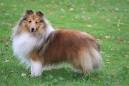
The Shetland sheepdog or Sheltie


This is smaller version of the rough coated collie from Scotlands northern most islands.  They were the crofter’s working dogs but now useless as workers.

Sheltie (Source:  Internet)


Old English sheepdog 
A very old breed of working dog developed to handle intensive sheep on the English downland.   Now completely ruined as a working dog by show ring standards.  Many of these dogs now cannot see for facial hair - unless its tied up with a ribbon.  Modern shepherds as far as I know dont carry ribbons!

 Photo:  Old English sheepdog (Source: internet)


The Corgie
Once the tough little Welsh cattle dog, and you may still find some that will heel cattle.  Two strains exist - the Cardigan and the Pembrokeshire.  Now generally useless for working stock, but made popular because of Royal associations.

Pembroks Corgi (Source:  Internet)

Read More..

Dogs and babies Not always cute

Hi Mia,

Oh, Arf! Based on the way I treated him, its a good thing he was stuffed. I remember dragging him around by his leg (or maybe it was his ear) so we could "spend time" together. 

Given he was a stuffed animal, I have to admit its pretty cute. Nowadays, it seems like one of the functions of social media is sharing cute stuff. You cant go a day without seeing something posted, tweeted or shared that elicits an, "Aww cute" response.

Some photos mix and match baby animals:
Baby animals get us every time

Others photos are more in the cute-weird category:
I see a piece of strawberry and broccoli on that plate. Do you?

Then there are the dog and baby pictures. On our Do You Believe in Dog? Facebook page, I posted the below picture. We got 37 likes, 27 shares and 1, “Awwww!" comment. This picture also appeared elsewhere on Facebook, and I took a screen shot to capture all the attention it received (listed below): 1,658 likes and 464 shares.


In one sense, when it comes to dogs and babies, the above picture is something we are very accustomed to seeing, a gaggle of mushy cuteness.

But theres more to the story, and this is clearly where you are going in your next installment, The Science Surrounding Kids and Dogs: The Ugly (Part 3)


Kids are bitten by dogs and some babies don’t become kids because of an interaction they had with a dog.

This is a fact. A really upsetting fact.

  • A retrospective study examined 341 children who had been bitten by a dog, and they found: “Incidence was highest in 1-year-old patients and decreased with increasing age.” 
  • Another study found: “Children younger than 6 years constituted 52.8% (n = 204) of the sample. As compared with older children, a higher proportion of younger children were bitten by their family dog whose rabies shots were up to date.”  
  • And another: “Children younger than 5 years represented 34% of all dog bite victims, but 50% of all children requiring hospitalization. Thirty-seven percent of all children admitted to the hospital were bitten by a family dog. The cost of direct medical care during the study was $2.15 million.”

These figures are quite painful. Even writing them sucks. But the numbers tell us something. 

  • First, some families will have a traumatic experience as the result of an interaction between a dog and a child.
  • Second, many of the dogs doing the biting are family dogs.
  • Finally, young children constitute a high proportion of children being bitten (and often by the family dog).

Putting it together: Images of dogs and babies
Madeline Gabriel is a San Diego-based Certified Professional Dog Trainer who holds training classes about dogs and babies. On her blog, she recently took a look at ubiquitous dog and baby photos, exploring whether “Cute” Dog and Baby Photos Feed the Fantasy?
  
Photos of dogs and kids often suggest that dogs and kids are just supposed to be "best friends," that dogs should somehow be comfortable having their space invaded, their toys handled, their food bowls touched and their tails tugged.

Gabriel points out, "parents don’t know about safety with dogs and babies and toddlers.  Why should they when our society chooses to surround itself with imagery showing dogs and babies as “best friends?”  You cannot pick up a children’s book with dogs in it without finding talking animals or smiley cartoon dogs who seemingly love being hugged and [their] space invaded by babies.  We have chosen to sacrifice the real to the fantasy.

The price of fantasy is being paid every day by children and dogs and the families that love them.  Hardly ever does a baby or child die from a dog bite (that’s why a single incident will be news across the country), but even a less serious bite is devastating to a family.  Tearful clients tell me, “If only I knew, I would have done it differently…”


She continues, No one purposely puts babies with dogs they think will hurt them.  The more a dog is tolerant, the more liberties will be allowed.  It’s human nature to believe what’s in front of your eyes (“He’s good with the baby!”), particularly when spurred on by a society that rewards and covets “cute” dog and baby interactions.  That is, until it goes wrong and then you’re spurned — as if you did anything different than millions of other parents who cling to the fantasy.” 

In her follow-up post, Gabriel gives examples of photos of dogs with babies and kids that dont foster the fantasy: each has personal space, no hands are in the dogs face and dogs are not cornered or smothered.

This photo would not have made Gabriels list:
Feeding the fantasy?

Looking forward to your take on this topic!

Julie

Recommended reading 
Madeline Gabriel. 2010. Good Dogs Don’t Bite Children, Do They? Dogs and Babies Blog


References
Madeline Gabriel. 2012. “Cute” Dog and Baby Photos Feed the Fantasy. Dogs and Babies Blog 


Madeline Gabriel. 2012. Should You Share That Cute Dog and Baby Photo? Dogs and Babies Blog

BERNARDO L.M., GARDNER M.J., ROSENFIELD R.L., COHEN B. & PITETTI R. (2002). A comparison of dog bite injuries in younger and older children treated in a pediatric emergency department, Pediatric Emergency Care, 18 (3) 247-249. DOI: 10.1097/00006565-200206000-00024

Daniels D.M., Ritzi R.B.S., O’Neil J. & “Tres Scherer L.R. (2009). Analysis of Nonfatal Dog Bites in Children, The Journal of Trauma: Injury, Infection, and Critical Care, 66 (Supplement) S17-S22. DOI: 10.1097/TA.0b013e3181937925

Schalamon J. (2006). Analysis of Dog Bites in Children Who Are Younger Than 17 Years, PEDIATRICS, 117 (3) e374-e379. DOI: 10.1542/peds.2005-1451
© Julie Hecht 2012 
Read More..

Do As I Do Copy Cat Social Imitation in Dog Training

Join us for another guest post, this time from Claudia Fugazza of the Family Dog Project in Budapest. Claudias here to discuss her recent publication in Applied Animal Behaviour Science on the efficiency of new methods in dog training.

Hi Mia and Julie,

Formal training methods used until now rely mainly on the well-known rules of individual associative learning. These methods work perfectly well for a very wide range of animals — pigeons, rats, dogs and even crabs — and human and non-human animals can learn by ‘click and treat,’ as noted in the popular training book by Karen Pryor.


However, recent research has found substantial evidence that dogs could be predisposed to acquire information socially via the ‘Do as I do’ method. Do as I Do is a relatively new training method for people to use, based on dogs’ social cognitive skills, particularly on their imitative ability. 


With this training technique, dogs learn new behaviors by observing and copying their handler. The dog is a copycat. This method relies on social learning, and it was recently introduced in the applied field of dog training. 


As this method has started spreading in the dog training world, we felt that its efficiency and efficacy needed scientific testing. We were also wanting to know whether this method would be more or less efficient than other current training methods in training for particular behaviors.

We expected that dogs would more easily copy object-related actions from a human demonstrator so we tested dogs’ efficiency in this kind of tasks. To do this, I travelled across Italy and the UK with my video-cameras as well as a heavy Ikea cabinet filled with objects (you can imagine the weird looks I got from security personal at checkpoints!). I used these objects to test dogs learning to open or close drawers and lockers, pick up items from it etc. Since training methods can be affected by the skills of the trainer, only experienced dog-owners pairs who achieved a certificate either for the ‘Do as I do’ method or for shaping / clicker training were included in the study. Each pair was tested using ‘his’ method for teaching three different object-related actions in three testing sessions.


We expected that the ‘Do as I do’ method would prove more efficient for teaching complex tasks, compared to the shaping method that relies on individual learning. This expectation comes from what we know in humans: we tend to rely more on social learning when required to learn something difficult.

Our research found that the ‘Do as I do’ method proved more efficient for teaching dogs complex tasks, like close a drawer, open a locker and pick up an item that was inside (i.e., the time needed by the owner to obtain the first correct performance of the predetermined action was shorter with the ‘Do as I do’ method compared to shaping). We did not find a significant difference in the efficiency of the methods for teaching dogs simple tasks like knocking over a bottle or ringing a bell.

Now that we know a bit more on how to efficiently teach complex object-related actions, we are curious to know what happens when we want to teach different kind of complex actions, like body movements. We also want to know whether introducing social learning in dog training could have an effect on learning cues for trained action. 

We are aware that learning rates can be influenced by many factors, and we acknowledge that this study is just a very first step towards a more scientific approach to training paradigms. However we believe that this kind of information can be very important for the practitioners working in the applied field of dog training. We hope that the readers will not misinterpret the results and will not extend them to different actions and situations that were not tested.

Furthermore we would like to emphasize that, despite being efficient for training some kinds of actions, the ‘Do as I do’ method does not replace the methods based on individual learning (for example think of how many actions are not imitable at all if the demonstrator is a human and the learner is a dog!). Instead ‘Do as I do’ is a useful (and fun!) addition to existing training paradigms. Experienced dog trainers may find effective ways to mix the different training techniques in order to obtain the best results with each dog. 

Claudia Fugazza
Do as I Do Book and DVD
http://www.apprendimentosociale.it/en/claudia-fugazza/
Family Dog Project 

Reference 
Fugazza C. & Miklósi Á. (2014). Should old dog trainers learn new tricks? The efficiency of the Do as I do method and shaping/clicker training method to train dogs, Applied Animal Behaviour Science, 153 53-61. DOI: 10.1016/j.applanim.2014.01.009


© Do You Believe in Dog? 2014
p.s. Check out this dogs excellent jump!


Read More..

New Zealand Farm Working Dogs 4 Basic Training

  By Dr Clive Dalton
 
The pup
Pup at sale waiting for new boss
 Training methods are as variable as handlers and dogs.   But the basic principles are fairly straightforward.  How you apply them depends greatly on your nature, and the nature of the pup.  One thing all trainers agree on - theres no point wasting your time on a badly bred pup.  If it hasnt got the working genes - then forget it.

Pups start to work at different ages, but you would certainly expect to see some action by 6 months of age.  If a dog hadnt shown much interest by 9 months, youd be getting concerned about the costs of keeping it.  It would have to be an especially good prospect based on its pedigree to keep it.  Check with the breeder incase the strain are late starters, before deciding what to do.  It may not be the pup – it could be you!  Talk to an experienced dog handler about your concern.


Be wary of pups that will be keen to take on full work by six months.  Dont let them, as they can so easily get hurt and scared.  This scare may put them off work for an extended period, or forever .

Key points collected from a wide range of handlers:
·      Voice tones, petting, touching and feeding are all valuable rewards for a dog.  Exploit them fully.

·      Dont over-stimulate or tease a pup, or let anyone else do this.

·      During a pups early life, keep it fully occupied.  Never let it get bored or it will start such bad habits as barking, biting, work shyness and so.  Keep it stimulated – but not overstimulated.  Give a young pup a slipper or a bone as its own "treasure".

·      Keep it where it can see daily happenings.  Some trainers prefer a kennel to a run as it means they have to handle it each day to let it off and tie it up.

·      Teach a pup its name.  This is its alerting signal for life.  Always call it when you go to feed it.  When it wanders, call its name with a “come-here” command.  Use a word and add a whistle if you wish.  Give it a big welcome when it comes back to you.  Pet it and use its name as much as you can.

·      Get the pup used to wearing a light collar.  Its tight enough if you can slip one finger between it and the dogs neck.  When it accepts this, tie it up for a short period (about 30 minutes/day) on a short chain with a swivel in it.  Make sure it cannot slip the collar.  Dont use a rope, as it will learn to chew through it and escape.

·      Make sure going back to the kennel or being tied up is a happy and positive experience.  Be patient if the pup is reluctant.  Help it up or provide a step if needed.  Dont associate this with feeding, and dont lose your cool and boot it into the kennel.

Bonding time after exercise

·      Teach the pup to follow at heel on a lead (check cord about 4m long).  Here teach it the "heel" or "get-in" command. 

·      Teach it the "sit" command by stopping, pressing its hindquarters on the ground while lifting its head.  When done correctly - give plenty of praise.

·      Some trainers teach the "down" or "lie down" command, simply by stepping on the lead to pull its head down while pushing its back end flat.  When done correctly - give plenty of praise.  In New Zealand the “stand” command is preferred as the dog stays on its feet and is clearly seen by the sheep.

·      Teach the "stand" command.  Its probably the most important command - to get the dog to stop and do nothing.  Dogs that will not STOP on command cause so many problems with stock.

"Stand" is taught by either raising the pup from the "sit" position, with one hand on its head while the other lifts its belly.  Or you can stop as you walk along, go infront of the dog giving the command "stand" or "stand there".  With all these commands, use the pups name all the time with positive reinforcement.

·      As well as the "stand" you may want to teach a "stay" or "stay there" command.  Its probably not necessary but can be useful.  A “stay” hand signal can be taught at the same time by holding your hand infront of the pup’s face as you give it.  Then walk away backwards saying “stay there Meg”.

"Stand" or "stay" can be very frustrating for a pup that has spent the last few months being in touch contact with you.   Now you are going to walk away and leaving it with no company.  Naturally it wants to follow to maintain the bond.  Be patient as you are moving to reinforce the bond visually from a distance.

·      One famous NZ trainer of working dogs and gun dogs used to teach these early commands on a stool (see other blog post) just big enough for the pup to stand or sit on.  Once taught how to climb up on the stool from one end, the pup was scared to jump off from such a height.  The trainer then taught it to "stay", and over time could move further and further away (in all directions) without the pup moving.  At any sign of stress, he went back to reassure the pup.
·      Now the "stand" command can be linked to the "come here" command, and the "sit" in any combination.  Dont keep the pup in any of these positions for long, and keep the total lessons short, no more than 10 minutes at time, maybe 2-3 times a day.

·      When giving pups commands there’s no need to shout and roar!  Dogs have very good hearing, and a raised voice should be kept for discipline - otherwise speak quietly.  If more discipline is warranted, then use the "shake-praise" trick.

·      A pat is adequate reward when training a pup.  Dont get involved with methods that rely on food.  Its not very practical and one day youll forget the biscuits!

·      Dont train a pup by tying it to an older trained dog.  Its a great idea that doesnt work!  It’s sometimes used by some experts, but for specific problem solving.

House training
In nature a pup learns its hygiene habits from the bitch.  They normally keep the den clean and defaecate and urinate outside.  Build on this basic instinct when house training.

As soon as the pup wakes up, take it outside on to grass and praise it for performing.  Never punish it after an "accident".  Keep the pup in a small area in the house to make it realise that the area is its “den” where it will not naturally perform.  You can extend this area in time once it is performing outside.

The young keen dog


Keep it keen.   Once the dog is into regular light work, here are some general points:

·      Establish a regular daily routine and stick to it - unless the dog goes "sour" and won’t work when you’ll have to go back to the beginning.

·      Dont exhaust the dog - work it within its physical limits.  Work must be fun and enjoyed by the dog.  Dont work a dog when you’re feeling tired or in a bad mood.

·      Keep a regular routine of commands going, and keep checking proficiency.  This helps to strengthen the dog-handler bond.  You can put whistles to word commands at any time that suits.  Simply give the word command followed by the whistle or vice versa.  A good dog will learn very quickly.

Teaching Stop, and Start
Once you have the pup under control so it knows its name and will sit or stand, and then come to you, then let it show its natural instinct with stock.   Now is time for some fun- just let it go in a small paddock with some quiet sheep that are used to dogs, and see what happens

The pup may be so keen that it will forget everything that it has learned so far.  Dont worry, it will soon pick these commands up again once it has steadied down. 

Some very successful trainers dont bother to teach a pup anything until it has started to work stock.  They have no problems putting the commands on the pup later.  The last thing you want to do at this stage is cramp the pups natural instinct to work.  It doesnt matter if its work is a bit rough - just encourage it to keep going.  But keep an old dog handy to prevent or clean up any impending disasters - and incase the neighbours may be watching!

Fast heading pups are likely to get into more trouble than huntaways, which are usually more steady.  This early working instinct is to chase and go around stock.  Make sure the pup can catch whatever it sets out to chase.  Here an old dog is useful to help out and guarantee success.

You may need a little bit of encouragement to get the pup to go after stock, especially if you have overdone the initial commands.  Border shepherds use a "Sh-sh" sound to alert the pup and excite it to GO.  But seeing stock is often enough for a keen pup, but you might have to excite a late starter.  Any noise will do as long as it’s different to those already used.

Teaching directions
Here exploit the dogs circling instinct to the full.  Dont worry if it keeps going round and round stock at the start.  You can stop this by meeting the dog half way round the group, and sending it back in the other direction.  Its here where you can teach a "go away" command.

But "go away" is too simple a command, because you’ll inevitably want the dog to either "go right" or "go left" around stock, or "come right" or "come left" back to you.  Put these direction commands on the dog while it is at this circling stage with a small group of quiet sheep.  A signal with your arm or a stick is useful here too.

Commands to get the dog to go away from you (or cast) can be for example "get away" for circle right, or "get back" to circle left.  And then for commands to get the dog to come towards you could be "come away" for one direction or "come bye" for another.  Some dog handlers may just use "over" and "back".  Remember the dog doesnt speak English - it is responding to sound.

After sheep have been used for a week or so of dog training, they get sick of the whole business and wont go anywhere.  They seem to want to jump into the trainers’ arms to get away from the dog.  They become too friendly and need to be changed for sheep less man/dog friendly.

A good routine is to get the young dog to start by standing or sitting at your heel.  Then making sure it has seen the sheep, cast it on either the right or left hand to gather the sheep.   Keep sending it off on each side, as often they may prefer one particular side.